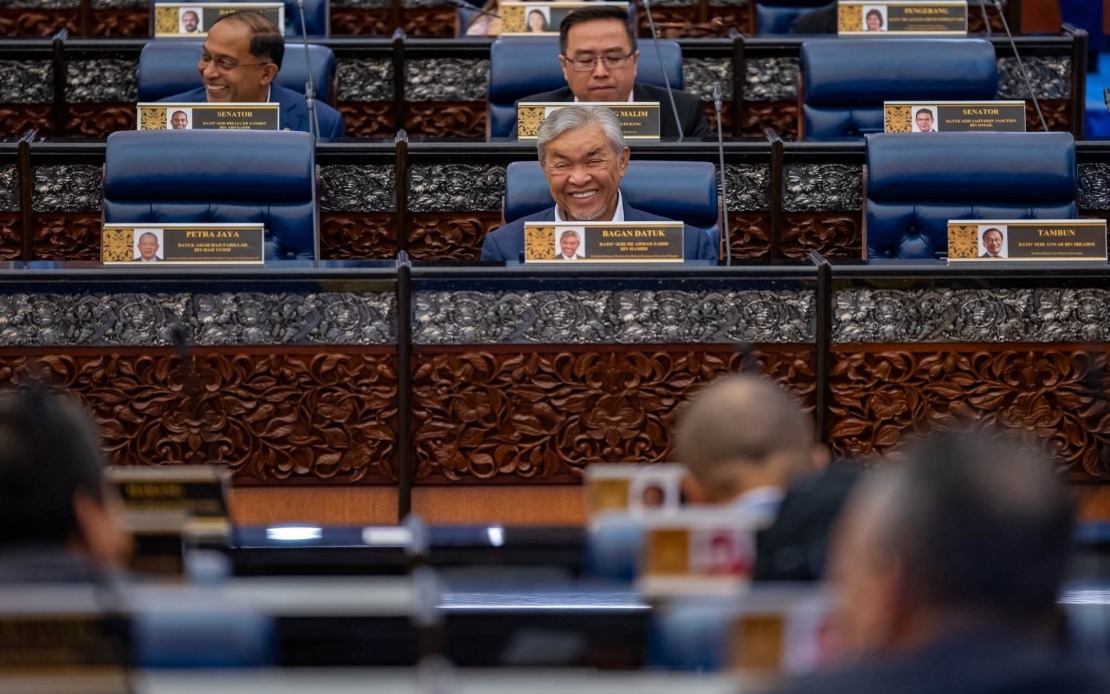
Deputy Prime Minister Datuk Seri Dr Ahmad Zahid Hamidi has stressed that criticism of Lembaga Tabung Haji must be matched with tangible action to preserve the institution's reputation and public trust. Speaking following a special parliamentary sitting on August 11, Ahmad Zahid, who simultaneously holds the Rural and Regional Development portfolio, warned against allowing the matter to fester without resolution or devolve into unsubstantiated allegations that undermine confidence in one of Malaysia's most significant Islamic financial bodies.
The parliamentary session followed the government's decision in late July to release a Royal Commission of Inquiry report examining Tabung Haji's operations and administration during the 2014 to 2020 period. This release marked a significant moment of institutional transparency, allowing elected representatives to scrutinise the findings and publicly debate the commission's recommendations without parliamentary restrictions. The move reflected recognition that the pilgrim fund's governance challenges warranted legislative oversight and public accountability.
The RCI report documented substantive operational and management deficiencies across multiple dimensions of the fund's administration during that six-year window. Rather than merely cataloguing problems, the commission formulated 25 distinct recommendations aimed at remedying identified weaknesses and strengthening internal controls. By early August, Tabung Haji had already implemented three-quarters of these proposals, suggesting administrative responsiveness to the inquiry's findings, though questions remained about the adequacy and durability of such measures.
Ahmad Zahid's emphasis on coupling criticism with responsible action reflects deeper concerns about institutional reputation in Malaysia's Islamic financial sector. Tabung Haji, established to facilitate Islamic pilgrimage for Malaysian Muslims and manage their savings, commands substantial public resources and personal wealth deposits. When governance failures emerge, they risk eroding confidence not only in that institution but potentially in the broader ecosystem of Islamic banking and finance that has become increasingly central to Malaysia's economic architecture. The deputy premier's framing thus positioned the debate within a larger context of financial system integrity.
The parliamentary avenue provided what Ahmad Zahid characterised as a structured mechanism for MPs to examine evidence, seek clarification, and debate remedial approaches comprehensively. Rather than allowing concern about Tabung Haji to circulate through informal channels or social media where accuracy cannot be guaranteed, the formal legislative forum offered opportunities for fact-based discussion grounded in the commission's documented findings. This procedural emphasis underscores anxieties about misinformation and rumour potentially widening the reputational damage beyond what the actual governance failures warranted.
Ahmad Zahid's public statement appealed implicitly to legislators and commentators to refrain from amplifying allegations beyond what the evidence supported or generating perceptions disconnected from documented facts. Such language suggests awareness that public discourse around Tabung Haji had become emotionally charged, potentially magnifying the narrative of institutional failure in ways that transcended the specific management and operational deficiencies the RCI had identified. The call for restraint acknowledged the risk that unguarded rhetoric could transform technical governance issues into broader crises of institutional legitimacy.
The deputy premier's invocation of spiritual considerations—praying for wisdom and sincerity among all parties addressing the matter—reflected the intersection of governance concerns with religious institutional identity. Tabung Haji operates within a framework where financial management and Islamic religious values are intertwined. For Muslim Malaysians, the fund represents not merely a savings mechanism but an extension of their religious obligation and community identity. This dual character meant that governance failures carried both financial and spiritual dimensions, explaining why institutional restoration required articulation at both technical and moral registers.
For Malaysian policymakers and financial regulators, the Tabung Haji situation offers wider lessons about institutional resilience and transparency. The decision to make the RCI report public represented departure from earlier governmental inclinations toward managing institutional crises through private remediation. Public disclosure, while potentially uncomfortable, establishes clear expectations for reform and creates mechanisms through which progress can be monitored. It also demonstrates governmental confidence that identified weaknesses, while serious, remain remediable rather than reflecting systemic rot requiring wholesale institutional restructuring.
The three-quarter implementation rate for RCI recommendations by late July suggests that Tabung Haji management had begun translating the inquiry's findings into operational changes. However, implementation percentages alone cannot confirm that proposed reforms will be effective or durable. Genuine restoration of public trust requires demonstrating not merely that changes have been made but that underlying causes of governance failure have been addressed and that systems exist to prevent recurrence. This distinction between formal compliance and substantive reform remains critical as the institution moves forward.
For Malaysian Muslims planning to undertake pilgrimage, Tabung Haji's governance challenges intersect directly with personal financial security and religious obligation. The institution manages not only pilgrim savings but complex investment portfolios intended to generate returns supporting pilgrimage subsidies. Governance failures in prior years potentially affected fund performance and returns to depositors. Resolution of these issues thus carries immediate practical significance beyond abstract institutional health, directly influencing the financial calculus of hajj planning for ordinary Malaysians.
The parliamentary debate itself represented democratic accountability in action, though with peculiar characteristics given that the institution's primary stakeholders—millions of Muslim Malaysians with deposits—are diverse and scattered. Formal legislative scrutiny offers more systematic oversight than dispersed public pressure alone could generate. However, effective accountability ultimately depends on sustained monitoring beyond the immediate post-report moment and genuine integration of governance improvements into institutional culture rather than superficial compliance with external recommendations.
Moving forward, Ahmad Zahid's message essentially calls for closure of the immediate crisis phase while establishing higher standards for ongoing institutional management. The parliament has examined the RCI findings; recommendations for improvement have been substantially implemented; and public transparency has been established. These represent progress toward institutional rehabilitation. Whether Tabung Haji emerges genuinely strengthened or merely restored to its prior state of public tolerance will depend on how thoroughly governance changes penetrate institutional practices and how effectively the fund demonstrates renewed commitment to protecting the financial interests of Malaysia's Muslim pilgrims.

