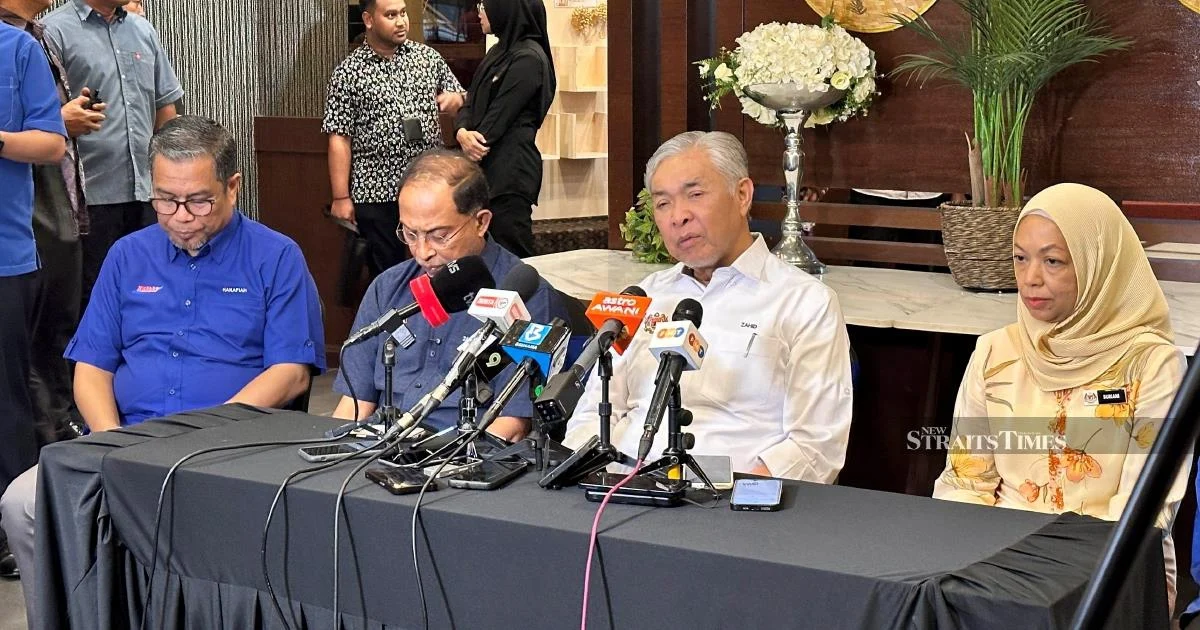
Barisan Nasional chairman Datuk Seri Dr Ahmad Zahid Hamidi has signalled that unity government coalition partners should steer clear of divisive historical issues during the Johor state election campaign, in what appears to be a rebuke directed at a fellow component party. Speaking in Kluang, Zahid implied that references to sensitive figures from Malaysia's recent political past—notably Datin Seri Rosmah Mansor—should be set aside as the coalition focuses on winning voter support across the southern state.
The tension reflects deeper fractures within the unity government alliance that has governed since 2020. While the coalition's component parties formally agree on shared electoral strategy, disagreements over campaign messaging and which figures to highlight or downplay periodically surface. The apparent friction over the use of Rosmah's image suggests that different coalition members hold divergent views on how to navigate contentious elements of recent Malaysian political history when appealing to Johor voters.
Rosmah's prominent public presence remains a sensitive matter within Malaysian politics. As the wife of former Prime Minister Datuk Seri Najib Razak, she became a polarizing figure during the 1MDB scandal that engulfed the previous administration. Her subsequent legal troubles and high-profile trials have kept her in the spotlight, making her name and image potential liabilities for any political campaign seeking to appeal to a broad cross-section of voters who hold diverse views about that era.
Zahid's intervention reflects the delicate balance required to maintain coalition cohesion while pursuing electoral advantage. Barisan Nasional, which dominated Malaysian politics for decades before losing federal power in 2018, remains the backbone of the current unity government. However, its electoral recovery depends on managing internal tensions and preventing component parties from pursuing agendas that might alienate voters or embarrass allies. The chairman's message appears aimed at enforcing message discipline across the alliance.
The Johor state election represents a significant test for the unity government's capacity to govern effectively and maintain public support. As one of Malaysia's most populous and economically important states, Johor carries substantial political weight nationally. A strong performance would validate the coalition's governance record and reinforce its claim to represent mainstream Malaysian interests. Conversely, a disappointing result could intensify internal recriminations and undermine confidence in the alliance's viability.
Voters in Johor may prove more receptive to forward-looking campaign messaging that emphasizes development projects, economic opportunities, and governance performance rather than rehashing divisive episodes from the preceding administrations. Many Malaysians appear fatigued by political disputes centered on historical grievances and personalities, preferring instead to hear how political parties plan to address contemporary challenges such as cost-of-living pressures, employment opportunities, and infrastructure development.
The reference to Rosmah also touches on broader questions about how Malaysian political parties should engage with controversial figures from their own histories. For Barisan Nasional, which governed for six decades before 2018, the party remains closely associated with the Najib administration despite official distancing from the former prime minister's policies. Coalition strategists must carefully manage this legacy while attempting to rebrand and rebuild credibility with an electorate that punished the party heavily in the 2018 general election.
Zahid's statement carries particular weight given his position as the leading voice within Barisan Nasional. As Prime Minister as well as party chairman, he holds ultimate authority over coalition direction and messaging. His ability to enforce discipline among component parties, particularly those tempted to pursue independent campaign strategies, will significantly influence the unity government's electoral prospects. The Johor election will provide an early indication of whether he can maintain coalition unity around a coherent campaign strategy.
The unity government itself—comprising Barisan Nasional, PKR, DAP, and other parties—represents an unusual political arrangement born from necessity rather than ideological affinity. Maintaining this broad coalition while managing diverse political interests, campaign styles, and historical baggage requires constant negotiation and occasional firm direction from senior leaders. Zahid's intervention in Johor suggests these underlying tensions remain present despite the coalition's nearly four-year tenure in power.
For Malaysian voters, particularly in Johor, the message implicit in Zahid's comments is that the coalition intends to campaign on contemporary governance issues rather than relitigating the past. Whether coalition partners fully embrace this discipline, and whether voters find the resulting campaign messaging sufficiently compelling, will become clearer as the election campaign develops across the state.

