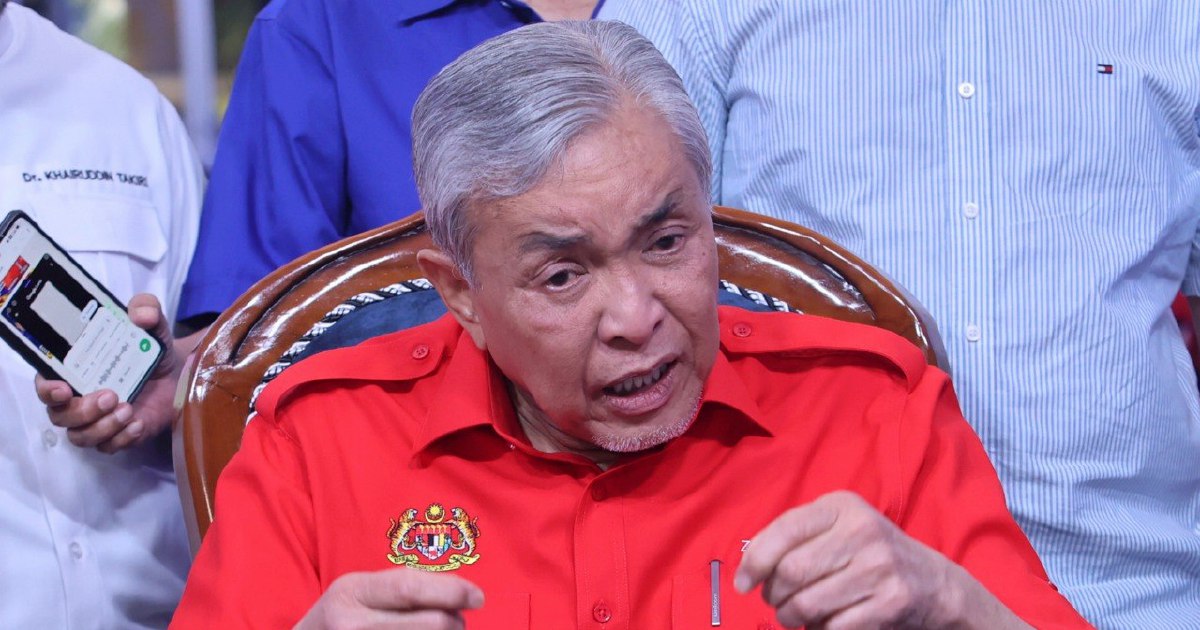
Barisan Nasional chairman Datuk Seri Dr Ahmad Zahid Hamidi has sounded an urgent call for the coalition to accelerate its campaign operations across Negri Sembilan as the state election looms, acknowledging frankly that his alliance faces an uphill battle in the contest. Speaking in Seremban, the BN leader indicated that the coalition cannot afford complacency and must mobilise its resources and grassroots machinery with renewed vigour to compete effectively against rival blocs in the state.
Zahid's characterisation of BN as the underdog represents a candid assessment of the political landscape in Negri Sembilan, a state where the coalition's traditional dominance has been eroded over successive electoral cycles. The frank acknowledgement signals that BN strategists recognise the party needs to recalibrate its approach and messaging to reconnect with voters who may have grown disillusioned with the coalition or shifted allegiances to alternative political offerings. This realistic appraisal contrasts with some of the overconfident rhetoric occasionally heard from party figures and suggests a more disciplined, focused approach to the campaign ahead.
The timing of Zahid's intervention underscores the importance BN leadership places on the Negri Sembilan contest. State elections have become increasingly significant as barometers of national political sentiment and can influence the trajectory of federal politics. A strong showing would bolster BN's narrative of recovery and renewed relevance, while a weak performance could deepen concerns among party members about the coalition's viability as a governing force. For Zahid personally, steering BN to a respectable outcome in Negri Sembilan would help consolidate his position as chairman and demonstrate his capacity to lead the coalition through a challenging political environment.
Negri Sembilan has historically been a BN stronghold, but recent years have seen the coalition's grip loosen as voters increasingly engage with alternative political messages and vote across party lines. The state's electoral dynamics reflect broader shifts in Malaysian politics, where no single coalition can assume automatic victory regardless of past performance. Urban constituencies in particular have become more unpredictable, with younger voters and middle-class electorates proving willing to punish incumbents perceived as failing to deliver on governance and development priorities.
Zahid's call for intensified campaigning implies a multi-pronged strategy encompassing grassroots engagement, media presence, and direct voter outreach. BN's machinery in Negri Sembilan will likely focus on highlighting infrastructure projects and economic initiatives that have benefited constituencies, while attempting to frame the coalition as the most stable and capable administrator. The party will also seek to exploit any vulnerabilities in opposition messaging and emphasise the risks of untested alternatives, a theme that has featured prominently in recent BN communications.
The coalition's campaign momentum will partly depend on its ability to reconcile internal divisions and present a united front. BN comprises multiple parties with distinct constituencies and agendas, and ensuring harmonious coordination during elections requires careful management. Any visible fractures could undermine the message of stability and cohesion that BN typically projects to voters. Zahid's directorship as chairman positions him as the key figure responsible for holding the coalition together and directing overall strategy.
From a Malaysian perspective, the Negri Sembilan election matters because it will provide clarity on voter sentiment regarding BN's recent governance record and the broader political direction of the country. A BN setback could embolden opposition parties and create momentum for non-coalition entities, while a BN recovery would reinforce the coalition's claim to be the electorate's preferred choice. The result will also influence calculations about the timing and conduct of the next federal election, as political parties assess their relative strength and positioning.
Zahid's explicit warning about underdog status may also serve a strategic purpose by managing expectations and potentially rallying BN supporters to greater effort. By framing the situation as challenging, party leaders can motivate volunteers and party members to increase their commitment and persuade swing voters that BN deserves their support because the party is fighting from behind rather than coasting on assumed victory. Such framing can paradoxically boost turnout and engagement among core supporters.
The Negri Sembilan contest also reflects broader dynamics in Southeast Asia, where established ruling coalitions across the region are navigating increasingly complex electoral environments. Voter sophistication has increased, and electorate demand for governance quality, economic delivery, and responsive leadership has intensified. Parties that successfully adapt their messaging and organisational approach to these new realities tend to perform better, while those relying on traditional patronage networks and top-down structures may find their appeal diminishing.
As BN embarks on its campaign push in Negri Sembilan, the coalition faces the challenge of balancing continuity with renewal, demonstrating that it remains committed to serving all segments of the population while also showing willingness to address emerging concerns and aspirations. Zahid's call for momentum represents an attempt to galvanise the party around this dual imperative, transforming the acknowledged underdog status into a motivating force for the battle ahead.

