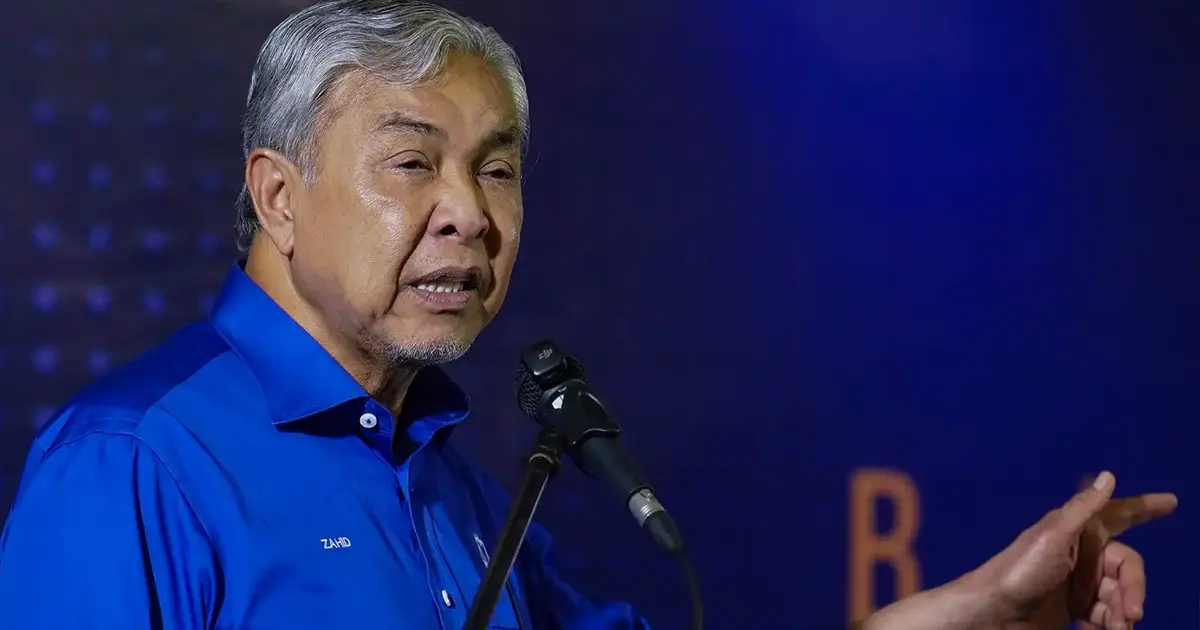
Deputy Prime Minister Ahmad Zahid Hamzidi's pursuit of the prime ministerial position has emerged as a potential catalyst for rekindling political relations between Umno and PAS, two parties whose alliance fractured in recent years. Puad Zarkashi, a senior figure within the political establishment, has indicated that both organisations harbour sufficient mutual interest to overcome past grievances and collaborate once again, driven by pressing short-term political objectives that align with their respective agendas.
The prospect of renewed cooperation between Malaysia's largest Malay-Muslim political organisations carries substantial weight in the country's electoral mathematics. Umno, the traditional custodian of Malay-Muslim interests and the senior partner in the ruling Barisan Nasional coalition, has faced sustained pressure to rejuvenate its political fortunes following electoral setbacks. Zahid's aspirations for the premiership represent a consolidation strategy wherein the party seeks to position its leadership for succession within the current administration, necessitating expanded coalition building to strengthen its parliamentary standing and grassroots mobilisation capacity.
PAS, meanwhile, has pursued an ostensibly independent political trajectory since its divergence from Umno, attempting to position itself as the authentic voice of Islamic governance in Malaysia. However, the party's exclusion from federal executive authority has created structural limitations on its policy implementation and resource allocation capabilities. A return to government, whether as a coalition partner or in a supporting role, would provide PAS with tangible institutional leverage to advance its legislative agenda and distribute patronage networks to its membership and supporters, objectives that become increasingly difficult to achieve from an opposition vantage point.
The historical relationship between these two parties is marked by periodic cycles of cooperation and rupture. Their previous alliance, formalised through various coalition arrangements, enabled them to maintain dominant control over Malay-Muslim electoral constituencies and shape the ideological contours of national governance. The breakdown of this alliance stemmed from ideological divergences, competition for the same voter demographics, and disagreements over power-sharing arrangements, particularly regarding ministerial portfolios and administrative prerogatives at both federal and state levels.
Zahid's ministerial portfolio and his position as Deputy Prime Minister provide him with institutional advantages and visibility that could prove attractive to coalition partners. However, his ascension to the premiership would require navigating complex internal party dynamics within Umno, managing existing coalition partners, and potentially broadening the governmental coalition to command sufficient parliamentary majorities. PAS's participation in such an arrangement would substantially bolster these numerical requirements whilst simultaneously positioning the Islamic party as an indispensable coalition component.
The timing of these discussions reflects broader structural pressures within Malaysia's political system. The current parliamentary configuration remains fragile, with governing coalitions dependent upon maintaining diverse partner alignment and managing internal factions. A strengthened Umno-PAS partnership could fundamentally alter the equilibrium of power, potentially reshaping state-level administrations and federal executive composition. This recalibration would have ramifications extending beyond immediate ministerial appointments to encompass policy directions on religious affairs, education, public finance allocation, and social legislation.
For PAS, the prospect of governmental participation addresses accumulated grievances regarding institutional marginalisation. The party's electoral performance remains robust in certain demographics and constituencies, particularly within Malay heartland regions, yet its inability to translate electoral support into executive authority constrains its capacity to implement policy initiatives or distribute resources. A coalition return would provide mechanisms for advancement of the party's Islamic governance agenda whilst simultaneously enriching its organisational capacity and member incentives.
Umno's strategic calculus appears centred on consolidating its control within the Malay-Muslim political space whilst simultaneously defending against challenges from both the Islamic opposition and secular alternatives. Zahid's elevation to the premiership would represent a significant generational shift within the party's leadership structures. His coalition-building efforts necessarily extend beyond traditional Barisan Nasional partners to encompass other Malay-Muslim organisations capable of commanding grassroots mobilisation and electoral delivery.
The resurrection of Umno-PAS cooperation would reshape Southeast Asia's largest democracy's political dynamics substantially. Both parties maintain extensive organisational networks, significant financial resources, and entrenched positions within state administrations and local governance structures. Their collaborative efforts could accelerate legislative processes, streamline administrative operations, and concentrate decision-making authority within an Umno-PAS dominated governmental framework. Conversely, such consolidation might marginalise alternative political perspectives and constrain institutional checks on executive authority.
Malaysian voters and the broader regional political community will likely scrutinise the development of these negotiations carefully. The stability of any Umno-PAS arrangement would depend substantially upon transparent power-sharing mechanisms, explicit policy agreements, and mechanisms for resolving future disagreements. The parties' previous experiences with coalition breakdown demonstrate the fragility of political alliances constructed primarily upon short-term tactical considerations rather than deeper programmatic alignment or institutional trust-building exercises.
Puad's observations regarding the feasibility of renewed cooperation suggest that political pragmatism may ultimately transcend historical animosities and doctrinal differences. The Malaysian political landscape has demonstrated considerable flexibility in generating unexpected coalitional arrangements when participants perceive mutual benefit. Nevertheless, the sustainability and broader implications of any Umno-PAS partnership remain contingent upon the parties' abilities to address underlying organisational interests whilst simultaneously advancing collective governance objectives that extend beyond factional advantage to encompass substantive policy achievement and institutional legitimacy.

