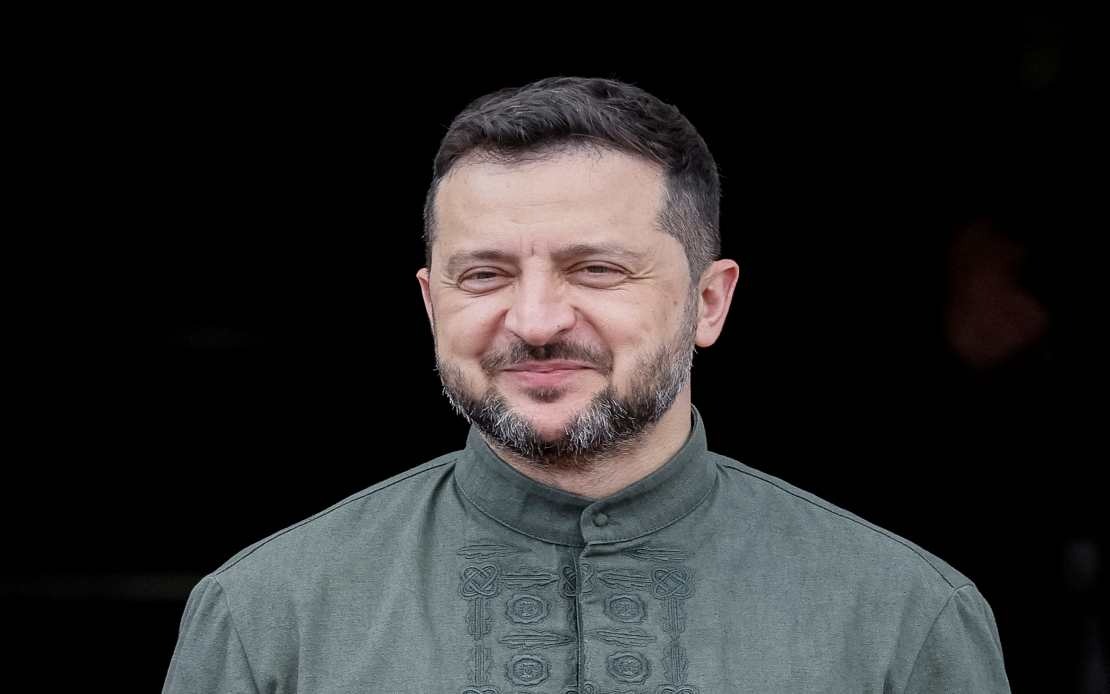
Ukrainian President Volodymyr Zelensky has formally enacted a law creating a national heroes' memorial despite escalating diplomatic friction with Poland, signalling Kyiv's determination to shape its own historical narrative independently. The legislation, approved by parliament in July and now signed into law, establishes what officials describe as a pantheon that will enshrine figures regarded by modern Ukraine as liberation fighters but viewed by Poland as perpetrators of wartime atrocities. Zelensky's decision underscores the competing visions of World War II history that divide the two neighbours and complicates their alliance against Russian aggression.
At the heart of the controversy lies the Ukrainian Insurgent Army, known by its Ukrainian acronym UPA, which Poland holds responsible for massacring tens of thousands of Polish and Jewish civilians during the German occupation of World War II. Historical accounts identify the Volyn region, situated in what is now western Ukraine, as the principal site of these killings. For Warsaw, honouring UPA members amounts to glorifying those who committed genocide, a characterisation Poland has repeatedly emphasised in official communications. The distinction between how each nation remembers these figures reflects fundamentally different historical interpretations and national priorities in the post-war period.
Zelensky reaffirmed his government's commitment to the memorial project during an address to war veterans on Saturday, declaring that Ukrainians alone would determine who merits recognition as a national hero. This assertion of sovereign decision-making reflects broader Ukrainian efforts to reclaim historical narratives previously shaped by Soviet-era interpretations or external pressures. The pantheon, to be constructed in Kyiv, will encompass historical figures spanning from the medieval Kyivan Rus empire through contemporary periods, making it a comprehensive statement about Ukrainian identity and continuity.
The memorial will serve multiple functions beyond honouring deceased independence fighters. The legislation designates the site as a burial ground for future Ukrainian presidents, effectively transforming it into a permanent institution of state symbolism. The reinterment of internationally controversial figures—those whom Kyiv views as freedom fighters but other nations regard differently—represents an explicit assertion of Ukraine's right to define its historical pantheon without external approval or constraint. This dual purpose ensures the memorial will remain a focal point of Ukrainian civic and political life for generations.
The diplomatic fallout has been swift and consequential. Polish President Karol Nawrocki's office formally objected to the law's advancement, characterising the glorification of those convicted of genocide in Volyn as incompatible with Ukraine's aspirations toward Western integration. Warsaw has not remained passive; in June, after Zelensky awarded a military unit the title "Heroes of the UPA," Poland withdrew the Order of the White Eagle that had previously been conferred upon the Ukrainian president. The symbolic nature of this retaliatory gesture cannot be overstated—such honours represent the highest expressions of international diplomatic respect, and their withdrawal signals serious rupture in bilateral relations.
The incident has prompted extraordinary responses from individual politicians in both countries. Ukrainian and Polish officials have returned honours and decorations they had received from the neighbouring state, a pattern of reciprocal diplomatic snubbing that demonstrates how deeply this historical dispute resonates beyond formal government channels. These personal acts of repudiation illustrate the emotional and political stakes involved in competing claims to historical truth and national dignity.
For Malaysia and Southeast Asia more broadly, this dispute offers instructive lessons about how historical grievances can complicate strategic alliances. Ukraine's relationship with Poland parallels, in certain respects, tensions that exist between nations in this region over contested historical narratives and commemorations. Nations navigating regional security challenges sometimes find that historical disputes threaten partnerships forged on contemporary strategic grounds. The Ukrainian-Polish case demonstrates that even allies facing common external threats may struggle to reconcile divergent historical memories and national commemorative practices.
Poland's muted initial response, followed by escalating objections, reflects the delicate balance Warsaw must maintain. As a frontline NATO member and crucial Western supporter of Ukrainian resistance against Russia, Poland faces pressure to avoid rupturing the alliance against Moscow. Simultaneously, Polish society harbours deep historical wounds regarding UPA violence, making it politically untenable for Warsaw to acquiesce silently. The government has chosen expressions of formal displeasure and symbolic gestures rather than economic sanctions or diplomatic isolation, indicating an attempt to register protest while preserving the essential alliance.
Ukraine's positioning is similarly complex. Kyiv requires sustained Polish support—military assistance, logistics, refugee assistance, and diplomatic backing within NATO and the European Union remain vital to Ukrainian survival. Yet Zelensky has calculated that defining national identity and historical narrative represents a non-negotiable assertion of sovereignty. The timing of the law's signing, during an ongoing existential conflict with Russia, suggests that Ukrainian leadership views the establishment of independent historical memory as integral to the nation-building project that justifies the war effort itself.
The pantheon law reflects broader trends across post-Soviet space, where nations are actively reconstructing national historical narratives after decades of Soviet dominance. Ukraine's assertion that "only Ukrainians will decide who is a hero for us" encapsulates this reclamation of interpretative authority. However, this process inevitably generates friction where Ukrainian historical revisionism conflicts with Polish or other neighbours' competing claims to historical truth. The challenge for regional stability lies in developing frameworks through which nations can honour their own historical narratives without systematically denigrating neighbours' suffering or trivialising documented atrocities.
The unresolved tension between Ukraine and Poland over this memorial will likely persist as long as neither country signals willingness to reframe the historical debate. Poland may intensify pressure through quiet diplomatic channels or conditional support for specific Ukrainian initiatives, while Ukraine appears unlikely to modify legislation that its leadership views as fundamental to national identity. The question remains whether this specific dispute might eventually be subsumed within broader reconciliation efforts once the current war concludes, or whether it will become an enduring obstacle to deeper integration within Europe. For now, the memorial stands as a testament to competing claims on history and the complications that arise when strategic necessity collides with historical memory.

