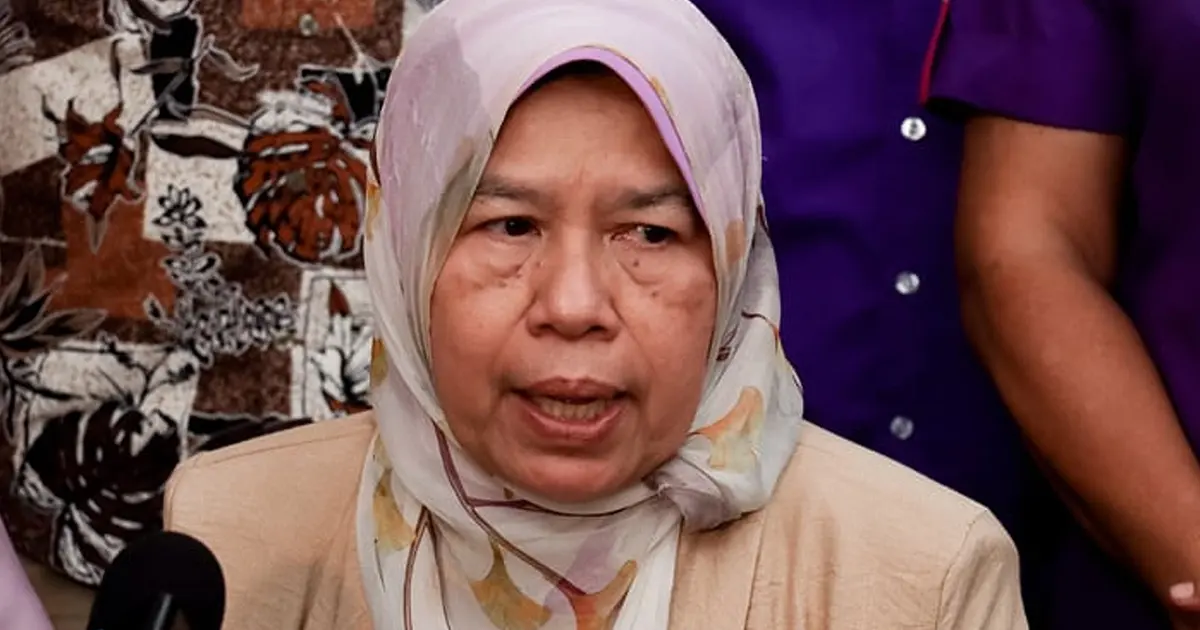
Zuraida Kamaruddin, who previously served as vice-president of the People's Justice Party, has emphatically stated that she will not be heeding Prime Minister Anwar Ibrahim's recent calls for disaffected party veterans to make a comeback. The declaration marks a definitive end to speculation about potential reconciliation between the politician and PKR, the party she once held senior office within.
Anwar Ibrahim has been actively working to rebuild PKR's internal cohesion and parliamentary strength by encouraging former members who departed under acrimonious circumstances to reconsider their positions. However, Zuraida's refusal demonstrates that at least some of the party's estranged figures have moved beyond the possibility of reconciliation, and their grievances may run too deep for dialogue to bridge. Her statement serves as a reality check on the success of the Prime Minister's broader reunion campaign.
The context of Zuraida's departure from PKR reflects broader factional tensions that have plagued the reformist party for years. Her exit occurred against a backdrop of internal disputes, strategic disagreements, and personal differences that had accumulated during her tenure within the leadership structure. Rather than being a isolated incident, her departure exemplifies the pattern of senior figures leaving PKR when their positions or policy preferences clash with the dominant faction.
For Malaysian political observers, Zuraida's rejection carries significance beyond her individual case. It suggests that some of PKR's most senior defectors have established themselves sufficiently within the political landscape that returning to their former party no longer represents an attractive option. Whether through ministerial positions elsewhere, alternative party structures, or other political arrangements, these veterans have found new homes and loyalties. The emotional and political investments in building new political identities and alliances make a backward step implausible.
The timing of Zuraida's statement is worth noting, as it comes during a period when PKR faces ongoing internal management challenges and parliamentary calculations remain tight. With government majorities dependent on careful coalition mathematics, losing former allies to defection or sustained estrangement weakens Anwar Ibrahim's hand in crucial negotiations. The Prime Minister's overtures to returning members should therefore be understood as strategic efforts to strengthen his legislative position rather than purely reconciliatory gestures.
Zuraida's political trajectory since leaving PKR offers insight into why she may feel no compulsion to reverse her decision. Having established herself in alternative political arrangements or roles, she possesses the autonomy and independence that party membership might constrain. Senior politicians who depart troubled parties often discover that independence offers greater freedom in decision-making and public positioning than remaining within hierarchical structures prone to factional conflict.
The broader implications for PKR suggest that the party's internal wounds remain unhealed despite any official narratives of reconciliation and moving forward. When prominent figures like Zuraida firmly shut the door on return, it signals to other potential defectors that exit is permanent and that bridges need not be rebuilt. This hardens factional lines and makes future reunification more difficult, creating a self-reinforcing cycle of separation.
Anwar Ibrahim's attempts to consolidate party strength come at a moment when Malaysian politics remains fluid and unpredictable. Coalition governments are inherently fragile, particularly when dependent on maintaining the loyalty of multiple partner parties and independent members. Any permanent loss of experienced parliamentarians represents a genuine strategic setback, even if not immediately catastrophic to government stability.
For regional observers watching Malaysian political developments, Zuraida's stance reflects typical patterns in Southeast Asian coalition governments, where party loyalty remains conditional and personal relationships often supersede formal party structures. Politicians calculate their advantage through multiple variables—ministerial prospects, constituency considerations, ideological alignment, and personal antagonisms all factor into decisions about party membership and political allegiances.
The incident also illustrates how Malaysian politics operates within a complex ecosystem where former allies can become persistent opponents, and where personality-driven politics often overwhelms institutional considerations. Zuraida's refusal to respond positively to Anwar's call indicates that whatever transpired during her PKR membership has created sufficient distance that official appeals cannot bridge. Her intransigence suggests the disputes were substantive rather than merely procedural disagreements susceptible to negotiated resolution.
Moving forward, Zuraida's confirmed exit from PKR permanently closes one possible avenue for party reorganisation. Other senior figures observing this dynamic may draw their own conclusions about the likelihood of successful reintegration. The political signal transmitted through her rejection may prove as consequential as any formal statement about party unity or reconciliation efforts.

