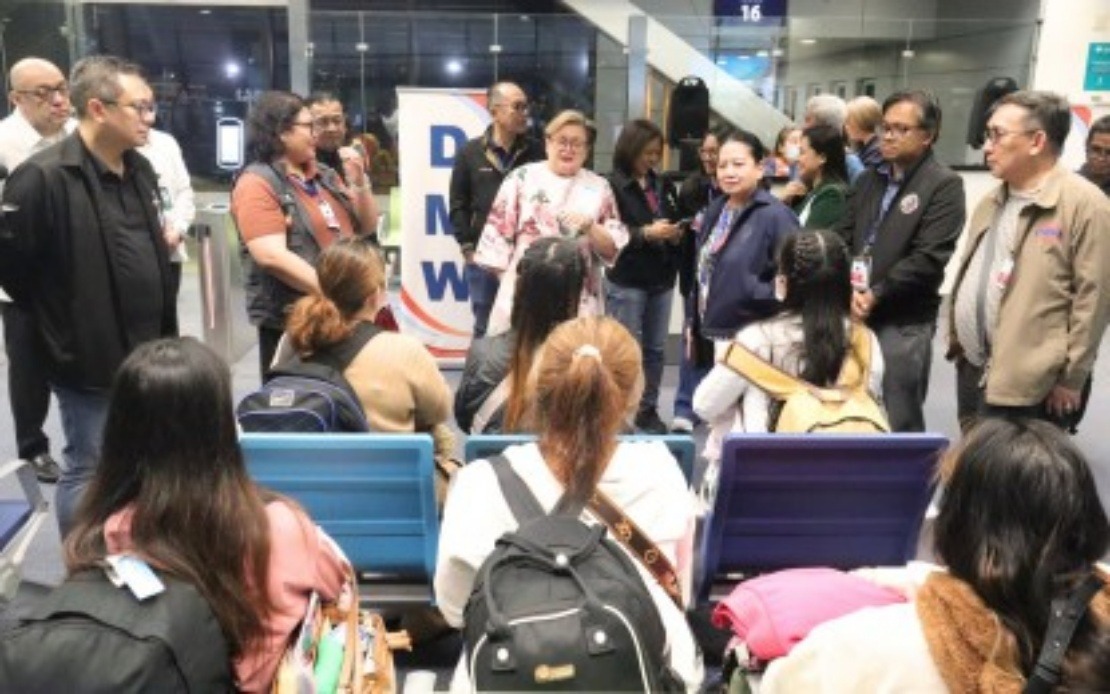
Twenty-four Filipino nationals have safely returned to the Philippines after spending approximately nine months in detention within Russia, marking a significant victory for diplomatic engagement between Manila and Moscow. The returnees landed at Ninoy Aquino International Airport in two separate flights from Bangkok on Sunday morning, with the repatriation occurring just days after President Ferdinand R. Marcos Jr personally addressed their case during bilateral discussions with Russian President Vladimir Putin at the ASEAN-Russia Commemorative Summit in Kazan.
The coordinated arrival underscored the level of high-level political will required to resolve such consular matters. Six Filipinos disembarked from Philippine Airlines Flight PR737 shortly after midnight, while the remaining 18 passengers arrived on PAL Flight PR733 in the early morning hours. Both flights originated from Bangkok, indicating that Russian authorities had moved the detainees to Thailand as an intermediary point before their final repatriation. Foreign Affairs Secretary Maria Theresa Lazaro and Migrant Workers Secretary Hans Cacdac were present at the airport to formally receive the returning nationals, signalling the government's commitment to the case.
The detained Filipinos had been held in the remote Russian city of Irkutsk, located in southeastern Siberia, for the entire period without facing any formal criminal charges. This absence of transparent legal proceedings had raised serious concerns within Philippine diplomatic circles about the conditions and justifications for their prolonged detention. Marcos publicly thanked Putin and the Russian government for facilitating their release, acknowledging the Kremlin's cooperation in resolving what could have become a protracted consular crisis between the two nations.
Initial investigations by Philippine authorities suggested that the workers had fallen victim to illegal recruitment schemes that eventually funneled them to Russia under false pretences. Rather than legitimate employment opportunities, they appear to have been taken into custody upon arrival by Russian immigration enforcement, facing potential violations of the country's immigration laws. The circumstances surrounding their recruitment and transportation reveal the continued vulnerability of Filipino migrant workers to sophisticated trafficking networks that exploit labour market demand across the region.
The case highlights broader challenges facing Southeast Asian nations in protecting their overseas workers. The Philippines, as the region's largest source of migrant labourers, regularly confronts situations where citizens become ensnared in exploitative recruitment networks. The operation that brought these individuals to Irkutsk demonstrates how such schemes can span multiple continents, with victims transported thousands of kilometres from home on the promise of work that never materialises. The nine-month detention period represented a severe ordeal for families left in the Philippines with minimal information about their relatives' whereabouts.
Diplomatic resolution required coordination across multiple Philippine government agencies and direct presidential-level intervention. The Department of Foreign Affairs led negotiations with Russian counterparts, while the Department of Migrant Workers and Overseas Workers Welfare Administration provided logistical and support functions. This institutional approach reflects the Philippines' institutional capacity for managing consular emergencies, though the case also reveals that such crises often require the highest levels of political engagement to achieve swift resolution.
The timing of the repatriation within the context of the ASEAN-Russia Commemorative Summit suggests that Marcos strategically leveraged the bilateral meeting to address the matter, demonstrating how regional forums can serve practical diplomatic purposes beyond their stated agendas. Putin's willingness to facilitate the release during a summit setting may also reflect broader geopolitical considerations, as Russia seeks to maintain functional relationships with Southeast Asian nations despite international sanctions and tensions.
Government officials have committed to providing comprehensive assistance and reintegration support to the returning nationals as they readjust to civilian life. The extended detention without charges represents a form of psychological trauma that extends beyond the physical ordeal. Returning workers will require counselling, job placement assistance, and potentially financial support to rebuild their lives and restore family relationships disrupted by months of separation and uncertainty.
The investigation into the recruitment and trafficking operation remains ongoing, with authorities committed to identifying the networks responsible for targeting these Filipinos. Understanding how the scheme operated, which agents facilitated the deception, and what financial arrangements underpinned the operation remains crucial for preventing similar incidents. The case underscores the need for stronger bilateral labour agreements that specify worker protections and establish clearer channels for consular intervention when nationals face legal difficulties abroad.
For Malaysian and broader Southeast Asian readers, this episode reinforces several cautionary lessons about overseas employment. While the Philippines maintains robust governmental agencies dedicated to migrant worker protection, the existence of such schemes demonstrates that even established safeguards remain inadequate against well-organised criminal networks. The incident also illustrates how isolation in foreign jurisdictions—particularly authoritarian or less transparent legal systems—can result in prolonged detention without accountability, a risk that extends to Malaysian migrant workers in certain destinations.
The successful repatriation ultimately reflects the effectiveness of high-level diplomatic channels when conventional consular processes prove insufficient. However, the nine-month timeline also suggests that such mechanisms activate slowly, leaving vulnerable citizens in precarious situations for extended periods. Regional governments continue developing improved early-warning systems and faster intervention protocols to prevent similar cases from protracted resolution cycles.
Moving forward, the Philippines and other ASEAN nations should prioritise strengthening bilateral labour agreements with destinations like Russia, establishing clearer protocols for consular access to detained nationals, and developing intelligence networks to identify and disrupt recruitment schemes before they transport workers across borders. The successful return of these 24 individuals represents closure for one case, but prevention remains the more effective approach for protecting Southeast Asia's massive migrant worker population from exploitation and unlawful detention.
%22%2F%3E%3C%2Fpattern%3E%3C%2Fdefs%3E%3Crect%20width%3D%22100%25%22%20height%3D%22100%25%22%20fill%3D%22url(%23ph5v36dg)%22%2F%3E%3Crect%20width%3D%22100%25%22%20height%3D%22100%25%22%20fill%3D%22url(%23ph5v36dp)%22%2F%3E%3Ctext%20x%3D%2250%25%22%20y%3D%2250%25%22%20text-anchor%3D%22middle%22%20dominant-baseline%3D%22central%22%20fill%3D%22rgba(255%2C255%2C255%2C0.95)%22%20font-family%3D%22Georgia%2C%20'Times%20New%20Roman'%2C%20serif%22%20font-weight%3D%22700%22%20font-size%3D%22151%22%20letter-spacing%3D%22-0.02em%22%3ENorwegian%3C%2Ftext%3E%3C%2Fsvg%3E)
%22%2F%3E%3C%2Fpattern%3E%3C%2Fdefs%3E%3Crect%20width%3D%22100%25%22%20height%3D%22100%25%22%20fill%3D%22url(%23ph34ksng)%22%2F%3E%3Crect%20width%3D%22100%25%22%20height%3D%22100%25%22%20fill%3D%22url(%23ph34ksnp)%22%2F%3E%3Ctext%20x%3D%2250%25%22%20y%3D%2250%25%22%20text-anchor%3D%22middle%22%20dominant-baseline%3D%22central%22%20fill%3D%22rgba(255%2C255%2C255%2C0.95)%22%20font-family%3D%22Georgia%2C%20'Times%20New%20Roman'%2C%20serif%22%20font-weight%3D%22700%22%20font-size%3D%22320%22%20letter-spacing%3D%22-0.02em%22%3EPM%3C%2Ftext%3E%3C%2Fsvg%3E)