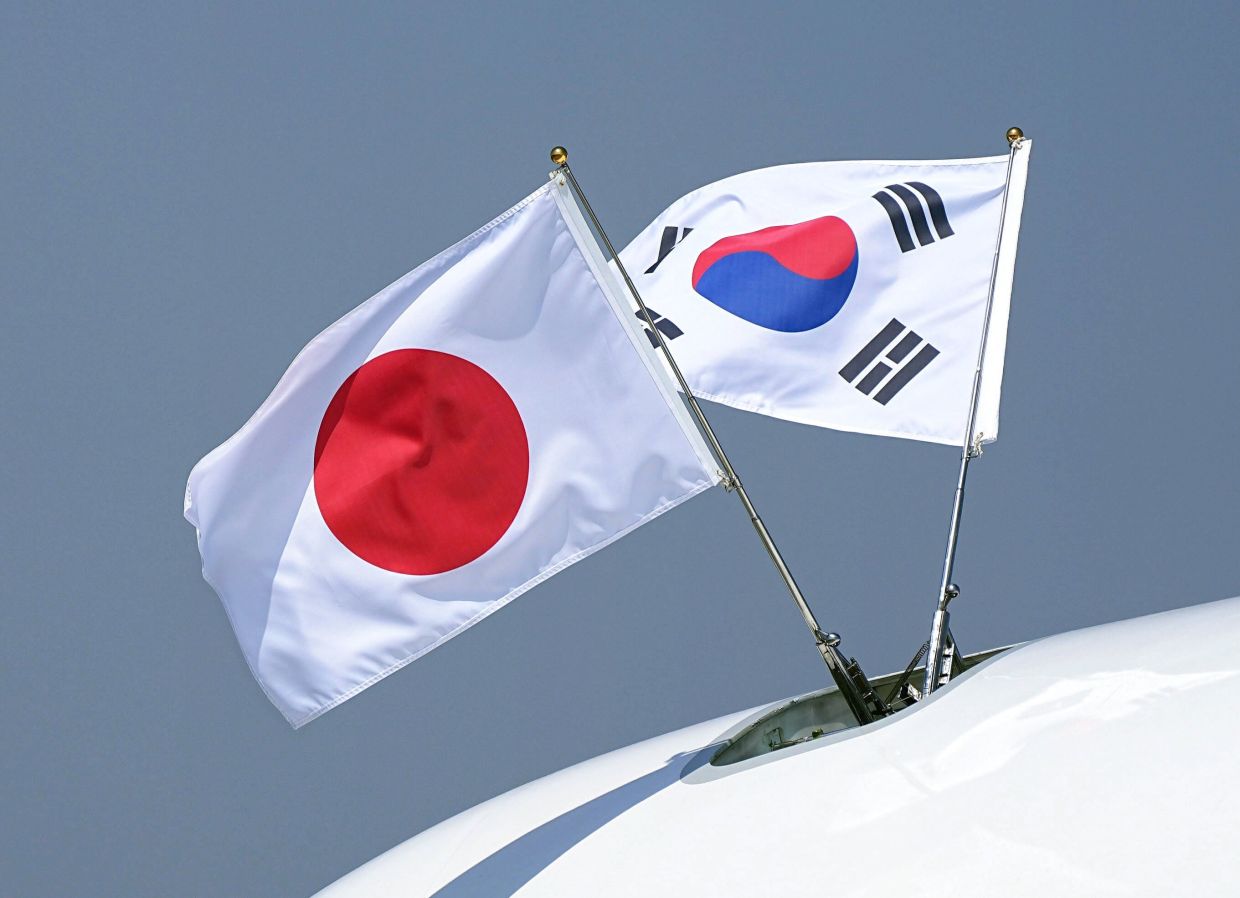
The consensus against nuclear weapons among Japan and South Korea's political and military establishment remains intact for now, but it rests on far shakier ground than official pronouncements suggest. A new survey from the Washington-based Center for Strategic and International Studies reveals a critical vulnerability in northeast Asian security architecture: the moment one major ally acquires atomic weapons, support for the same capability in the other could surge dramatically, potentially triggering an uncontrolled regional arms race with consequences exceeding even a significant withdrawal of American forces from the region.
The CSIS study, led by Victor Cha and Kristi Govella and released on Thursday, surveyed current and former government officials, parliamentarians, academics, think tank specialists and business leaders across both nations through October. The findings paint a portrait of strategic elites deeply uncomfortable with nuclear proliferation in their own backyards. Roughly 75 percent of South Korean respondents and nearly 80 percent of Japanese respondents opposed or expressed uncertainty about their countries developing nuclear arsenals. This apparent consensus, however, masks a profound sensitivity to shifting circumstances that could unravel the fragile restraint.
The disjuncture between elite opinion and public sentiment in South Korea throws the stability of this arrangement into sharp relief. While three-quarters of strategic decision-makers rejected nuclear acquisition, a 2024 Gallup poll commissioned by the Chey Institute for Advanced Studies found that over 72 percent of ordinary South Koreans supported their nation obtaining nuclear weapons. This gap reflects fundamentally different threat assessments: ordinary citizens facing the immediate reality of North Korean military capabilities may see nuclear weapons as insurance against conventional superiority, whereas elites weigh broader regional and alliance considerations. Japan presents a notably different picture, with public and elite opinion largely aligned. Approximately 80 percent of the Japanese public similarly opposes nuclear weapons development, suggesting that media reports claiming significant momentum within Japanese policy circles toward nuclear armament have distorted the actual landscape of institutional opinion.
Yet the CSIS analysis emphasises that this restraint is conditional rather than principled. The survey discovered a striking vulnerability: should neighbouring countries alter their nuclear policies, the carefully maintained consensus could evaporate. This cascade effect creates a profound strategic dilemma for regional stability. South Korean respondents who did support nuclear weapons overwhelmingly cited the need to counter North Korea's growing arsenal and delivery capabilities, while Japanese supporters focused on uncertainty surrounding long-term American security commitments in the region. These divergent motivations suggest that proliferation would follow different triggers in each country, complicating any diplomatic effort to prevent it.
The timing of the CSIS survey's release proved significant, coinciding with stepped-up American engagement on nuclear matters across northeast Asia. The United States conducted bilateral meetings in Seoul earlier this month to advance consultations on nuclear cooperation initiatives with South Korea, followed by an extended deterrence dialogue in Tokyo with Japan. These discussions represent Washington's effort to reinforce its security commitments and reassure allies that American nuclear protection remains credible and permanent. The underlying message to both nations is unmistakable: they need not pursue independent nuclear arsenals because American strategic forces will provide the ultimate security guarantee.
However, China's repeated accusations that Japan is pursuing remilitarisation, including nuclear weapons development, complicate Washington's reassurance strategy. Beijing's willingness to frame any Japanese strategic ambition as inherent aggression creates an environment where perception shapes behaviour as much as material capabilities do. When Chinese state media and officials regularly warn that Tokyo is preparing to go nuclear, they plant seeds of doubt about Japanese intentions that affect not only Chinese calculations but also the domestic political space within Japan itself.
American nuclear strategy itself is undergoing significant reassessment, with implications for how Washington manages its Asian alliances. Brandon Williams, Under Secretary for Nuclear Security at the Department of Energy and Administrator of the National Nuclear Security Administration, announced on Thursday that the United States must accelerate nuclear weapons production to counter unspecified threats. His agency plans to invest 600 million US dollars in artificial intelligence this year to digitalise nuclear weapons design and production, aiming to compress the current decade-plus timeline for developing new warheads. This pivot toward expanded nuclear capability, even as Washington urges its allies to forego their own arsenals, sends mixed signals about American long-term intentions.
Adding another layer to the nuclear equation, CSIS experts argued that Washington should reconsider its policy of arming hypersonic missiles exclusively with conventional warheads. Heather Williams, director of the CSIS project on nuclear issues, contended that deploying nuclear-armed hypersonic weapons would strengthen American deterrence by increasing response uncertainty for adversaries and diversifying available strike options. She argued that a more credible and robust American nuclear arsenal would paradoxically reassure allies, making them less inclined to pursue proliferation. This logic assumes that security assurance flows directly from demonstrated capability, yet the survey evidence suggests that elite fears about American commitment transcend mere technical capacity.
The strategic implications for Southeast Asia and the broader region extend well beyond bilateral US-Japan or US-South Korea relationships. A nuclear cascade in northeast Asia would fundamentally alter the regional balance and potentially trigger proliferation elsewhere. Countries like South Vietnam during the Cold War sought nuclear weapons not from technical ambition but from existential fear and alliance uncertainty. Should Japan and South Korea simultaneously develop nuclear arsenals, regional actors from Taiwan to the Philippines might recalculate whether American protection provides sufficient insurance or whether indigenous capabilities become necessary. The resulting proliferation spiral would devastate the Non-Proliferation Treaty regime and create unmanageable risks.
The CSIS survey also exposed how divergent threat perceptions complicate unified regional strategy. South Korea's focus on North Korean capabilities and Japan's preoccupation with American staying power reflect different geopolitical positions, even as both nations remain American allies. This suggests that no single reassurance package from Washington will satisfy both countries' security concerns. South Korea requires assurances against North Korean aggression; Japan requires certainty that the US will ultimately defend Japanese territory against China. Meeting both demands simultaneously strains American capability and global commitments.
China's repeated refusal to join nuclear arms control negotiations and its consistent resistance to any agreement limiting its own arsenal create another complicating factor. Washington has persistently pressed Beijing to participate in negotiations, yet China maintains that discussing its weapons is premature given American and Russian arsenals dwarf its own stockpile. This stance essentially guarantees that any regional nuclear arrangement will remain incomplete, lacking the participation of the power most capable of destabilising northeast Asia.
The CSIS findings ultimately suggest that northeast Asian nuclear stability depends not on the inherent preferences of elites in Tokyo or Seoul but on the preservation of circumstances that make those preferences rational. The moment American commitment appears doubtful, or North Korean threats escalate beyond current levels, or China's aggressive posturing intensifies, the carefully maintained consensus against proliferation could collapse. This fragility underscores why American policy toward the region must emphasise not merely military deployments but credible, sustained commitment to allied security. Without it, the survey's comforting statistics about elite opposition to nuclear weapons may prove merely a snapshot of temporary arrangements rather than a durable foundation for regional peace.
%22%2F%3E%3C%2Fpattern%3E%3C%2Fdefs%3E%3Crect%20width%3D%22100%25%22%20height%3D%22100%25%22%20fill%3D%22url(%23ph5vnqfg)%22%2F%3E%3Crect%20width%3D%22100%25%22%20height%3D%22100%25%22%20fill%3D%22url(%23ph5vnqfp)%22%2F%3E%3Ctext%20x%3D%2250%25%22%20y%3D%2250%25%22%20text-anchor%3D%22middle%22%20dominant-baseline%3D%22central%22%20fill%3D%22rgba(255%2C255%2C255%2C0.95)%22%20font-family%3D%22Georgia%2C%20'Times%20New%20Roman'%2C%20serif%22%20font-weight%3D%22700%22%20font-size%3D%22272%22%20letter-spacing%3D%22-0.02em%22%3EMITRA%3C%2Ftext%3E%3C%2Fsvg%3E)
%22%2F%3E%3C%2Fpattern%3E%3C%2Fdefs%3E%3Crect%20width%3D%22100%25%22%20height%3D%22100%25%22%20fill%3D%22url(%23ph3s7kbg)%22%2F%3E%3Crect%20width%3D%22100%25%22%20height%3D%22100%25%22%20fill%3D%22url(%23ph3s7kbp)%22%2F%3E%3Ctext%20x%3D%2250%25%22%20y%3D%2250%25%22%20text-anchor%3D%22middle%22%20dominant-baseline%3D%22central%22%20fill%3D%22rgba(255%2C255%2C255%2C0.95)%22%20font-family%3D%22Georgia%2C%20'Times%20New%20Roman'%2C%20serif%22%20font-weight%3D%22700%22%20font-size%3D%22320%22%20letter-spacing%3D%22-0.02em%22%3ERim%3C%2Ftext%3E%3C%2Fsvg%3E)