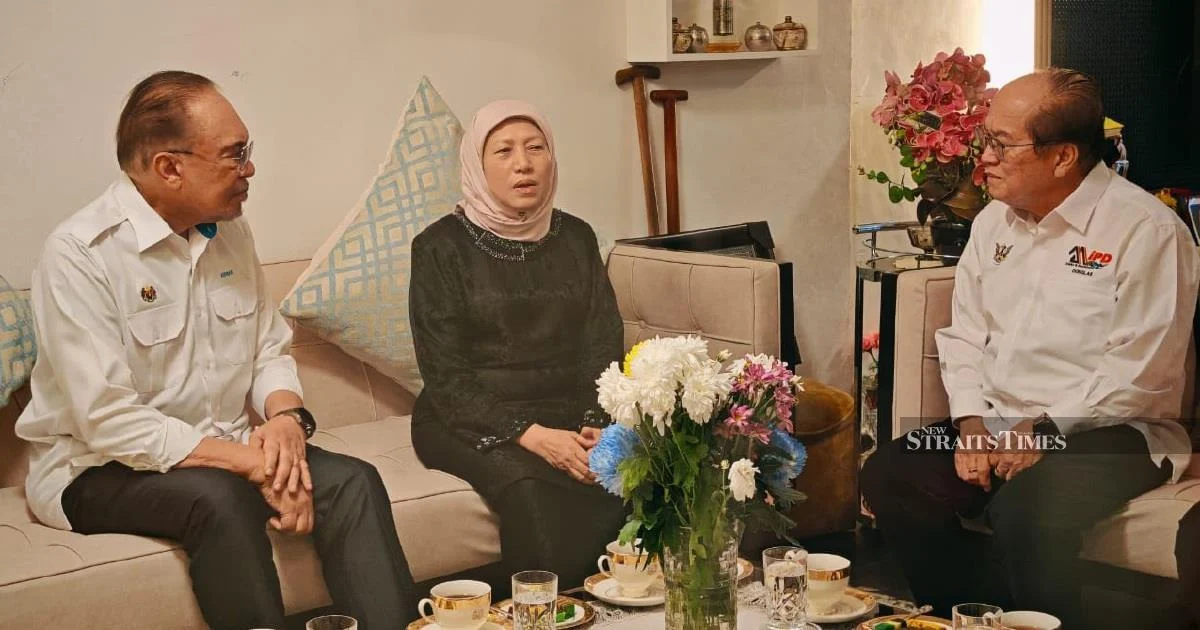
Prime Minister Datuk Seri Anwar Ibrahim travelled to Kuching to offer his sympathies to Women, Family and Community Development Minister Datuk Seri Nancy Shukri, whose husband Datuk Kamil Misuari has recently passed away. The visit underscores the personal bonds that continue to characterise Malaysia's political establishment, even as the government navigates competing pressures and policy priorities.
Such condolence visits from the nation's top leadership carry symbolic weight in Malaysian political culture, reflecting both human compassion and institutional respect. The gesture signals Anwar's acknowledgment of Shukri's loss during what is inevitably a challenging period for her and her family. In the Malaysian context, where personal relationships and hierarchy remain important within the political sphere, a prime ministerial visit to a cabinet member's residence constitutes a meaningful expression of solidarity and support.
Nancy Shukri has held the portfolio of Women, Family and Community Development since the formation of the current administration, making her a key figure in the government's social policy agenda. Her tenure has encompassed oversight of women's rights, family welfare initiatives, and community development programmes across Malaysia. The loss of her spouse presents both personal hardship and potential operational implications for her ministerial responsibilities during what may be a period requiring her focused attention on family matters.
Datuk Kamil Misuari's passing represents a loss to both Shukri's immediate family and the broader networks with which they have been associated over the years. While details about his background and contributions remain limited in public records, such losses inevitably affect the families of Malaysia's political and administrative elite, reminding observers that personal tragedy touches all segments of society regardless of professional standing.
Anwar's decision to undertake the journey to Sarawak for this visit demonstrates the priority placed on maintaining collegial relationships within cabinet ranks. The Prime Minister's office frequently balances competing demands across the federation, making deliberate travel to pay personal respects a notable allocation of time and resources. This type of engagement helps sustain the networks of goodwill essential for effective governance within any cabinet structure.
Condolence visits also serve as informal opportunities for political leaders to demonstrate their human dimension beyond policy execution and legislative oversight. Such moments, captured and reported through official and media channels, contribute to how the public perceives their leaders' character and capacity for empathy. In Malaysia's politically charged environment, where public perception remains vital to political sustainability, these gestures function at multiple levels simultaneously.
The relationship between Anwar and Shukri spans the tenure of the current administration, during which they have collaborated on various government initiatives. Whether their relationship extends beyond the professional realm into genuine personal friendship, or operates primarily through the conventions of high office, such visits help reinforce institutional cohesion. In any government, maintaining solid relationships among senior ministers facilitates smoother policy implementation and reduces friction that might otherwise impede administrative effectiveness.
For Malaysian observers of politics, condolence visits also provide windows into the social structures that govern the country's leadership class. They reveal which relationships merit personal attention from the nation's highest office and how the Prime Minister allocates his limited time. The choice to visit Shukri rather than sending a representative or message alone speaks to how Anwar positions certain relationships within his administration.
Such events also occur against the backdrop of Malaysia's diverse and complex political landscape, where maintaining unity across different regional constituencies and political groupings remains perpetually challenging. Sarawak, in particular, retains distinctive political dynamics that the federal government must carefully navigate. A prime ministerial visit to one of the state's prominent federal ministers carries additional resonance for local stakeholders and observers.
The timing and nature of Anwar's visit reflect broader patterns in how Malaysia's contemporary political leadership manages the intersection of personal dignity and public duty. While cabinet members must navigate loss and grief like any citizens, their positions require them to eventually resume full responsibilities. Anwar's visit acknowledges this human reality while subtly affirming his expectation that Shukri will continue her ministerial functions in due course.
%22%2F%3E%3C%2Fpattern%3E%3C%2Fdefs%3E%3Crect%20width%3D%22100%25%22%20height%3D%22100%25%22%20fill%3D%22url(%23ph5v36dg)%22%2F%3E%3Crect%20width%3D%22100%25%22%20height%3D%22100%25%22%20fill%3D%22url(%23ph5v36dp)%22%2F%3E%3Ctext%20x%3D%2250%25%22%20y%3D%2250%25%22%20text-anchor%3D%22middle%22%20dominant-baseline%3D%22central%22%20fill%3D%22rgba(255%2C255%2C255%2C0.95)%22%20font-family%3D%22Georgia%2C%20'Times%20New%20Roman'%2C%20serif%22%20font-weight%3D%22700%22%20font-size%3D%22151%22%20letter-spacing%3D%22-0.02em%22%3ENorwegian%3C%2Ftext%3E%3C%2Fsvg%3E)

%22%2F%3E%3C%2Fpattern%3E%3C%2Fdefs%3E%3Crect%20width%3D%22100%25%22%20height%3D%22100%25%22%20fill%3D%22url(%23ph34ksng)%22%2F%3E%3Crect%20width%3D%22100%25%22%20height%3D%22100%25%22%20fill%3D%22url(%23ph34ksnp)%22%2F%3E%3Ctext%20x%3D%2250%25%22%20y%3D%2250%25%22%20text-anchor%3D%22middle%22%20dominant-baseline%3D%22central%22%20fill%3D%22rgba(255%2C255%2C255%2C0.95)%22%20font-family%3D%22Georgia%2C%20'Times%20New%20Roman'%2C%20serif%22%20font-weight%3D%22700%22%20font-size%3D%22320%22%20letter-spacing%3D%22-0.02em%22%3EPM%3C%2Ftext%3E%3C%2Fsvg%3E)