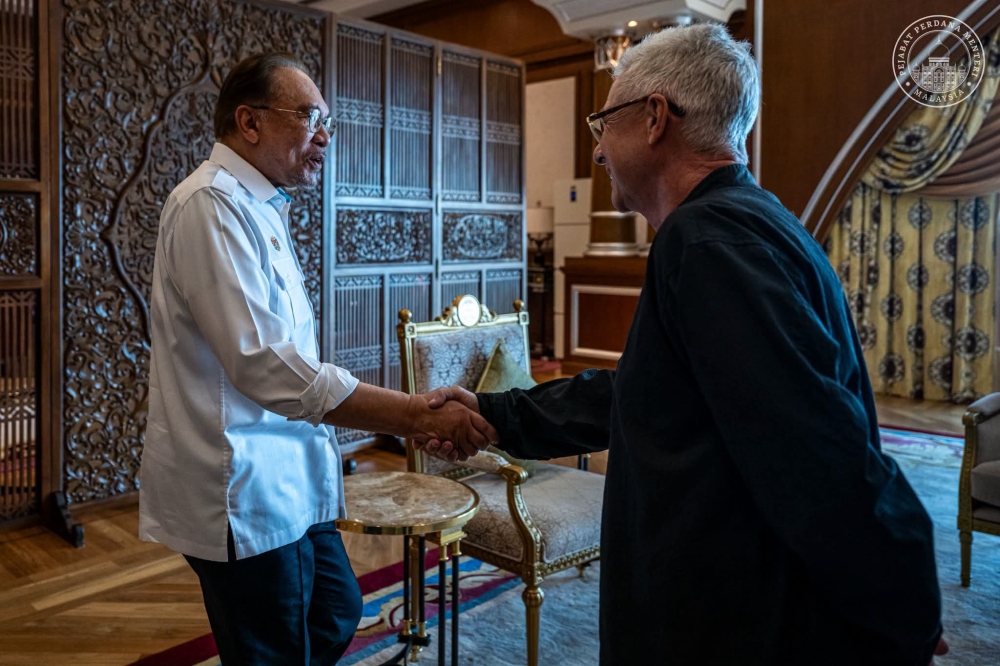
Prime Minister Datuk Seri Anwar Ibrahim held talks with senior leadership from the Singapore Grand Prix yesterday, underscoring the government's commitment to restoring Malaysia's position on the prestigious Formula 1 racing circuit. The meeting reflects broader efforts by the administration to revitalise sporting infrastructure and position the nation as a premier destination for world-class motorsport events.
The dialogue comes as Malaysia prepares for what could be a transformative moment in its motorsport history. After a prolonged absence from the F1 calendar, the prospect of races returning to Sepang International Circuit represents not merely a sporting comeback but a strategic economic and diplomatic initiative. For nearly a decade, the Malaysian Grand Prix vanished from the F1 schedule, leaving a significant gap in the region's racing calendar and depriving the nation of the international prestige and economic benefits such marquee events generate.
Engagements at this level between government and international motorsport stakeholders typically signal serious groundwork for negotiations. By meeting with the Singapore Grand Prix leadership, Anwar was effectively strengthening bilateral relationships within the regional motorsport ecosystem whilst simultaneously gathering insights from a neighbouring nation that has successfully maintained and expanded its own F1 commitment. Singapore's Marina Bay Circuit has become a hallmark event on the F1 calendar, demonstrating the political will and financial capacity required to host such demanding competitions.
The restoration of Malaysia's F1 racing calendar carries significant implications beyond the paddock. Such international sporting events serve as catalysts for tourism, hospitality, and aviation sectors whilst generating substantial employment opportunities throughout the year. Infrastructure investments required to meet F1 standards—from circuit maintenance to telecommunications and security systems—benefit local communities and modernise regional transportation networks. Additionally, hosting F1 races elevates a nation's global profile and provides diplomatic platforms for high-level interactions with international dignitaries and business leaders.
Sepang International Circuit, located within the Kuala Lumpur metropolitan region, possesses the technical specifications and facilities required for contemporary F1 racing. The venue has previously hosted grand prix events that attracted international media attention and substantial spectator numbers. Revitalising this asset aligns with the government's broader infrastructure modernisation agenda and represents efficient utilisation of existing sporting infrastructure rather than requiring entirely new construction projects.
Regional competition for F1 events has intensified in recent years. Several Southeast Asian nations have expressed interest in hosting races or developing new circuits, creating a competitive landscape where governments must demonstrate commitment through both policy support and infrastructural development. Malaysia's historical association with F1 and the existing capabilities at Sepang position the country advantageously, provided that government backing translates into concrete funding arrangements and regulatory frameworks that satisfy international motorsport authorities.
The timing of such discussions also reflects broader economic considerations. Post-pandemic recovery has prompted renewed focus on entertainment and sporting events as drivers of economic activity. International tourism has rebounded strongly across Southeast Asia, creating favourable conditions for hosting large-scale sporting events that attract global audiences both in person and through broadcast media. Malaysia's geographic position, accessibility, and tourism infrastructure make it an attractive destination for F1 stakeholders evaluating regional expansion opportunities.
Motouring organisations and circuit operators typically require comprehensive assurances regarding government support, including financial guarantees, regulatory certainty, and long-term commitment before confirming race calendar inclusions. By engaging directly with Singapore's F1 leadership, Anwar was demonstrating at the highest political level that Malaysia takes such considerations seriously. These conversations frequently establish frameworks for more detailed discussions between sporting authorities, government agencies, and circuit operators that follow in subsequent months.
The Formula 1 calendar has evolved significantly since Malaysia's previous hosting period, with new technical requirements and safety standards now expected at all circuits. Meeting these criteria may necessitate capital investments in circuit upgrades, enhanced medical facilities, improved broadcasting infrastructure, and expanded hospitality areas. Such modernisation projects represent opportunities for domestic contractors and suppliers whilst ensuring that Sepang maintains competitive parity with other world-class F1 venues.
Stakeholders across Malaysia's motorsport and tourism sectors will be closely monitoring the trajectory of these discussions. Successful F1 calendar reinstatement would provide validation of Malaysia's commitment to sporting excellence and position the nation as a serious contender for hosting other major international events. Furthermore, a thriving motorsport ecosystem creates pipeline opportunities for talent development, manufacturing capabilities, and ancillary industries that support competitive racing at all levels.
The government's visible engagement with international motorsport leadership suggests that F1 restoration is not merely a peripheral ambition but rather a strategic priority within broader economic development frameworks. How these discussions translate into concrete agreements and timelines will determine whether Sepang's return to the F1 calendar becomes reality in the near term or requires extended negotiation processes. The meeting with Singapore's Grand Prix leadership represents a significant early indicator of momentum.

