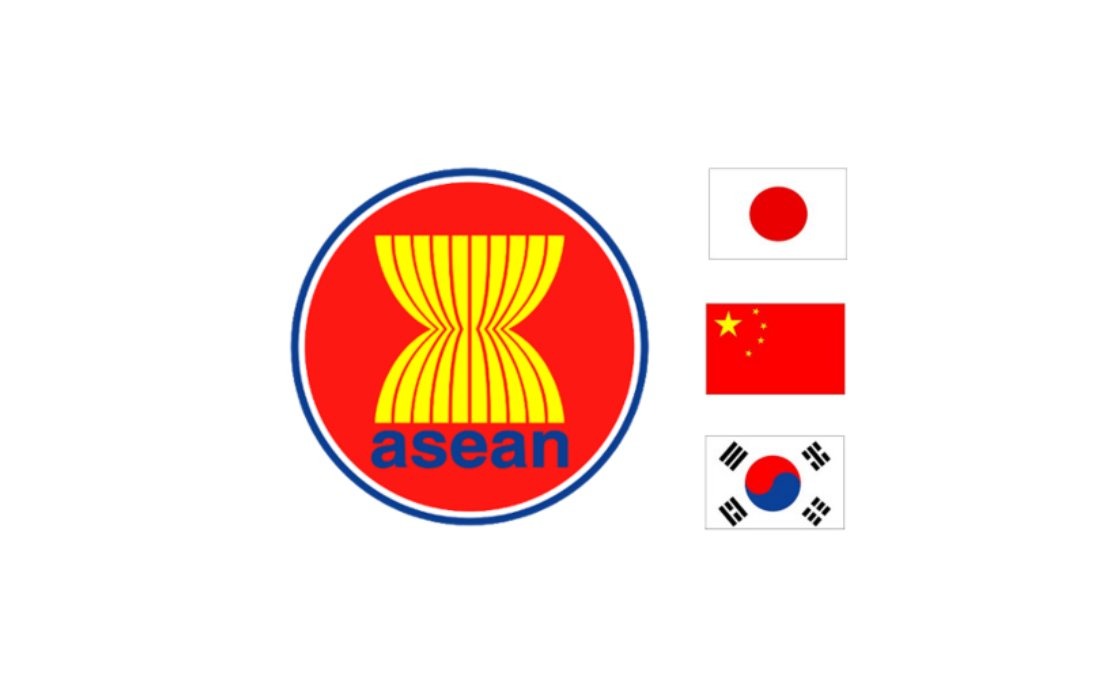
As artificial intelligence reshapes the contours of global commerce, a regional research body has sounded an urgent warning: ASEAN+3 economies risk becoming increasingly trapped within a dollar-denominated financial ecosystem unless they act swiftly to coordinate policies across AI development, energy systems and digital payments. The ASEAN+3 Macroeconomic Research Office released commentary on Thursday flagging how commercial decisions by major AI companies, cloud computing providers and international payment networks are quietly reconstructing the world's monetary architecture around the US currency, potentially locking out smaller regional players.
The concern highlights a subtle but consequential shift in how globalisation operates in the artificial intelligence era. Unlike traditional trade or investment flows that governments can more directly influence through tariffs or capital controls, the infrastructure choices made by technology giants create self-reinforcing economic patterns that are far harder to dislodge. When cloud providers establish their data centres in dollar zones, when AI training systems operate on dollar-based cloud platforms, and when payment networks settle transactions in dollars, emerging economies find themselves with limited alternatives. AMRO's analysis suggests that without deliberate intervention, ASEAN+3 members—comprising the ten ASEAN nations plus China, Japan and South Korea—could drift further into monetary dependence on Washington.
Yet the research office's message also carries a note of possibility. While AMRO acknowledges that the region cannot entirely prevent this dollar-centric loop from consolidating, it argues that coordinated action can substantially limit exposure to it. This framing matters for policymakers in Malaysia, Thailand, Indonesia and other regional economies: the problem is not inevitable, but requires unified strategic thinking. The commentary calls for a comprehensive approach that treats energy infrastructure, artificial intelligence capacity and payment systems not as separate policy domains but as interconnected components of a single framework aimed at strengthening digital sovereignty.
The energy dimension deserves particular attention given Malaysia and Southeast Asia's energy-intensive trajectory. AMRO recommends that ASEAN+3 economies expand regional data centre capacity powered by affordable and increasingly renewable energy sources. This proposal addresses a critical bottleneck: the cost and availability of computing power directly shapes which companies and countries can participate in the AI boom. By building regional data centre infrastructure fuelled by cleaner energy, countries reduce both the financial drain of relying on foreign cloud providers and the carbon footprint of their digital economy. For Malaysia specifically, this could leverage the nation's hydroelectric resources and growing renewable capacity to position itself as a hub for Southeast Asian data processing rather than remaining a consumer of foreign computing services.
Parallel to energy infrastructure, developing local-currency tokenised payment systems represents the second pillar of AMRO's proposed strategy. Such systems would harness blockchain or similar technologies to enable commerce denominated in Malaysian ringgit, Thai baht, Indonesian rupiah or regional currencies rather than defaulting to dollars. The appeal extends beyond national prestige: businesses operating in local currencies avoid the currency conversion costs, hedging risks and exposure to US monetary policy that currently burden regional traders. More subtly, maintaining payment flows in local currencies preserves regulatory oversight. When transactions occur within dollar-dominated networks controlled by foreign entities, national central banks and financial authorities lose visibility and control over capital movements within their own economies. Local-currency payment infrastructure restores that capacity.
The concept of "agentic commerce" mentioned in AMRO's commentary refers to transactions conducted by autonomous AI systems making purchasing and sales decisions without direct human intervention. As AI becomes more sophisticated, these automated economic interactions will proliferate. If such commerce defaults to dollar settlements, the regional consequences compound over time: fewer transactions occur in local currencies, less commerce is visible to local regulators, and businesses gain less pricing power. By developing payment infrastructure explicitly designed to support AI-driven commerce in local currencies, ASEAN+3 economies can ensure that the profits and oversight of this emerging economic layer remain partially within regional hands.
Implementing this strategy requires coordination that goes beyond conventional regional frameworks. Energy policy, AI regulation and financial infrastructure have historically fallen under separate ministerial and bureaucratic silos. Yet AMRO's recommendation treats them as interdependent: energy costs determine whether regional data centres can compete with American alternatives, data centre capacity determines whether local AI research and development can flourish, and payment infrastructure determines whether the economic benefits of that activity flow through regional financial systems. For Malaysia and its ASEAN neighbours, this integrated approach demands dialogue between energy ministries, telecommunications regulators, central banks and tech policy bodies—institutions that rarely coordinate on the scale required.
The timing of AMRO's intervention carries significance. Artificial intelligence investment and deployment remain in relatively early stages across much of Southeast Asia, meaning the window to shape how these systems integrate with regional financial infrastructure remains partly open. If policymakers delay, the default infrastructure—largely American—will calcify through network effects and business momentum. Within two to three years, most regional AI deployment may have become dependent on American cloud platforms, dollar-based payment networks and imported computing power. By contrast, proactive investment now in data centre capacity, local payment systems and energy integration could entrench a different pattern before it becomes prohibitively expensive to change.
For Malaysia specifically, the implications deserve serious consideration. The nation's tech sector has matured considerably, with homegrown companies increasingly competing regionally in software and services. Malaysian financial institutions and fintech firms possess the expertise to develop tokenised payment systems. And Malaysia's energy sector, while facing transition challenges, possesses sufficient capacity to power regional data centre expansion. Rather than passively accepting dollar dominance in the AI economy, Malaysia could position itself as a convener and participant in ASEAN+3 efforts to build regional alternatives. Such positioning would enhance the nation's strategic autonomy while creating new economic opportunities in the emerging digital landscape.
The broader context involves shifting geopolitical dynamics. China, Japan and South Korea bring substantial technological capacity and capital to ASEAN+3 initiatives, while ASEAN itself represents a market of over 650 million people and growing digital sophistication. Coordinated effort around AI, energy and payments could elevate ASEAN+3 as a consequential economic bloc capable of shaping how artificial intelligence integrates with global finance, rather than merely absorbing whatever infrastructure arrangements American technology companies design. This is not about rejecting the US dollar or Western technology—both will remain important—but about ensuring the region retains strategic choice and sufficient local economic capacity to participate in the AI boom on terms that reflect regional interests.

