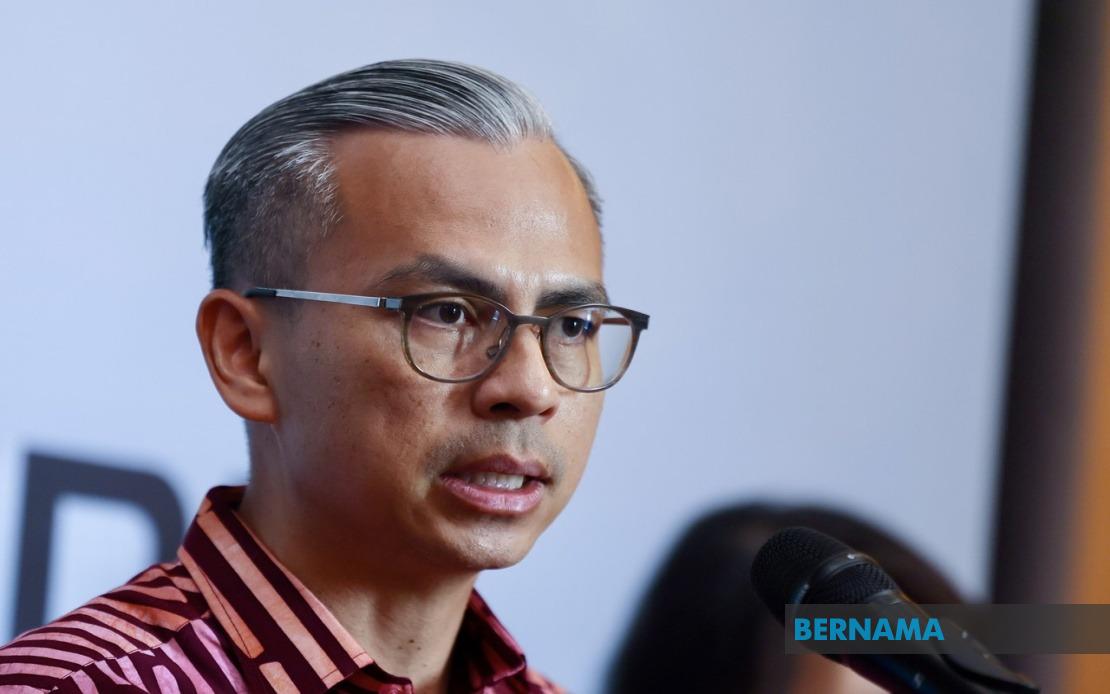
Bank customers encountering RM1 charges for cash withdrawals at automated teller machines should immediately report the matter to Bank Negara Malaysia, Communications Minister Datuk Fahmi Fadzil announced at a press briefing in Kuala Lumpur on July 2. The directive comes after a long-awaited waiver of interbank ATM fees officially commenced the previous day, sparking questions from consumers about implementation inconsistencies across the banking sector. Fahmi emphasised that BNM possesses the regulatory authority to pursue enforcement action against any financial institution failing to honour the policy.
The fee waiver represents a significant milestone in Malaysia's ongoing efforts to enhance financial accessibility and reduce hidden banking charges that have long frustrated retail customers. Under the new arrangement, withdrawals made at any bank-owned ATM participating in the shared network incur no additional charge, fundamentally reshaping how Malaysians access their own funds. This development comes after sustained public pressure and advocacy from consumer groups, who argued that such fees disproportionately affected lower-income households and discouraged the use of formal banking channels.
According to Fahmi's clarification, the waiver applies exclusively to ATMs owned and operated by banks that are participants in the shared automated teller machine network. This distinction is crucial for consumers to understand, as it delineates which machines fall under the new regime and which do not. The minister noted that approximately 84 per cent of all bank-owned ATMs nationwide—representing nearly 16,000 machines—now operate under this fee-free arrangement, reflecting substantial coverage across urban and suburban areas where banking infrastructure tends to be concentrated.
The remaining 16 per cent of ATMs, however, continue to impose the RM1 withdrawal fee. These machines are operated by non-bank private companies functioning under distinct commercial agreements that fall outside the scope of BNM's regulatory framework governing traditional banking networks. This creates a two-tier system that customers must navigate carefully to avoid unexpected charges. Private operators argue that the maintenance and operational costs of their standalone machines justify the fee, a position that has generated ongoing debate within the financial services community regarding whether such charges represent fair cost recovery or exploitative pricing.
To prevent confusion and unintended charges, Fahmi advised customers to carefully identify which ATMs fall under the fee-free category by looking for bank logos displayed prominently on the machines. This practical guidance reflects real-world challenges faced by consumers who may not instinctively know whether a particular machine is bank-owned or independently operated. The distinction has proven especially important in shopping malls, commercial hubs, and other venues where multiple ATM operators coexist in close proximity, creating potential for error when customers are in a hurry or unfamiliar with their surroundings.
The public enquiries that prompted Fahmi's clarification underscore broader consumer confusion about the policy's application across different banking scenarios. Social media discussions had generated considerable debate about whether certain banks were complying with the waiver, with anecdotal reports of continued charges in some instances. These queries suggest that while the policy direction is clear, its practical implementation remains uneven, requiring ongoing vigilance from both regulators and consumers to ensure compliance across the entire banking ecosystem.
The Association of Banks in Malaysia and the Malaysian Islamic Banking and Financial Institutions Association are anticipated to release a joint statement soon that will elaborate on implementation specifics and provide updated guidance to member institutions. This coordinated approach by industry bodies is intended to establish common standards and prevent a patchwork of divergent practices that could further confuse customers. The statement is expected to address particular scenarios and edge cases that have generated enquiries from both retail and corporate customers.
For Malaysian consumers, this development carries tangible implications for household finances and banking convenience. Over the course of a year, eliminating RM1 charges on multiple interbank withdrawals can result in meaningful savings, particularly for individuals who regularly need to access cash from ATMs outside their primary bank's network. The policy thus functions as a form of implicit cost-of-living assistance that reduces the cumulative burden of hidden banking fees. From a policy perspective, the waiver signals renewed government commitment to ensuring that financial services remain accessible and affordable to all segments of society.
In a related development, Fahmi highlighted Malaysia's emerging position as a destination for technology investment, noting that an international financial technology company has established a Global Development Centre at Tun Razak Exchange. This facility is designated to focus on digital talent development and fintech innovation, particularly in the specialised area of Agentic AI. The announcement reflects confidence among global technology investors in Malaysia's regulatory environment and political stability, factors that have historically influenced decisions about where to locate significant investment commitments.
Fahmi attributed this investment confidence to the MADANI Government's economic policies and demonstrated commitment to maintaining stable governance conditions. The decision by a major international fintech firm to establish its first global centre of this magnitude in Malaysia carries symbolic and economic weight, suggesting that the nation's positioning within the regional technology ecosystem remains attractive despite regional competition from Singapore and other established tech hubs. The facility is expected to generate high-value employment opportunities and contribute to building Malaysia's indigenous expertise in cutting-edge financial technology applications.
The convergence of these two policy announcements—the ATM fee waiver and the fintech investment—illustrates the government's dual focus on immediate consumer welfare alongside longer-term structural development of the financial system. While the ATM initiative addresses immediate practical concerns affecting retail banking, the fintech investment signals confidence in Malaysia's ability to compete at the frontiers of financial innovation. Together, these developments suggest a comprehensive approach to modernising Malaysia's financial sector from both consumer and technological perspectives, with implications extending across Southeast Asia's increasingly integrated digital economy.

