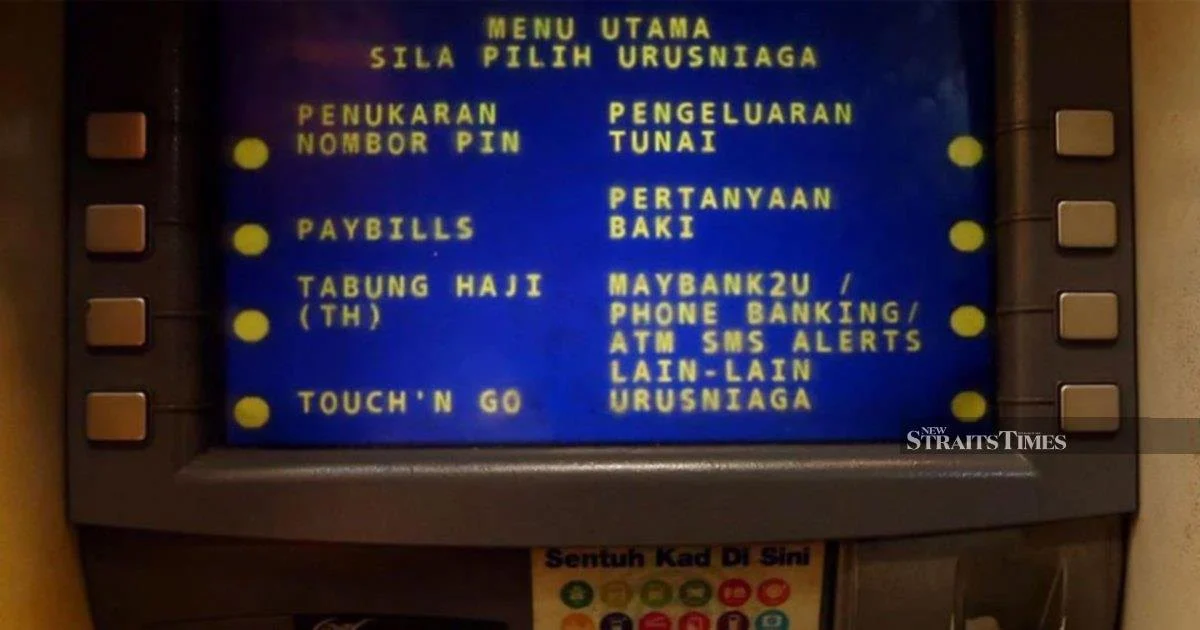
Bank Negara Malaysia is urging the public to report instances where they are being charged the RM1 interbank withdrawal fee at automated teller machines belonging to their own banks, Communications Minister Datuk Fahmi Fadzil announced. The directive signals renewed regulatory scrutiny over billing practices that may contravene existing guidelines on ATM usage, and reflects growing concerns about consumer complaints regarding unexpected charges on routine banking transactions.
This advisory comes amid broader efforts by Malaysia's central bank to ensure that banks comply with established rules governing automated teller services. Under the current framework, customers should not incur charges when withdrawing funds from machines operated by their own financial institution, making any such fees a violation of banking standards. The distinction between own-bank and interbank ATM withdrawals has long been central to Malaysia's banking consumer protection regime, with the RM1 fee specifically designated only for transactions at machines belonging to competing institutions.
The call for public reporting suggests that Bank Negara has identified potential patterns of non-compliance or systemic issues within the banking sector's ATM operations. By inviting customers to lodge complaints, the regulator is creating a direct feedback mechanism that allows it to monitor the frequency and nature of improper charges. This grassroots approach to enforcement complements conventional supervisory tools and enables the central bank to build a comprehensive picture of where violations are occurring most persistently.
For Malaysian consumers, this development underscores the importance of scrutinizing banking charges on transaction receipts and account statements. Many automated withdrawals happen routinely, and customers may not always notice a RM1 charge if it appears alongside other banking costs. However, such fees represent neither necessary business expenses nor legitimate regulatory charges—they constitute straightforward billing errors or violations of operating standards that warrant remedial action. Awareness of proper ATM charging rules empowers consumers to identify improper deductions and take corrective steps.
The regulatory emphasis on this issue reflects a broader pattern of central bank attention to retail banking practices in Malaysia. Over recent years, Bank Negara has increasingly focused on ensuring transparent and fair treatment of consumers, from messaging about loan restructuring programs to oversight of digital banking services. The ATM fee controversy fits within this wider supervisory landscape, where protecting customer interests while maintaining banking sector stability remains a balancing act. Strengthening enforcement in high-frequency, routine transactions like ATM withdrawals demonstrates commitment to fair play in everyday banking.
From a practical standpoint, customers who encounter RM1 charges at their own bank's ATMs should gather documentation including transaction dates, machine locations, and account statements showing the deductions. These details provide Bank Negara with actionable evidence that supports investigation and potential enforcement action against non-compliant institutions. The reporting process itself creates institutional pressure on banks to audit their ATM networks and ensure proper configuration of charging systems, as widespread complaints would expose operational lapses to regulatory scrutiny.
The implications extend beyond individual refunds to broader questions about banking system integrity and technological reliability. If multiple banks are charging customers incorrectly at own-bank machines, this suggests either widespread misconfiguration of ATM software or deliberate policy deviations. Either scenario raises concerns about control systems and governance within financial institutions. Bank Negara's intervention likely signals that management of these systems requires improvement and that regulatory oversight must be enhanced to prevent such issues from becoming entrenched.
For the financial sector itself, this regulatory signal carries meaningful consequences. Banks that fail to comply with ATM charging standards risk reputational damage, regulatory sanctions, and customer defection to competitors perceived as more reliable. The directive to report improper fees effectively mobilizes consumers as compliance monitors, creating competitive incentives for banks to maintain accurate systems. Institutions that demonstrably respect charging rules gain an advantage in customer trust and market positioning. This market-based enforcement mechanism complements traditional regulatory intervention by leveraging consumer choice.
The broader Southeast Asian context matters here as well. Malaysia's banking sector serves as a regional reference point for consumer protection standards and regulatory best practices. How Bank Negara handles this ATM charging issue may influence approaches in neighboring countries and contribute to discussions about banking fairness standards across ASEAN. The regulator's openness to consumer complaints and willingness to act on widespread reported problems reinforces Malaysia's reputation for relatively robust retail banking protections compared to some regional peers.
Moving forward, customers should understand that Bank Negara has effectively opened a channel for reporting improper ATM charges, signaling that such complaints will receive serious attention. For consumers who have been charged incorrectly, this represents a practical opportunity to pursue remediation. The directive also implicitly acknowledges that customer vigilance and reporting are essential to maintaining banking system integrity, positioning the public as active participants in regulatory enforcement rather than passive recipients of banking services. This collaborative approach between regulator and consumers reflects evolving expectations about transparency and accountability in Malaysia's financial sector.

