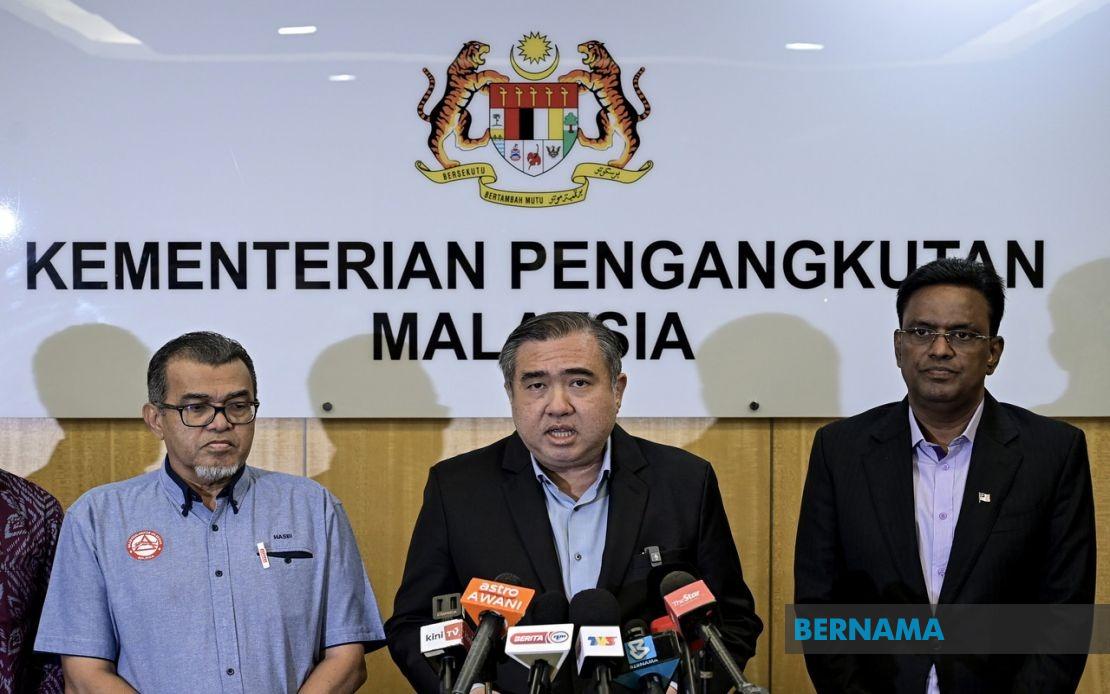
The Malaysian Cabinet has taken a significant step towards strengthening victim protections in road safety by endorsing proposed amendments to the Road Transport Act 1987 that would empower courts to impose compensation orders on convicted road offenders. Transport Minister Anthony Loke unveiled the decision on Wednesday in Putrajaya, signalling a major policy shift that recognises the financial and emotional toll that road accidents inflict on victims and their families beyond what criminal penalties alone can address.
The reform represents a departure from Malaysia's traditional approach to road offences, which has historically focused on punitive measures such as imprisonment, fines, and driving bans without requiring offenders to directly redress the harm they cause. Under the proposed mechanism, courts would possess discretionary authority to determine compensation amounts on a case-by-case basis, taking into account the specific circumstances of each incident rather than applying a standardised formula. This judicial flexibility reflects an understanding that road accidents vary widely in severity and impact, from minor injuries requiring brief medical intervention to fatal collisions that devastate entire households.
Loke emphasised that compensation would function as an additional layer of accountability rather than a replacement for existing penalties. The severity of the road offence, the extent of physical harm sustained, financial losses incurred by victims, and the offender's financial capacity to pay would all factor into judicial deliberations. By maintaining the full suite of traditional punishments alongside compensation orders, the government aims to balance deterrence with victim restitution—a principle increasingly recognised in modern criminal justice systems across comparable nations in the region.
The proposed amendments would extend to a broad range of dangerous driving behaviours, with particular emphasis on driving under the influence of alcohol or drugs and reckless driving. These categories capture some of the most destructive road offences, where personal choice and negligence directly precipitate preventable tragedy. Notably, the reform avoids creating a government-administered automatic compensation scheme, a choice that reflects concerns about equitable distribution and administrative burden while preserving judicial independence in assessment.
Crucially, the new compensation mechanism would operate independently of existing insurance and civil remedies available to victims. This means accident victims and their families retain full entitlement to pursue insurance claims against responsible parties' policies and to initiate separate civil litigation seeking damages. The proposed reform thus creates an additional avenue for recovery rather than constraining victims' options, addressing a gap in the current system where offenders might lack sufficient insurance coverage or personal assets to satisfy civil judgements.
Before the amendments proceed to Parliament, the Ministry of Transport has committed to an extensive engagement process involving multiple stakeholders. These consultations will include government agencies, the insurance industry, and other relevant bodies tasked with refining operational details and addressing practical implementation challenges. Key definitional questions require resolution, including precisely which injuries qualify as serious under the new regime and how courts should respond when offenders lack financial capacity to satisfy compensation orders.
The anticipated timeline projects the bill for tabling during Parliament's year-end sitting, contingent upon completion of the drafting and stakeholder engagement phases. Loke signalled his intention to request establishment of a Parliamentary Special Select Committee to conduct detailed scrutiny of the legislation, an approach designed to build cross-party consensus and ensure the reform withstands political scrutiny and practical implementation challenges that may emerge post-enactment.
An important procedural limitation embedded in the proposal is that amendments would apply exclusively to offences committed after the Act receives parliamentary approval, as Malaysian law prohibits retroactive application of criminal legislation. This temporal constraint means that the deterrent effect of compensation orders will take hold gradually as the legal framework matures, though it reflects internationally accepted principles of justice that individuals cannot be penalised under laws that did not exist when they committed their actions.
For Malaysia's road safety landscape, this reform signals growing recognition that punitive measures alone have failed to adequately deter reckless driving or address the needs of victim families. Road fatalities and serious injuries impose substantial economic costs on the healthcare system, social welfare apparatus, and affected families, yet offenders often experience minimal direct accountability for these cascading harms. By introducing court-ordered compensation, the government seeks to create meaningful consequences that extend beyond abstract penalties to concrete restitution, potentially strengthening both specific and general deterrence.
The proposal also includes provisions to strengthen the Road Offence Demerit Points System (KEJARA), augmenting the compensation framework with enhanced preventive mechanisms. This dual-track approach—combining restorative compensation with improved enforcement and graduated sanctions through the demerit system—reflects a comprehensive rethinking of road safety policy beyond simple post-incident punishment.
Regionally, Malaysia's move aligns with evolving international best practices in victim-centred criminal justice. Jurisdictions across Southeast Asia and beyond have increasingly incorporated compensation orders into traffic legislation, recognising that sustainable road safety requires multi-dimensional interventions addressing offender accountability, victim support, and systemic enforcement. The Malaysian approach, with its emphasis on judicial discretion and preservation of civil remedies, offers a balanced model that respects both offender circumstances and victim interests.
For Malaysian road users and families who have experienced devastating accidents, this reform potentially represents a pathway toward financial justice when navigating complex civil and insurance claims. However, the reform's ultimate effectiveness will depend substantially on judicial capacity, training, and resource availability to administer the new compensation regime fairly and efficiently across Malaysia's court system.

