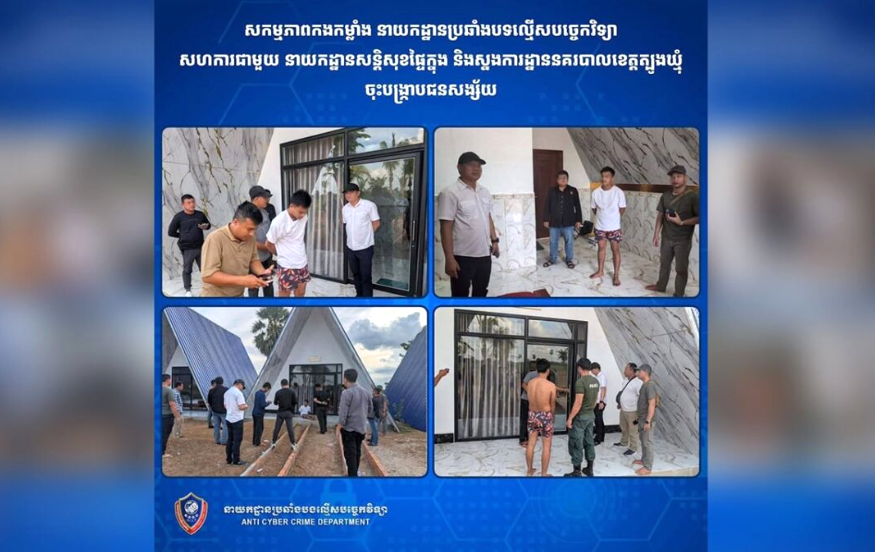
Cambodian police have dismantled a sophisticated online fraud ring that exploited the growing commerce ecosystem of social media platforms, arresting one suspect on June 20 following an investigation that revealed an elaborate extortion racket operating across Telegram. The accused individual orchestrated roughly 50 successful deception operations, accumulating more than US$110,000 in illicit proceeds by impersonating both legitimate business owners and high-ranking government and police officials. The operation represented a troubling evolution in cybercrime tactics, one that weaponised public institutional trust to overcome victim scepticism.
The arrest culminated months of coordinated work between the Anti-Cyber Crime Department, the Internal Security Department, and provincial law enforcement from Tbong Khmum. The investigation exposed a criminal methodology that exploited a vulnerability inherent in Cambodia's rapidly expanding digital marketplace, where millions conduct daily transactions through Facebook Live commerce without necessarily verifying the legitimacy of communications they receive about those purchases.
The scammers' modus operandi demonstrated considerable sophistication. The suspect would monitor live-streaming sales events, particularly those hawking clothing and fruit, then harvest customer information from the transaction metadata or broadcast interactions. Armed with victim identities and purchase details, he fabricated Telegram accounts bearing the profile photographs and names of the shop owners whose stores had just processed the transactions. Operating under these false identities, the scammer contacted the newly identified customers with an urgent message: their funds had been incorrectly routed, creating banking system complications that threatened to freeze the merchant's account.
The fabricated urgency and technical plausibility of this initial approach induced many victims to comply with requests for additional payments intended to "resolve" the supposed banking glitch. However, when targets resisted or expressed doubt, the perpetrator deployed a more intimidating second phase. He switched to fresh Telegram accounts, this time impersonating senior government figures and National Police commanders, then threatened victims with immediate arrest unless they transferred money within tight timeframes. The dual-layer deception—combining technical feasibility with institutional authority—proved remarkably effective at overcoming natural consumer caution.
What distinguished this scheme from routine phishing or catfishing operations was its deliberate weaponisation of state legitimacy. By incorporating authentic photographs and titles of real officials, the scammer created a credibility framework that most ordinary citizens would find difficult to challenge. The psychological leverage derived not merely from the threat itself, but from the exploited assumption that impersonating state officials online constitutes such a serious crime that the threat must be legitimate. This inverted logic—that only a genuine official could risk impersonating officials—turned victims' rational threat assessment against them.
The case arrives amid a broader regional conversation about the intersection of informal e-commerce and organised cybercrime. Facebook Live shopping has become a dominant retail channel across Southeast Asia, particularly in countries where traditional brick-and-mortar infrastructure remains geographically dispersed or where consumer familiarity with established e-commerce platforms lags. Cambodia's embrace of this platform reflects both genuine consumer adoption and the reality that formal merchant verification systems remain underdeveloped. This gap between transaction velocity and identity verification creates precisely the environment where social engineering attacks flourish.
Cambodian authorities have recently intensified the legal framework governing digital crime. The newly enacted Law on Combating Technology-Based Scams represents a legislative acknowledgment that cybercriminal activity has reached a scale requiring dedicated statutory attention and enhanced penalties. The law specifically targets organised digital fraud and establishes liability frameworks that treat sophisticated impersonation schemes as serious offences rather than isolated incidents of deception. This suggests that Cambodian policymakers recognise cybercrime not as a peripheral problem but as a structural threat to confidence in both digital commerce and state institutions themselves.
The implications extend throughout the region. Similar Telegram-based impersonation schemes have surfaced in Thailand, Vietnam, and the Philippines, indicating that this particular attack vector enjoys considerable portability across Southeast Asian markets. The methodology requires minimal technical sophistication—essentially social engineering paired with account creation and screenshot forgery—yet generates outsized returns precisely because it exploits the intersection of legitimate commerce anxiety and fear of state apparatus. Malaysian consumers and merchants engaging in social commerce platforms should recognise this as a live threat rather than a hypothetical risk.
For Facebook Live vendors, the arrest underscores the vulnerability of informal seller verification systems. Customers who cannot independently confirm merchant legitimacy become susceptible to high-confidence imposters. More broadly, the case illustrates how official-looking communications carry disproportionate persuasive power, particularly when directed toward individuals already primed by recent financial transactions. The scammer's targeting of Facebook Live shoppers—individuals actively engaged in e-commerce and therefore psychologically receptive to payment-related messages—reflected careful victim selection rather than indiscriminate spam.
Authorities have forwarded the arrested suspect to Phnom Penh Municipal Court, where prosecution under the new technology fraud statute will likely proceed. Cambodian police have simultaneously issued public advisories counselling caution toward unsolicited messages from unfamiliar accounts and urging citizens to verify claims independently before transferring funds. However, such general warnings face inherent limitations when confronting threats that deliberately invoke official authority and manufactured urgency.
The broader challenge facing Cambodia and regional governments involves developing verification infrastructure that keeps pace with digital commerce growth. This might include official merchant verification badges visible within Facebook Live broadcasts, two-factor authentication for payment confirmations sent through messaging apps, or coordinated telecommunications protocols that make official government communications cryptographically verifiable. Until such systems emerge, the vulnerability that enabled this scammer's success will persist, likely attracting imitators across the region who recognise the high-reward, low-risk profile of technology-based impersonation.

%22%2F%3E%3C%2Fpattern%3E%3C%2Fdefs%3E%3Crect%20width%3D%22100%25%22%20height%3D%22100%25%22%20fill%3D%22url(%23ph4uc2pg)%22%2F%3E%3Crect%20width%3D%22100%25%22%20height%3D%22100%25%22%20fill%3D%22url(%23ph4uc2pp)%22%2F%3E%3Ctext%20x%3D%2250%25%22%20y%3D%2250%25%22%20text-anchor%3D%22middle%22%20dominant-baseline%3D%22central%22%20fill%3D%22rgba(255%2C255%2C255%2C0.95)%22%20font-family%3D%22Georgia%2C%20'Times%20New%20Roman'%2C%20serif%22%20font-weight%3D%22700%22%20font-size%3D%22170%22%20letter-spacing%3D%22-0.02em%22%3EElephant%3C%2Ftext%3E%3C%2Fsvg%3E)
%22%2F%3E%3C%2Fpattern%3E%3C%2Fdefs%3E%3Crect%20width%3D%22100%25%22%20height%3D%22100%25%22%20fill%3D%22url(%23ph12wosg)%22%2F%3E%3Crect%20width%3D%22100%25%22%20height%3D%22100%25%22%20fill%3D%22url(%23ph12wosp)%22%2F%3E%3Ctext%20x%3D%2250%25%22%20y%3D%2250%25%22%20text-anchor%3D%22middle%22%20dominant-baseline%3D%22central%22%20fill%3D%22rgba(255%2C255%2C255%2C0.95)%22%20font-family%3D%22Georgia%2C%20'Times%20New%20Roman'%2C%20serif%22%20font-weight%3D%22700%22%20font-size%3D%22170%22%20letter-spacing%3D%22-0.02em%22%3EMalaysia%3C%2Ftext%3E%3C%2Fsvg%3E)