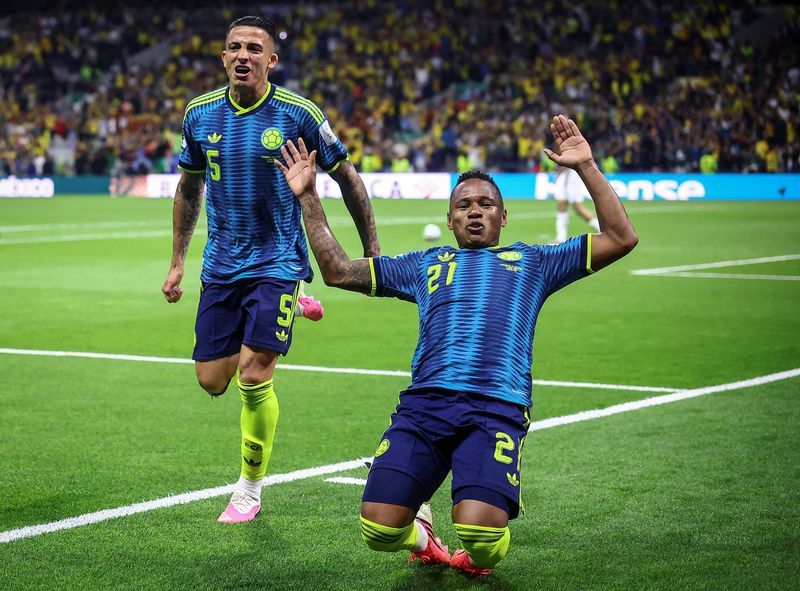
Colombia will attempt to build momentum in their World Cup campaign when they meet DR Congo on Tuesday in a Group K encounter that carries significance for both nations. The South American side began their tournament with a 3-1 victory over Uzbekistan, though Nestor Lorenzo's men will face a notably different test against an opponent who has already demonstrated the ability to trouble elite opposition. DR Congo's 1-1 draw against Portugal in their opening match represents a notable achievement, particularly given the continental powerhouses' return to the World Cup after nearly 50 years of absence.
Colombia's opening triumph over Uzbekistan, while substantial on the scoreboard, revealed defensive vulnerabilities that Lorenzo will be eager to eliminate. The second-half performance exposed gaps in their rearguard, a concern the coaching staff recognises could prove costly against more tactically sophisticated opponents. Nevertheless, the victory positions them well in the group standings, and another three points would essentially guarantee their progression to the knockout rounds while potentially securing top spot if Portugal stumble against Uzbekistan in their concurrent fixture.
The attacking impetus for Colombia has centred on Bayern Munich forward Luis Diaz, whose electrifying pace and directness proved decisive against Uzbekistan. His goal and assist earned him player-of-the-match honours, establishing him as the principal offensive weapon in Lorenzo's system. However, the Colombian coaching staff recognises that over-reliance on any single player invites strategic vulnerability. Captain James Rodriguez, a experienced orchestrator of their play, registered a comparatively muted performance in the opener, and Lorenzo will be hoping for greater creative influence from the midfielder as they face stiffer opposition.
DR Congo's emergence as a genuine tournament threat has surprised many observers, though their tactical discipline and organisation suggest their Portugal draw was no mere aberration. Yoane Wissa's opening-match goal holds profound symbolic weight for the nation, marking their first World Cup goal since their appearance as Zaire nearly half a century ago. Coach Sebastien Desabre has constructed a side built on defensive compactness and devastating counter-attacking transitions, an approach that suffocated Portugal's possession-based approach and remains well-suited to containing Colombia's threats.
Lorenzo has explicitly flagged the distinct challenge that DR Congo's transitional football poses to his team's methodology. The Argentine tactician acknowledged that the Congolese preference for long balls and rapid breaks differs fundamentally from Uzbekistan's approach, requiring Colombia to remain defensively composed while maintaining offensive penetration. His observation that excessive possession occasionally proved counterproductive against Uzbekistan suggests Colombia must become more clinical in converting their territorial advantage into clear-cut chances. The balance between maintaining control and avoiding sterile possession will likely determine the match's outcome.
Columbia's ability to transform Mexico City's Estadio Azteca into a fortress in their opening match demonstrated the power of their travelling support. Thousands of fans in yellow created an atmosphere that effectively neutralised any home advantage Uzbekistan might have claimed. This continental support network represents a tangible asset for Lorenzo's side, and with their tournament base located in Guadalajara, another substantial Colombian contingent is expected to travel to the fixture. Such backing can provide momentum in crucial moments, though it cannot substitute for tactical discipline and clinical finishing.
The broader tournament context adds further dimension to Tuesday's encounter. A Colombian victory would represent genuine progress toward their stated tournament ambitions, establishing them as a serious contender in their group. Conversely, DR Congo faces a crucial juncture in their campaign, as securing another positive result against such accomplished opposition would substantially enhance their already-remarkable tournament narrative. The contrast in expectations and pressure between a traditional South American powerhouse and an African nation experiencing their tournament return after five decades adds compelling human and sporting dimensions to the fixture.
Lorenzo's squad selection and tactical adjustments will prove critical to navigating DR Congo's specific challenges. The Colombian coaching staff must determine whether to maintain the high-intensity attacking approach that overwhelmed Uzbekistan or whether to adopt greater defensive caution given their opponent's counter-attacking potency. This calculus extends beyond individual player selection to encompass the philosophical approach toward possession retention, pressing intensity, and positioning in transition scenarios.
DR Congo's defensive organisation, proven effective against Portugal, suggests they will seek to frustrate Colombia through compact shape and disciplined positioning. Desabre's side will likely afford Luis Diaz space only in limited areas, forcing him to operate deeper or wider than his preferred zones. Should Colombia's primary attacking outlet be successfully neutralised, the onus falls upon James Rodriguez and supporting players to manufacture alternative attacking avenues. The midfield contest will therefore assume outsized importance, determining whether Colombia can control the tempo and dictate proceedings or whether DR Congo can impose their preference for direct, transitional football.
From a Malaysian sporting perspective, this fixture exemplifies how international football competitions create platforms for underdog narratives alongside traditional powerhouse dominance. DR Congo's tournament return resonates across Southeast Asia, where smaller nations frequently pursue competitive aspirations against more resourced opponents. Their tactical approach—emphasising discipline and counter-attacking rather than possession dominance—offers instructive lessons for regional sides developing strategic identity. Colombia's position, conversely, reflects the expectations and pressure accompanying established excellence, a dynamic familiar to Malaysian football followers observing traditional heavyweights navigate tournament progression.
The resolution of this encounter will shape Group K's trajectory substantially. A Colombian victory restores order to expected tournament hierarchy, though Desabre's side has demonstrated sufficient competence to suggest they remain far from defeated. The fixture represents genuine uncertainty within structured parameters, where tactical acumen, psychological resilience, and clinical execution will determine which nation progresses with enhanced confidence toward their subsequent group assignment.
%22%2F%3E%3C%2Fpattern%3E%3C%2Fdefs%3E%3Crect%20width%3D%22100%25%22%20height%3D%22100%25%22%20fill%3D%22url(%23ph3abqhg)%22%2F%3E%3Crect%20width%3D%22100%25%22%20height%3D%22100%25%22%20fill%3D%22url(%23ph3abqhp)%22%2F%3E%3Ctext%20x%3D%2250%25%22%20y%3D%2250%25%22%20text-anchor%3D%22middle%22%20dominant-baseline%3D%22central%22%20fill%3D%22rgba(255%2C255%2C255%2C0.95)%22%20font-family%3D%22Georgia%2C%20'Times%20New%20Roman'%2C%20serif%22%20font-weight%3D%22700%22%20font-size%3D%22151%22%20letter-spacing%3D%22-0.02em%22%3EPerikatan%3C%2Ftext%3E%3C%2Fsvg%3E)
%22%2F%3E%3C%2Fpattern%3E%3C%2Fdefs%3E%3Crect%20width%3D%22100%25%22%20height%3D%22100%25%22%20fill%3D%22url(%23ph4v2psg)%22%2F%3E%3Crect%20width%3D%22100%25%22%20height%3D%22100%25%22%20fill%3D%22url(%23ph4v2psp)%22%2F%3E%3Ctext%20x%3D%2250%25%22%20y%3D%2250%25%22%20text-anchor%3D%22middle%22%20dominant-baseline%3D%22central%22%20fill%3D%22rgba(255%2C255%2C255%2C0.95)%22%20font-family%3D%22Georgia%2C%20'Times%20New%20Roman'%2C%20serif%22%20font-weight%3D%22700%22%20font-size%3D%22272%22%20letter-spacing%3D%22-0.02em%22%3EWorld%3C%2Ftext%3E%3C%2Fsvg%3E)