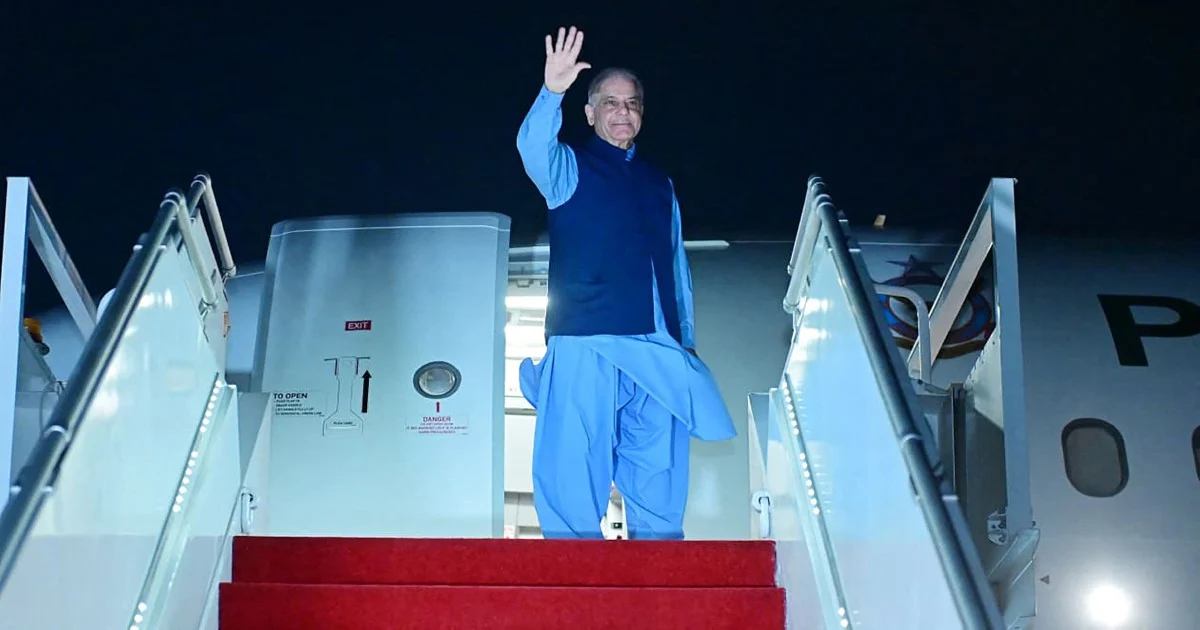
Prime Minister Shehbaz Sharif touched down in Switzerland on Sunday morning to participate in technical-level negotiations between the United States and Iran, marking Pakistan's involvement in international efforts to defuse the escalating tensions roiling the Middle East. The development signals Islamabad's commitment to playing a constructive role in multilateral diplomacy aimed at preventing further destabilisation in a region where Pakistan maintains significant strategic and economic interests.
Pakistan's decision to engage in these talks underscores the country's recognition that Middle Eastern stability directly impacts South Asian security and prosperity. The armed conflict between Iran and the United States has already reverberated across global markets, affecting energy prices and supply chains that Pakistan depends upon for its resource-constrained economy. By positioning itself at the negotiating table, Islamabad is attempting to protect its interests while simultaneously establishing itself as a responsible voice in international crisis management.
The technical-level discussions represent a crucial phase in potential reconciliation efforts between Washington and Tehran. Unlike high-level political talks, technical meetings typically focus on implementing frameworks, addressing specific concerns, and building mechanisms that could support broader diplomatic breakthroughs. These granular negotiations often prove decisive in determining whether broader peace initiatives can ultimately succeed or falter.
Pakistan's participation in such talks reflects its historical position as a bridge between Western and Islamic nations. The country has repeatedly positioned itself as an intermediary in regional disputes, leveraging its relationships with both the United States and Iran. Islamabad maintains significant diplomatic channels with Tehran through its proximity and shared interests in Afghanistan, while simultaneously maintaining security partnerships with Washington.
For Malaysia and other Southeast Asian nations, Pakistan's diplomatic engagement in Middle Eastern de-escalation efforts carries indirect but meaningful implications. The Middle East remains a critical supplier of crude oil and liquefied natural gas to the region, making Middle Eastern stability a core economic concern for ASEAN economies. Any escalation in US-Iran tensions threatens energy security across Southeast Asia and the broader Indo-Pacific.
The presence of Pakistani leadership at these negotiations could inject important perspectives into discussions. Pakistan understands the complexities of managing US-Iran relations from a unique vantage point, having navigated intricate relationships with both powers while confronting significant security challenges domestically. The country's experience in counterterrorism and regional stabilisation efforts might inform discussions about preventing proxy conflicts and protecting civilian populations.
Shehbaz Sharif's engagement in these talks also occurs amid broader Pakistani efforts to rehabilitate its international standing. The country has been working to emerge from years of economic strain and security concerns, and participating in high-level international diplomacy helps reinforce Pakistan's credentials as a stable, constructive actor in global affairs. Such engagement potentially strengthens Pakistan's position in international financial negotiations and security partnerships.
The timing of Pakistan's involvement raises questions about which other regional and international actors are participating in these discussions. The composition of negotiating parties significantly influences outcomes, as does the level of commitment from major stakeholders. Pakistan's presence suggests that multilateral mechanisms are being mobilised to address what many observers view as an increasingly precarious situation.
For Pakistani policymakers, the calculus involves balancing multiple considerations: strengthening ties with Washington through cooperative diplomacy, maintaining constructive relations with Iran to prevent regional isolation, and addressing domestic security and economic challenges that demand international support. These technical talks represent an opportunity for Pakistan to advance all three objectives simultaneously.
The broader implications for Southeast Asian stability warrant attention. Middle Eastern conflicts have historically created humanitarian crises, generated refugee flows, disrupted maritime trade, and created openings for extremist organisations to expand operations. By supporting de-escalation efforts, Pakistan and other international actors are investing in stability that benefits nations far beyond the immediate region.
How substantive these technical discussions prove remains uncertain. Past attempts at US-Iran reconciliation have faced significant obstacles rooted in decades of mutual distrust, competing regional ambitions, and fundamentally divergent strategic objectives. Yet the willingness of both parties to engage technical-level discussions suggests that at least some space exists for exploring potential pathways toward reduced tensions.
Pakistan's role in these negotiations illustrates how smaller powers can leverage diplomatic skills and regional positioning to influence outcomes on the international stage. Whether Islamabad's participation yields tangible progress toward conflict de-escalation will depend on broader dynamics involving Washington, Tehran, and other regional actors. Nevertheless, Pakistan's presence at the negotiating table represents a concrete commitment to pursuing solutions to a crisis that threatens global stability and prosperity.
%22%2F%3E%3C%2Fpattern%3E%3C%2Fdefs%3E%3Crect%20width%3D%22100%25%22%20height%3D%22100%25%22%20fill%3D%22url(%23ph1rv6vg)%22%2F%3E%3Crect%20width%3D%22100%25%22%20height%3D%22100%25%22%20fill%3D%22url(%23ph1rv6vp)%22%2F%3E%3Ctext%20x%3D%2250%25%22%20y%3D%2250%25%22%20text-anchor%3D%22middle%22%20dominant-baseline%3D%22central%22%20fill%3D%22rgba(255%2C255%2C255%2C0.95)%22%20font-family%3D%22Georgia%2C%20'Times%20New%20Roman'%2C%20serif%22%20font-weight%3D%22700%22%20font-size%3D%22170%22%20letter-spacing%3D%22-0.02em%22%3ETambirat%3C%2Ftext%3E%3C%2Fsvg%3E)
%22%2F%3E%3C%2Fpattern%3E%3C%2Fdefs%3E%3Crect%20width%3D%22100%25%22%20height%3D%22100%25%22%20fill%3D%22url(%23ph2vg5ig)%22%2F%3E%3Crect%20width%3D%22100%25%22%20height%3D%22100%25%22%20fill%3D%22url(%23ph2vg5ip)%22%2F%3E%3Ctext%20x%3D%2250%25%22%20y%3D%2250%25%22%20text-anchor%3D%22middle%22%20dominant-baseline%3D%22central%22%20fill%3D%22rgba(255%2C255%2C255%2C0.95)%22%20font-family%3D%22Georgia%2C%20'Times%20New%20Roman'%2C%20serif%22%20font-weight%3D%22700%22%20font-size%3D%22194%22%20letter-spacing%3D%22-0.02em%22%3EBintulu%3C%2Ftext%3E%3C%2Fsvg%3E)