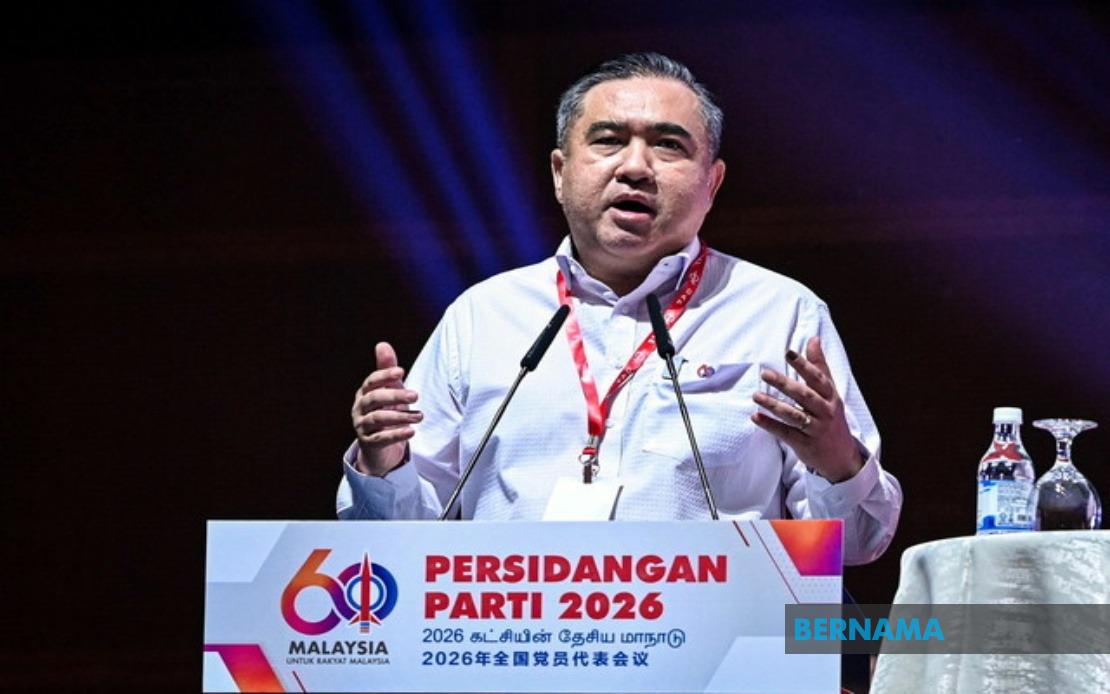
The Democratic Action Party has seized on Prime Minister Datuk Seri Anwar Ibrahim's announcement to repeal the Universities and University Colleges Act (AUKU) 1971 as validation of its long-standing advocacy, with party secretary-general Anthony Loke declaring unequivocal backing for the move during the DAP's 2026 National Conference at the Putrajaya International Convention Centre today. Loke framed the decision as evidence that the party's participation in government extends beyond merely occupying ministerial seats, emphasising instead its commitment to delivering tangible reforms that reshape Malaysian institutions and society.
The repeal proposal comes after Anwar outlined the initiative at the PKR 2026 National Congress yesterday, citing communications from student leaders requesting comprehensive legislative changes to expand freedoms within the university system. The Cabinet is expected to consider the proposal at a meeting scheduled for next Wednesday, marking a significant step toward dismantling a statute that has governed university conduct and student activism for more than five decades. The move reflects mounting pressure from students and civil society organisations that view AUKU as an anachronistic constraint on democratic expression within higher education institutions.
While DAP's endorsement carries political weight within the ruling coalition, Loke used the platform to advocate for an even more expansive education agenda. Beyond repealing AUKU, the party is urging the government to pursue what Loke described as related reforms aimed at guaranteeing equitable access to higher education for all Malaysians irrespective of ethnic background. This positioning suggests DAP intends to leverage the AUKU repeal as a foundation for addressing systemic inequalities that have long characterised Malaysia's university admissions and resource allocation policies.
AUKU's history demonstrates how Malaysian legislation evolves incrementally in response to societal pressure. Since its introduction in 1971, the Act has undergone seven amendments, with each revision loosening restrictions slightly without fundamentally altering the law's architecture. A 2012 amendment permitted students to engage in political activities outside campus boundaries, a modest concession that fell far short of repealing the Act entirely. More recently, 2024 amendments transferred disciplinary authority from university vice-chancellors to student-led disciplinary committees and expanded financial powers for student representative bodies and organisations.
These piecemeal changes reflect the contentious nature of student rights within Malaysia's governance framework. For activists and education reformers, such amendments have represented partial victories rather than genuine transformation. The prospect of complete repeal therefore carries symbolic significance beyond its legal implications, signalling a fundamental philosophical shift in how the government views student activism and university autonomy. Repealing AUKU would eliminate a statutory tool historically deployed to suppress political organising and restrict campus discourse on sensitive topics.
For regional observers, Malaysia's movement toward relaxing restrictions on student activism mirrors broader trends across Southeast Asia as younger generations demand greater participation in civic life. Thailand's recent constitutional reforms and Indonesia's expanding civil liberties suggest that constraints on student movements increasingly face legitimacy challenges. However, Malaysia's path differs in that reform appears driven by coalition politics and PKR-DAP collaboration rather than mass upheaval or constitutional crisis.
The timing of DAP's public support is strategically significant. By enthusiastically embracing a PKR-led initiative, DAP simultaneously stakes a claim to the reform agenda while subtly repositioning itself as a guardian of progressive values within a coalition government. Loke's emphasis on the party's responsibility to deliver substantive change suggests DAP views education policy as an arena where it can distinguish itself and consolidate support among younger, urban voters who form a traditional party constituency.
Implementation of a repeal carries unresolved questions about the legal vacuum that would follow. Universities currently rely on AUKU to regulate student conduct, manage political activities, and maintain institutional discipline. Dismantling the Act without establishing replacement frameworks could create complications for university administrations accustomed to its provisions. The government would need to develop alternative mechanisms balancing student freedoms with institutional governance requirements—a politically delicate undertaking in Malaysia's contested educational landscape.
Lok's broader call for education reforms addressing racial equity in university access touches on a more contentious terrain. Malaysia's affirmative action policies for Bumiputera students have shaped higher education enrollment for decades, and any legislative overhaul affecting these arrangements would trigger debate among majority and minority communities. By linking AUKU repeal to these wider reforms, DAP signals that the party sees student freedom and educational equity as interconnected challenges requiring comprehensive solutions rather than isolated legislative amendments.
For Malaysian universities and their international standing, AUKU repeal could foster institutional environments more conducive to academic freedom and intellectual exchange. Regional and global ranking systems increasingly factor university autonomy and student participation into assessments. Liberalisation of the regulatory framework might enhance Malaysia's competitive position among universities in developing economies, though this advantage would materialise only if institutions simultaneously invest in quality improvements and research infrastructure.
The political dynamics surrounding AUKU repeal also reflect the coalition government's broader reform trajectory. While Anwar has championed various modernisation initiatives, actual implementation frequently encounters delays or dilution. AUKU's repeal therefore represents a test case for whether the government can translate reform rhetoric into legislative action despite potential resistance from establishment quarters concerned about student activism and campus stability.

