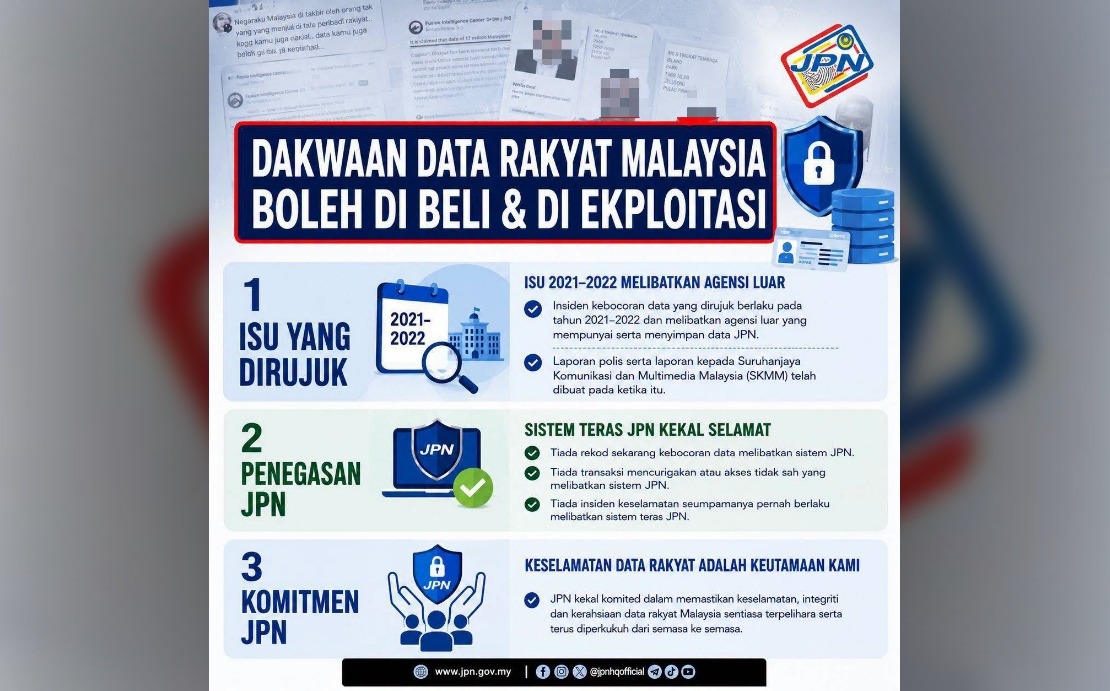
Malaysia's National Security Council (MKN) has moved to dispel growing alarm over viral claims of a widespread data breach, asserting that the compromised information originated from cybersecurity incidents that predated 2022 and bears no connection to systems currently in use. The clarification comes as social media users increasingly share links claiming access to leaked personal records, a development that prompted authorities to intervene and provide context for the public concern.
According to the National Cyber Security Agency (NACSA), which operates under the MKN's purview, the data circulating online was likely obtained through unlawful cyber intrusions targeting various systems in the years leading up to 2022. Rather than representing a fresh vulnerability in Malaysia's digital infrastructure, the incident reflects the recycling and redistribution of previously compromised information across online channels without authorisation from either the data subjects or legitimate custodians. This distinction matters significantly for public confidence, as it suggests that currently deployed platforms and services have not been newly penetrated or breached.
The authorities have taken a firm legal stance on the matter, emphasising that the act of sharing, disseminating, or facilitating access to unlawfully obtained information constitutes a criminal offence under Malaysian law regardless of where the offending website or service is hosted. This principle underscores the government's determination to pursue those engaged in the distribution chain, not merely the original perpetrators of the intrusions. The warning serves as notice to citizens that passive consumption of such data, or utilising services that traffic in it, carries legal consequences and contributes to the perpetuation of cybercrime.
In response to the leak, NACSA has coordinated swift action alongside MyNIC and the Personal Data Protection Department, engaging foreign service providers to identify, remove, and block access to the websites involved in redistributing the compromised data. This international cooperation reflects the borderless nature of cybercrime and the reality that many servers hosting illicit content operate beyond Malaysia's immediate jurisdiction. Concurrently, NACSA is working in partnership with the Royal Malaysia Police to conduct digital forensic investigations aimed at identifying the individuals behind the distribution network and bringing them to justice through the Malaysian legal system.
The incident has reignited discussion about Malaysia's cybersecurity legislative framework and the government's push for stronger protections. The forthcoming Cyber Crime Bill, scheduled for parliamentary presentation, is positioned as a comprehensive response to evolving digital threats. The proposed legislation introduces expanded definitions of cybercrime, with particular emphasis on unauthorised access to or damage of computer systems without lawful authority or legitimate purpose. Additionally, the bill specifically addresses identity theft, criminalising the unauthorised use of another person's identity when the intent is to commit a further crime, a provision directly relevant to the misuse of personal data now circulating online.
Complementing the legislative push, the Cyber Security Act 2024, which took effect in August 2024, has already begun reshaping Malaysia's defensive posture. The law mandates that operators of National Critical Information Infrastructure (NCII) implement comprehensive protective measures, including adherence to established codes of practice, rigorous risk assessments, and periodic security audits. This framework is designed to elevate the security standards across critical sectors, from financial institutions to telecommunications and government services, thereby reducing the likelihood of future large-scale intrusions that could feed future data leaks.
Amongst public concerns raised regarding the leak, questions have surfaced about the security of MyDigital ID, Malaysia's digital identity platform that has accumulated more than 16 million registrations. The MKN has taken pains to clarify a fundamental misconception: MyDigital ID is not a data storage repository but rather a verification mechanism that authenticates users in real time by connecting directly with the National Registration Department. This architectural choice means that MyDigital ID itself does not hold the personal information vulnerable to breach; instead, it validates the identity of the individual using it, thereby reducing the risk of identity fraud in digital transactions.
The widespread integration of MyDigital ID across government agencies and private-sector applications, including telecommunications companies and banking institutions, is expected to further strengthen the integrity of digital transactions and provide an additional barrier against identity theft. As more services adopt this verification mechanism, the ecosystem becomes incrementally more resistant to fraudulent use of stolen personal data, since merely possessing someone's information is insufficient to conduct transactions without passing through the MyDigital ID authentication layer. This layered security approach represents a significant departure from systems that rely solely on static identity credentials.
Beyond the immediate incident, the MKN has articulated a broader strategic vision centred on enabling Malaysians to benefit from digital transformation while safeguarding against cyber threats. The agency emphasises that cybersecurity must be embedded within the design of digital services from inception, rather than treated as an afterthought or remedial measure. This philosophy reflects international best practices and acknowledges that Malaysia's digital economy, which encompasses e-commerce, fintech, and government service delivery, requires robust foundational protections to maintain public trust and enable sustained growth.
The council has reassured the public that NACSA and associated agencies stand prepared to detect and respond to emerging cybersecurity threats. This commitment comes at a time when regional cyber incidents have grown more sophisticated and frequent, with neighbouring countries also grappling with large-scale breaches. For Malaysian users and businesses, the message is twofold: historical data circulating online poses a real risk to personal security and financial well-being, but current systems are being fortified with legislative, technical, and institutional measures designed to prevent future compromises and respond swiftly when vulnerabilities are discovered.
Citizens are advised to exercise caution if they encounter offerings of access to leaked data and to refrain from patronising services that traffic in unlawfully obtained information. Beyond the legal jeopardy, participation in such markets funds criminal operations and incentivises further intrusions and data theft. Instead, individuals should monitor their financial accounts for suspicious activity, change passwords on critical accounts, and remain vigilant for phishing attempts that may exploit the leaked information. Those who suspect they have been affected by identity fraud or unauthorised transactions should report the matter to their financial institutions and to the police, enabling authorities to build a comprehensive picture of the incident's real-world impact and refine their investigative approach.
%22%2F%3E%3C%2Fpattern%3E%3C%2Fdefs%3E%3Crect%20width%3D%22100%25%22%20height%3D%22100%25%22%20fill%3D%22url(%23ph5v36dg)%22%2F%3E%3Crect%20width%3D%22100%25%22%20height%3D%22100%25%22%20fill%3D%22url(%23ph5v36dp)%22%2F%3E%3Ctext%20x%3D%2250%25%22%20y%3D%2250%25%22%20text-anchor%3D%22middle%22%20dominant-baseline%3D%22central%22%20fill%3D%22rgba(255%2C255%2C255%2C0.95)%22%20font-family%3D%22Georgia%2C%20'Times%20New%20Roman'%2C%20serif%22%20font-weight%3D%22700%22%20font-size%3D%22151%22%20letter-spacing%3D%22-0.02em%22%3ENorwegian%3C%2Ftext%3E%3C%2Fsvg%3E)

%22%2F%3E%3C%2Fpattern%3E%3C%2Fdefs%3E%3Crect%20width%3D%22100%25%22%20height%3D%22100%25%22%20fill%3D%22url(%23ph34ksng)%22%2F%3E%3Crect%20width%3D%22100%25%22%20height%3D%22100%25%22%20fill%3D%22url(%23ph34ksnp)%22%2F%3E%3Ctext%20x%3D%2250%25%22%20y%3D%2250%25%22%20text-anchor%3D%22middle%22%20dominant-baseline%3D%22central%22%20fill%3D%22rgba(255%2C255%2C255%2C0.95)%22%20font-family%3D%22Georgia%2C%20'Times%20New%20Roman'%2C%20serif%22%20font-weight%3D%22700%22%20font-size%3D%22320%22%20letter-spacing%3D%22-0.02em%22%3EPM%3C%2Ftext%3E%3C%2Fsvg%3E)