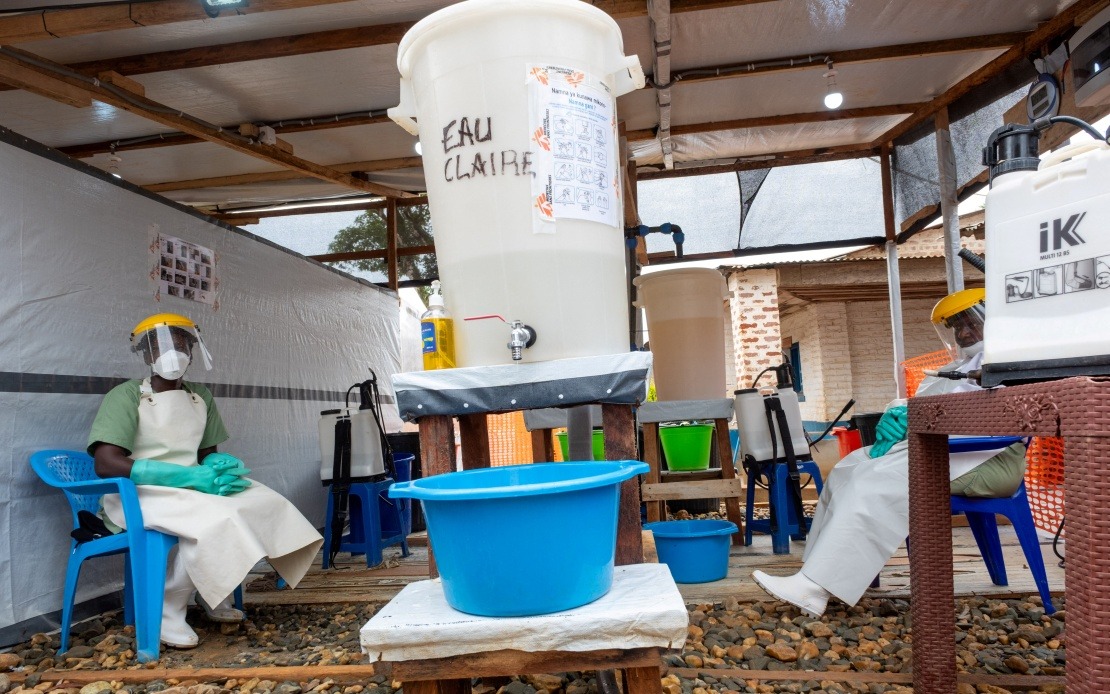
The Ebola crisis in the Democratic Republic of Congo has reached a critical threshold, with health authorities confirming 3,075 cases as of Saturday, marking a grim milestone in the ongoing battle against the infectious disease. The outbreak, now spreading across five provinces in the central African nation, has claimed 1,354 lives while 556 patients have recovered. The persistence of the virus reflects both the challenges of containment in the affected regions and the urgent international need for effective medical interventions to curtail transmission.
The geographical spread of the outbreak underscores the complexity of the public health response. The virus is currently active across Ituri, North Kivu, South Kivu, Haut-Uele and Tshopo provinces, indicating that containment efforts have yet to fully suppress transmission chains across these diverse and sometimes difficult-to-reach areas. With 755 patients still requiring hospital or isolation care, the strain on local health infrastructure remains substantial, particularly given the limited medical resources typically available in these regions.
What distinguishes the current outbreak is the specific viral strain responsible for the crisis. The Bundibugyo ebolavirus, while part of the broader Ebola family that has devastated the region before, presents unique challenges because existing preventive measures have not been tailored to combat this particular variant. Prime Minister Judith Suminwa Tuluka outlined the government's strategy during remarks on Friday, noting that scientific teams are actively engaged in developing both pharmaceutical interventions and immunological protection specifically designed for this strain.
The timeline provided by the Prime Minister offers cautious optimism, though it requires careful interpretation. Her statement that a vaccine and treatment could reach availability within two to four months suggests an accelerated development pathway, yet such timeframes for medical interventions remain highly dependent on trial outcomes and regulatory approval processes. The DRC government has committed financial resources to support this research effort, demonstrating its commitment to finding homegrown solutions rather than relying solely on international support, though she did not elaborate on specific funding amounts or the current development stage of these initiatives.
The current landscape of Bundibugyo ebolavirus countermeasures is defined by the absence of approved solutions. Unlike other Ebola variants that have benefited from vaccine development following previous outbreaks, the Bundibugyo strain lacks a licensed treatment or preventive vaccine already in use. This represents a significant gap in the medical arsenal available to health workers and patients. However, the scientific community has not been idle, with several experimental vaccines and therapeutic compounds currently undergoing clinical evaluation across international research institutions.
A major breakthrough came on Friday when the University of Oxford announced a historic moment in the fight against this specific strain. The institution announced that the first human volunteer has received an injection of ChAdOx1 BDBV, an experimental vaccine specifically engineered to provide protection against the Bundibugyo ebolavirus. This initiation of human trials represents the transition from laboratory research and animal studies to testing the vaccine's safety and efficacy in people, a critical step toward eventual regulatory approval and deployment.
The Oxford initiative carries particular significance for the DRC and by extension Southeast Asian health security frameworks. This research programme exemplifies how international scientific collaboration can address emerging infectious disease threats with specific regional or outbreak-related variants. For Malaysia and other nations in the region, the case demonstrates both the vulnerability posed by novel disease strains and the importance of maintaining partnerships with leading research institutions globally. The success or failure of ChAdOx1 BDBV could influence pandemic preparedness strategies across multiple continents.
The human trial launch also signals a shift in how the global health community addresses outbreaks of lesser-known disease variants. Historically, development of countermeasures for less frequently occurring pathogens proceeded more slowly due to reduced commercial incentives. The expedited approach to Bundibugyo ebolavirus research reflects lessons learned from previous crises and an evolved understanding that rapid response mechanisms can protect public health more effectively than traditional timelines.
For regional observers monitoring disease control and public health capacity, the DRC situation underscores the complexity of managing outbreaks when multiple factors converge: limited healthcare infrastructure, geographical challenges, the emergence of less-familiar pathogenic variants, and the need to mount simultaneous epidemiological containment and scientific development efforts. The 1,354 deaths recorded thus far represent not merely statistics but reflect individual and family tragedies, while the 556 recoveries offer evidence that survival is possible with appropriate medical care.
Looking forward, the next critical juncture will be the demonstration of safety and preliminary efficacy data from the Oxford ChAdOx1 BDBV trials. Should these early results prove promising, the pathway toward expanded access and potential emergency authorization could accelerate further. Simultaneously, the DRC authorities must maintain focus on conventional outbreak response measures including contact tracing, isolation protocols, and community engagement, as these tools remain essential while waiting for vaccine and treatment development to mature.
The international dimension of this outbreak carries implications extending beyond the DRC's borders. Southeast Asian nations, given their own experiences with infectious disease challenges and their position within global health networks, have vested interests in both the immediate containment of this outbreak and the longer-term advancement of medical countermeasures for Bundibugyo ebolavirus. The research outcomes from Oxford and other institutions will inform regional pandemic preparedness planning and influence resource allocation decisions for emerging infectious disease programmes across multiple countries.

