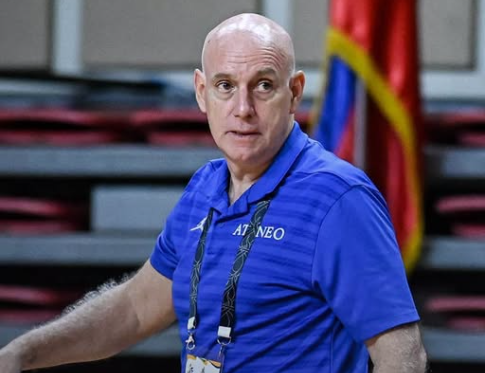
The Philippine National Police Criminal Investigation and Detection Group has recommended filing charges against Thomas Anthony 'Tab' Baldwin, former head coach of Ateneo de Manila University's men's basketball team, along with ten other team personnel for violations of the Anti-Hazing Act in connection with the deaths of players Rene Baterbonia and Divine Adili. The two athletes drowned during a training activity in Dipaculao, Aurora on June 8, in an incident that has drawn intense scrutiny on how elite sports programs manage their conditioning activities and duty of care towards young athletes.
The recommended charges target not only Baldwin but also two strength and conditioning coaches, three assistant coaches, two student managers, a physical therapist, and two utility personnel who were present during the fatal beach training session. According to officials from the Department of the Interior and Local Government, all eleven team members were present at the Aurora beach activity and bore collective responsibility for what authorities describe as a hazing exercise masked as a team-building event. The breadth of the recommendation signals prosecutors' view that responsibility extends throughout the coaching hierarchy and support staff, rather than resting solely with the head coach.
Police investigators characterised the activity as violating the Republic Act No. 11053 Anti-Hazing Law based on a progressive series of intense physical challenges. Players were roused at 4 in the morning and instructed to complete a four-kilometre run, followed by physically punitive games where losers faced additional penalties. This morning conditioning was deliberately designed to exhaust the athletes before they entered the water, amplifying the hazards they would face. The seawater training activity commenced between 2 and 2.30 in the afternoon, a timing that officials emphasize coincided precisely with high tide conditions forecast for 2.27 pm that day—conditions characterised by rip currents, strong wave action, and unpredictable seabed variations.
The investigation revealed a crucial reframing of what constitutes hazing in the modern context. Rather than limiting the definition to traditional initiation rituals, prosecutors argued that the Anti-Hazing Act extends to forced physical conditioning and exposure to dangerous environmental conditions when imposed as part of team membership or roster selection. The activity, investigators stressed, was explicitly designed to determine which of the twenty athletes present would be included in the seventeen-member roster that would be submitted to the University Athletics Association of the Philippines. This selection function transforms what might appear as voluntary team-building into a coercive trial where continued athletic participation effectively depends on enduring increasingly hazardous challenges.
The activities violated the Anti-Hazing Law's definition encompassing "any act that results in physical or psychological suffering, harm, or injury... as part of an initiation rite or practice made as a prerequisite for admission or a requirement for continuing membership." Officials presented evidence demonstrating the cumulative nature of the ordeal—the early morning four-kilometre run depleted the athletes' physical reserves, the mid-morning competitive games continued this exhaustion, and the afternoon seawater training immersed fatigued, weakened bodies into objectively hazardous conditions. No weights or anchoring devices were discovered on either victim's body when recovered, negating any suggestion they were attempting underwater exercises with equipment.
The timing of the seawater session remains particularly damning for prosecutors. The beach activity coincided with peak tidal conditions featuring unusually powerful currents and wave action on that specific day. The seabed depth varied unpredictably across the activity area, and rescue conditions would have been substantially more treacherous than during safer tidal windows. That the coaching staff nevertheless proceeded with the session during these documented high-risk conditions suggests either negligent disregard for safety or, from the prosecution's perspective, willful indifference to manifest danger.
Baldwin has publicly issued a lengthy video apology acknowledging the deaths of Baterbonia and Adili, though this expression of remorse does not preclude criminal liability. His responsibility as head coach extends beyond immediate supervision—he approved the training itinerary, selected the location, and established the intensity and sequence of physical demands. Assistant coaches and strength and conditioning specialists operationalized his vision, while student managers and utility personnel provided logistics and support that made the dangerous sequence possible. The recommendation charges treat this as a coordinated failure of safeguarding across the entire program hierarchy.
For Malaysian and Southeast Asian readers, this case illuminates recurring tensions in elite youth and university sports across the region. Many programs maintain intense, sometimes coercive conditioning cultures inherited from military or traditional initiation frameworks, despite modernization of anti-hazing legislation in countries including the Philippines, Singapore, and Malaysia. Universities and sports organisations frequently struggle to distinguish between legitimate high-performance training and hazing disguised as team-building, particularly when roster selection creates pressure for athletes to endure increasingly dangerous protocols.
The case also underscores how environmental factors and timing compound training risks in tropical and coastal contexts. High tide conditions, rip currents, and seabed variations present hazards that inland or temperate-zone programs may not routinely confront, yet regional coaches sometimes minimise these dangers. The decision to conduct water training during peak tidal conditions—rather than during safer windows—raises questions about whether sufficient safety expertise existed within the program's support structure, or whether performance metrics were prioritized over environmental risk assessment.
The prosecution's argument that team selection creates coercion has broader implications across Southeast Asian university athletics. When roster inclusion depends on completing progressively hazardous trials, athletes face intense psychological pressure to comply even when they doubt their safety. Younger or less confident athletes may persist in dangerous situations rather than withdraw, fearing exclusion from teams they have trained months to join. This dynamic particularly affects scholarship athletes or those pursuing athletic advancement as a pathway to education or professional opportunity.
The investigation and charges emerging from this tragedy reflect evolving legal interpretations of hazing statutes that move beyond traditional hazing frameworks to encompass modern high-performance training cultures. Philippine authorities have explicitly stated that intensive conditioning, exposure to harsh environmental conditions, and physical punishment connected to team membership constitute hazing under contemporary law, regardless of whether traditional initiation elements are present. This broader interpretation establishes precedent that may influence how university athletics programs across the region structure their conditioning activities, forcing reconsideration of practices that have long been normalised within competitive sports cultures.
Department of Justice prosecutors will now conduct preliminary investigation and case evaluation of the PNP CIDG recommendations. The charging decision carries significant implications not merely for the individuals involved but for institutional practices across Philippine and Southeast Asian university athletics. Whether courts ultimately sustain these charges will substantially clarify what constitutes criminal liability in sports-related deaths and may prompt widespread protocol revisions across the region's competitive athletic programs, particularly regarding environmental safety monitoring, roster selection transparency, and safeguarding responsibilities distributed through coaching hierarchies.

