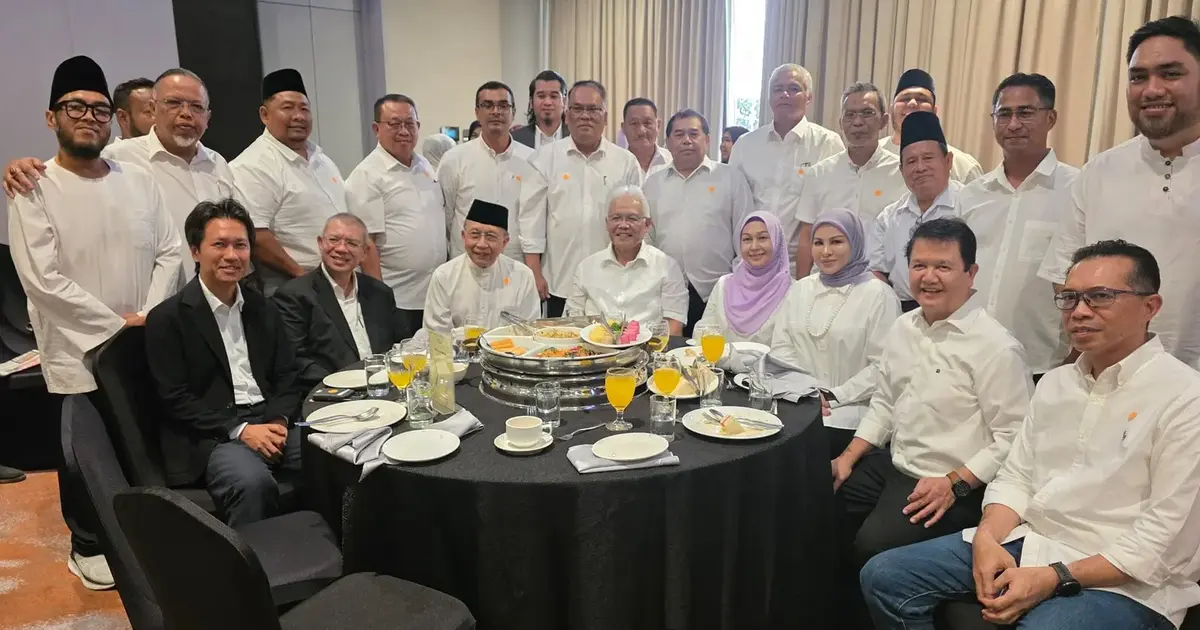
Hamzah has assumed the presidency of Wawasan in a significant leadership reshuffle that underscores the organization's strategic repositioning within Malaysia's political landscape. The appointment signals a new direction for the group as it navigates an increasingly competitive political environment and seeks to consolidate its influence across multiple constituencies.
Rais Yatim, a seasoned political operator with extensive ministerial experience spanning several decades, has been elevated to the role of chairman. His appointment reflects the organization's intention to leverage his considerable political capital and institutional knowledge as it charts its course forward. Yatim's background in government positions him as a stabilizing force at the helm, bringing credibility to the organization's governance structures and strategic initiatives.
Saifuddin Abdullah, who represents the Indera Mahkota constituency in parliament, has been appointed secretary-general. As a sitting member of parliament, Abdullah's dual responsibilities position him to serve as a bridge between Wawasan's institutional operations and parliamentary affairs, potentially enhancing the organization's legislative advocacy and governmental engagement.
The appointment of Hamzah to the presidency represents a consolidation of executive authority under someone positioned to drive the organization's agenda with renewed vigor. This leadership structure—with clear delineation between the presidency, chairmanship, and secretariat roles—suggests an organizational model designed to balance executive action with institutional oversight and administrative efficiency.
For Malaysian political observers, these appointments carry implications for the broader alignment of forces within the ruling coalition and among opposition groupings. Leadership transitions at organizationally significant bodies often precede or accompany shifts in political strategy, coalition dynamics, or public positioning. The composition of Wawasan's new leadership team may signal how various political factions intend to mobilize support and coordinate efforts in the coming political cycle.
Rais Yatim's assumption of the chairmanship is particularly noteworthy given his track record in ministerial portfolios including domestic affairs and cultural matters. His experience managing sensitive political files and navigating intra-party negotiations equips him well for a coordinating role. The chairman position traditionally carries responsibility for overall organizational direction and may involve engagement with external stakeholders, party leadership, and allied groups.
Saifuddin Abdullah's placement as secretary-general ensures that day-to-day organizational operations remain under the supervision of someone directly accountable to constituents and responsive to parliamentary developments. This arrangement potentially facilitates rapid adaptation to legislative changes and enhances the organization's capacity to mobilize its network in support of parliamentary initiatives.
The three-person leadership configuration reflects contemporary organizational best practices, distributing responsibilities across specialized portfolios rather than concentrating authority. This structure may enhance decision-making efficiency while maintaining internal checks and balances necessary for organizational stability and credibility.
From a regional perspective, Malaysian political organizations increasingly recognize the importance of professional governance structures and clear succession planning. The appointment of Hamzah, Rais Yatim, and Saifuddin Abdullah demonstrates this organizational maturation, positioning Wawasan competitively against other politically-significant bodies in Southeast Asia that maintain similar operational models.
The timing of these leadership changes merits consideration within the broader context of Malaysia's political calendar. Whether these appointments precede anticipated electoral activity, respond to internal organizational pressures, or represent planned leadership transitions will become clearer as the organization articulates its strategic priorities and policy objectives under the new leadership.
These appointments also reflect the importance of maintaining experienced hands in leadership positions while simultaneously introducing officers with contemporary parliamentary experience. The combination of Yatim's veteran status with Abdullah's active legislative engagement creates a leadership team positioned to address both institutional continuity and responsive political operation.
Moving forward, observers should monitor how Hamzah's presidency translates Wawasan's organizational capabilities into tangible political outcomes. The organization's effectiveness under this new leadership structure will likely influence its standing among stakeholders and its capacity to shape political discourse within its sphere of influence across Malaysia's complex political architecture.
%22%2F%3E%3C%2Fpattern%3E%3C%2Fdefs%3E%3Crect%20width%3D%22100%25%22%20height%3D%22100%25%22%20fill%3D%22url(%23ph5kiawg)%22%2F%3E%3Crect%20width%3D%22100%25%22%20height%3D%22100%25%22%20fill%3D%22url(%23ph5kiawp)%22%2F%3E%3Ctext%20x%3D%2250%25%22%20y%3D%2250%25%22%20text-anchor%3D%22middle%22%20dominant-baseline%3D%22central%22%20fill%3D%22rgba(255%2C255%2C255%2C0.95)%22%20font-family%3D%22Georgia%2C%20'Times%20New%20Roman'%2C%20serif%22%20font-weight%3D%22700%22%20font-size%3D%22320%22%20letter-spacing%3D%22-0.02em%22%3EMuda%3C%2Ftext%3E%3C%2Fsvg%3E)
%22%2F%3E%3C%2Fpattern%3E%3C%2Fdefs%3E%3Crect%20width%3D%22100%25%22%20height%3D%22100%25%22%20fill%3D%22url(%23ph22av8g)%22%2F%3E%3Crect%20width%3D%22100%25%22%20height%3D%22100%25%22%20fill%3D%22url(%23ph22av8p)%22%2F%3E%3Ctext%20x%3D%2250%25%22%20y%3D%2250%25%22%20text-anchor%3D%22middle%22%20dominant-baseline%3D%22central%22%20fill%3D%22rgba(255%2C255%2C255%2C0.95)%22%20font-family%3D%22Georgia%2C%20'Times%20New%20Roman'%2C%20serif%22%20font-weight%3D%22700%22%20font-size%3D%22136%22%20letter-spacing%3D%22-0.02em%22%3EBangladesh%3C%2Ftext%3E%3C%2Fsvg%3E)