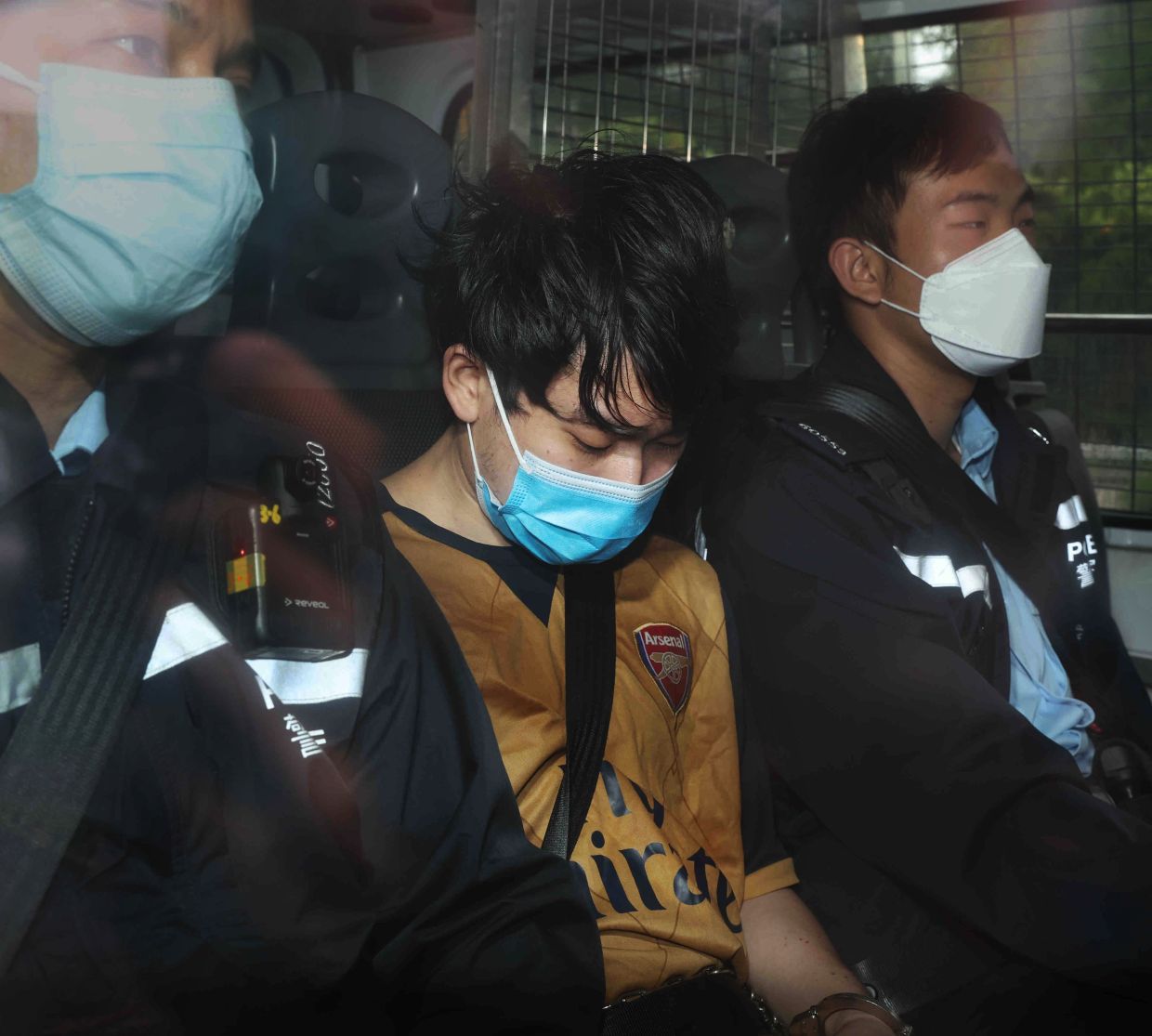
A 29-year-old jobless man in Hong Kong is mounting an extraordinary defense in a murder trial, claiming he fatally beat his 30-year-old girlfriend while attempting to assist her weight-loss efforts through an unconventional sleep-deprivation approach. Ng Ka-sing stands accused of killing Yip Tsz-ching at their 700 square-foot apartment in Galore Garden, Hung Shui Kiu, sometime between April 28 and 29, 2022. The case has drawn public attention not only for its severity but also for the unusual and troubling circumstances surrounding the death, which involve allegations of extensive burns, unlawful disposal of remains, and claims that contradicted evidence presented to police.
Prosecutors have rejected Ng's offer to plead guilty to the lesser charge of manslaughter, insisting instead on pursuing the more serious murder conviction. The High Court trial before Justice Judianna Barnes and a seven-member jury is expected to run for 18 days. In addition to the murder allegation, Ng faces a separate charge related to the unlawful burial of a human body after witnesses observed him transporting what appeared to be a corpse wrapped in quilting and multiple layers of plastic film along Tin Ha Road in the early hours of April 29, 2022.
Senior public prosecutor Audrey Parwani has signaled that the prosecution views Ng's account with considerable skepticism. In her opening statement, Parwani noted that the accused has provided multiple and varying explanations to police regarding how his girlfriend sustained her injuries, which forensic examination revealed covered approximately 55 percent of her body with corrosive burns. "The prosecution does not accept the accused was telling the whole truth," Parwani told the jury, establishing a framework suggesting inconsistencies and implausibility in the defendant's narrative.
According to Ng's own cautioned interview with police, he admitted to striking Yip repeatedly with a rod between the nights of April 27 and 28, driven by a conviction that sleep deprivation would facilitate fat loss. The beating allegedly occurred intermittently: from 10 p.m. on April 27 through 1:30 a.m. on April 28, and again between 3 a.m. and 5:30 a.m. on April 28. In a detail that raises significant questions about the household environment, Ng stated that his sworn sister—a family member sharing the flat—allegedly encouraged him to "continue for a bit longer" when he asked whether he should stop. Ng later told police that he continued the assault simply because Yip did not explicitly tell him to desist.
The defendant's explanation for the extensive chemical burns further strains credibility. According to Ng's account to authorities, Yip herself poured a bottle of drain cleaner onto her own body, while he splashed the liquid on the floor with the stated intention of "stimulating" her feet. He also claimed that Yip struck herself against a wall seven to eight times after slipping on the chemical-soaked floor. By approximately 5 a.m. on April 28, according to this narrative, Yip told Ng she was experiencing severe pain and believed she might not survive the injuries she had sustained. The woman subsequently lapsed into a coma after speaking for the final time at 7:21 a.m.
The case came to light when joggers discovered a leg protruding from a rolled quilt loaded onto Ng's wheeled board around 6 a.m. on April 29, 2022. Witness Lau Kwok-yan, who reported the discovery to police, testified that Ng remained on the street displaying no visible signs of panic or distress while awaiting law enforcement arrival. A street cleaner, Wong Ah-sum, reported that when he questioned Ng about the package, the accused calmly informed him it was a "corpse" and that he intended to transport it to a police station. When arrested at 6:36 a.m., Ng's first statement was stark and unambiguous: "This was my girlfriend. I hit her to death with a rod by mistake."
Forensic examination of the remains revealed a grim scene. Specialist Lo Man-hung documented that Yip's body had been secured to an overturned wooden chair using black rubbish bags and was covered with a quilt. Her head was bound with multiple layers of cling film and adhesive tape, suggesting either an attempt at concealment or something more deliberate. Government pathologist Dr Foo Ka-chung estimated the time of death at 12 to 24 hours before discovery, placing the fatal event squarely during the period Ng had described.
Dr Foo's forensic findings presented a clinical picture of severe trauma. The pathologist identified multiple bruises, abrasions, and lacerations distributed across Yip's head and other bodily regions consistent with blunt force injuries such as punching and kicking. However, the official cause of death was determined to be suffocation following head injuries and the extensive corrosive burns affecting her chest, abdomen, and limbs. This conclusion raises questions about the precise sequence of events and which injuries proved ultimately fatal—information central to distinguishing between murder and manslaughter.
For Malaysian and Southeast Asian observers, this case illustrates troubling dynamics that can emerge within isolated domestic environments. The involvement of Ng's sworn sister as a household member who allegedly encouraged continued violence raises uncomfortable questions about collective responsibility and the failure of bystanders to intervene in escalating abuse. The case also underscores how individuals operating outside formal employment may experience social isolation and desperation that manifest in dangerous ideological fixations, in this instance a fundamentally misguided and abusive approach to weight management that weaponized intimate relationships.
The trial's central question revolves around whether Ng's actions constitute premeditated murder or a tragic accident born from profound ignorance and poor judgment. The prosecution's skepticism regarding his narrative suggests authorities believe a more calculated sequence of events preceded Yip's death. The specific focus on the inconsistent accounts provided to police, the coordinated nature of the assault across multiple time periods, and the elaborate concealment effort all potentially support an interpretation of intentional killing rather than accidental manslaughter. As the evidence unfolds, the jury will need to reconcile Ng's claims with the physical evidence and witness testimony to determine culpability.
The case also highlights how abusive dynamics can operate within households where multiple family members cohabitate, creating situations where violence becomes normalized or tacitly endorsed. The statement attributed to the sworn sister encouraging continued beating represents not merely a failure to protect, but active participation in a harmful escalation. For domestic violence prevention advocates across the region, this trial may serve as a sobering reminder of how isolation, economic desperation, and unchallenged harmful beliefs create conditions for fatal outcomes. The extended trial period will likely reveal whether additional evidence emerges to clarify precisely what transpired during those fatal hours in the Hung Shui Kiu apartment.
%22%2F%3E%3C%2Fpattern%3E%3C%2Fdefs%3E%3Crect%20width%3D%22100%25%22%20height%3D%22100%25%22%20fill%3D%22url(%23ph5vnqfg)%22%2F%3E%3Crect%20width%3D%22100%25%22%20height%3D%22100%25%22%20fill%3D%22url(%23ph5vnqfp)%22%2F%3E%3Ctext%20x%3D%2250%25%22%20y%3D%2250%25%22%20text-anchor%3D%22middle%22%20dominant-baseline%3D%22central%22%20fill%3D%22rgba(255%2C255%2C255%2C0.95)%22%20font-family%3D%22Georgia%2C%20'Times%20New%20Roman'%2C%20serif%22%20font-weight%3D%22700%22%20font-size%3D%22272%22%20letter-spacing%3D%22-0.02em%22%3EMITRA%3C%2Ftext%3E%3C%2Fsvg%3E)
%22%2F%3E%3C%2Fpattern%3E%3C%2Fdefs%3E%3Crect%20width%3D%22100%25%22%20height%3D%22100%25%22%20fill%3D%22url(%23ph3s7kbg)%22%2F%3E%3Crect%20width%3D%22100%25%22%20height%3D%22100%25%22%20fill%3D%22url(%23ph3s7kbp)%22%2F%3E%3Ctext%20x%3D%2250%25%22%20y%3D%2250%25%22%20text-anchor%3D%22middle%22%20dominant-baseline%3D%22central%22%20fill%3D%22rgba(255%2C255%2C255%2C0.95)%22%20font-family%3D%22Georgia%2C%20'Times%20New%20Roman'%2C%20serif%22%20font-weight%3D%22700%22%20font-size%3D%22320%22%20letter-spacing%3D%22-0.02em%22%3ERim%3C%2Ftext%3E%3C%2Fsvg%3E)