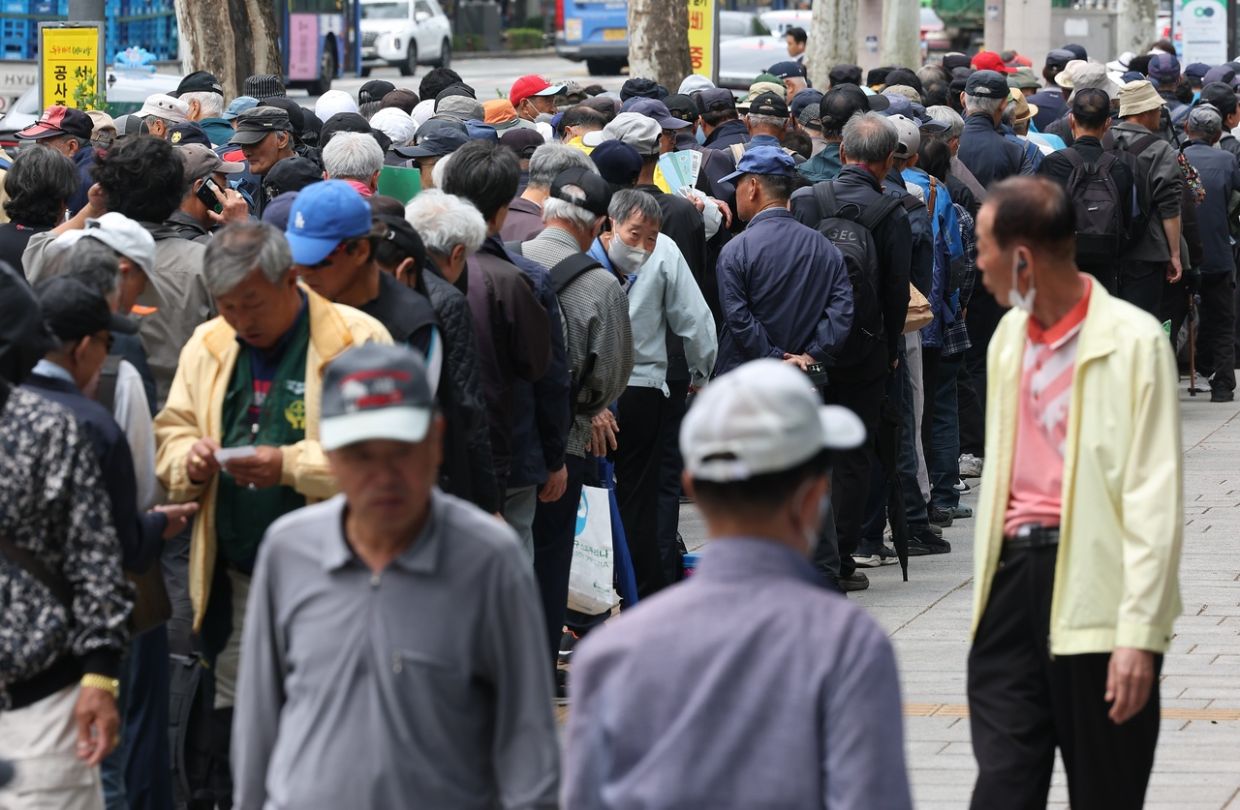
South Korea's capital is considering a significant expansion of its senior transportation benefits by introducing free or subsidised bus fares for citizens aged 70 and older, building upon an existing system that has granted free subway access to those 65 and above for decades. The proposal advanced through a Seoul Metropolitan Council committee in mid-June and was scheduled for a plenary vote, marking another step in efforts to address the mobility needs of an ageing urban population. However, the initiative has ignited considerable debate about whether the city can shoulder the financial obligations, particularly as the proportion of elderly residents continues to climb.
The proposal would apply specifically to regular city and neighbourhood buses while deliberately excluding express and intercity routes, creating a geographically bounded benefit structure. Introduced by Seoul Metropolitan Council Transportation Committee Chair Lee Byeong-yoon of the People Power Party, the ordinance would provide the statutory framework enabling Seoul to establish a formal senior bus-fare support programme. Notably, even if the council approved the measure, implementation would not be immediate; city officials would need to determine eligibility parameters, subsidy levels, and funding mechanisms before any residents received benefits. The initiative aligns with Mayor Oh Se-hoon's campaign commitments made during June's local elections, reflecting the political salience of senior welfare issues in an increasingly elderly city.
The demographic context heightens urgency around the proposal. Approximately 21.2 per cent of Seoul's population comprises senior citizens, and projections indicate the cohort aged 70 and above will expand from roughly 1.27 million currently to 1.63 million by 2031. Supporters of the policy argue that the existing transportation benefit system creates inequities for older residents, particularly those living beyond convenient subway access who depend primarily on buses. While seniors enjoy free subway travel, they must pay standard fares for bus journeys, imposing cumulative costs on vulnerable populations and potentially discouraging mobility among the most isolated elderly residents.
Other South Korean metropolitan areas have already pioneered similar schemes, providing instructive precedents. Daegu introduced free bus rides for seniors beginning in 2023 and is gradually lowering the eligibility age from 75 to 70 throughout 2028. Daejeon already provides free bus rides to residents aged 70 and older, while Incheon announced plans to launch an equivalent programme for those aged 75 and above during the same year. These regional implementations suggest both feasibility and growing political expectations that major cities should offer comprehensive transportation benefits to their elderly populations. However, Seoul's substantially larger population and existing infrastructure commitments distinguish its situation from smaller metropolitan centres.
The financial projections present a formidable obstacle to implementation. According to estimates by the Seoul Metropolitan Council Secretariat, providing universal free bus fares to all residents aged 70 and older would cost approximately 104.7 billion won (equivalent to roughly US$68 million) in its inaugural year, assuming a 2027 commencement date. As the eligible population expands, annual expenditures could climb to 127.5 billion won by 2031, with total five-year spending approaching 579 billion won. These figures represent additional burdens layered atop Seoul's existing transportation support infrastructure, which already encompasses a semi-public bus system where the city compensates private operators for operating losses. In the previous year alone, Seoul transferred more than 450 billion won to bus companies to cover their shortfalls, illustrating the precarious financial position of the sector.
Upward pressure on operational costs threatens to compound the fiscal challenge. Recent court rulings regarding ordinary wages are anticipated to increase labour costs substantially across Seoul's bus industry, narrowing margins and potentially requiring larger municipal subsidies to sustain service levels. This timing amplifies concerns about adding new benefit commitments when existing transportation support obligations already strain municipal finances. The convergence of demographic expansion, operational cost inflation, and competing budgetary demands creates what city planners characterise as an untenable fiscal trajectory without either programme reductions or significant revenue generation.
Seoul Metro, which operates the subway system, has become a vocal critic of expanding senior transportation benefits, arguing that existing free-ride provisions form a primary driver of its mounting deficits. The operator maintains that free fares for seniors, persons with disabilities, and national merit recipients generated average annual transportation losses of 364.5 billion won across the past five years, reaching 448.8 billion won in 2025 alone. Rather than absorb additional subsidy obligations, Seoul Metro has persistently appealed to the central government to assume responsibility for these losses, contending that the city bears an inequitable financial burden for what essentially functions as national social policy.
Policy analysts warn that initiating cash-type welfare programmes creates significant political and practical obstacles to subsequent reductions or eliminations. Sohn Jong-pil, a senior researcher at the Fiscal Reform Institute, emphasised that once benefits commence, reversing them becomes politically treacherous, necessitating cautious deliberation before programme launch. He further cautioned that expanding support without simultaneously strengthening accountability mechanisms within Seoul's semi-public bus system represents an incomplete policy approach that fails to address underlying structural inefficiencies in transportation finance. The implication is that new benefits grafted onto dysfunctional operational systems may merely entrench fiscal problems rather than resolve them.
Proponents of the proposal counter that cost estimates potentially exaggerate the actual burden by assuming universal provision of unlimited free rides. The proposed ordinance does not mandate immediate implementation of benefits for all eligible seniors; rather, it establishes a legal framework granting the city discretionary authority over programme design. This flexibility would permit policymakers to commence with restricted eligibility targeting low-income elderly residents, implement trip caps limiting monthly beneficiaries, restrict support to off-peak periods, or provide partial fare discounts rather than complete exemptions. A Seoul city official clarified that the measure should be understood as establishing institutional foundations rather than imposing immediate universal obligations, allowing potential phased expansion and cost management through targeted implementation strategies.
For Malaysian readers, Seoul's dilemma illustrates challenges facing rapidly ageing Asian economies balancing social welfare expectations against fiscal constraints. As Malaysia's population gradually ages and urban centres experience demographic shifts similar to Seoul's, comparable policy questions about transportation subsidies for elderly residents will likely emerge in Bangkok, Kuala Lumpur, and Singapore. The Seoul case demonstrates how initial benefit commitments, even when fiscally justified initially, can become increasingly burdensome as elderly populations expand and other cost pressures accumulate. Furthermore, the difficulty Seoul Metro experiences in securing sufficient government support highlights the importance of clarifying financial responsibility between operators and municipal authorities before implementing new benefits—a structural question that will confront Southeast Asian transport authorities as ageing populations become more visible users of public systems.
The broader implication concerns intergenerational equity and fiscal sustainability. Expanding transportation benefits for seniors necessarily shifts resources away from investments in infrastructure, education, or other services, or requires tax increases that burden working-age populations. Seoul's debate thus reflects fundamental questions about how societies apportion limited resources across generations and how political systems weigh immediate welfare needs against long-term fiscal viability. The city's eventual decision will likely influence not only other Korean municipalities but also peers throughout Asia grappling with similar demographic and budgetary pressures, making Seoul's resolution of this question consequential for regional policy trajectories.