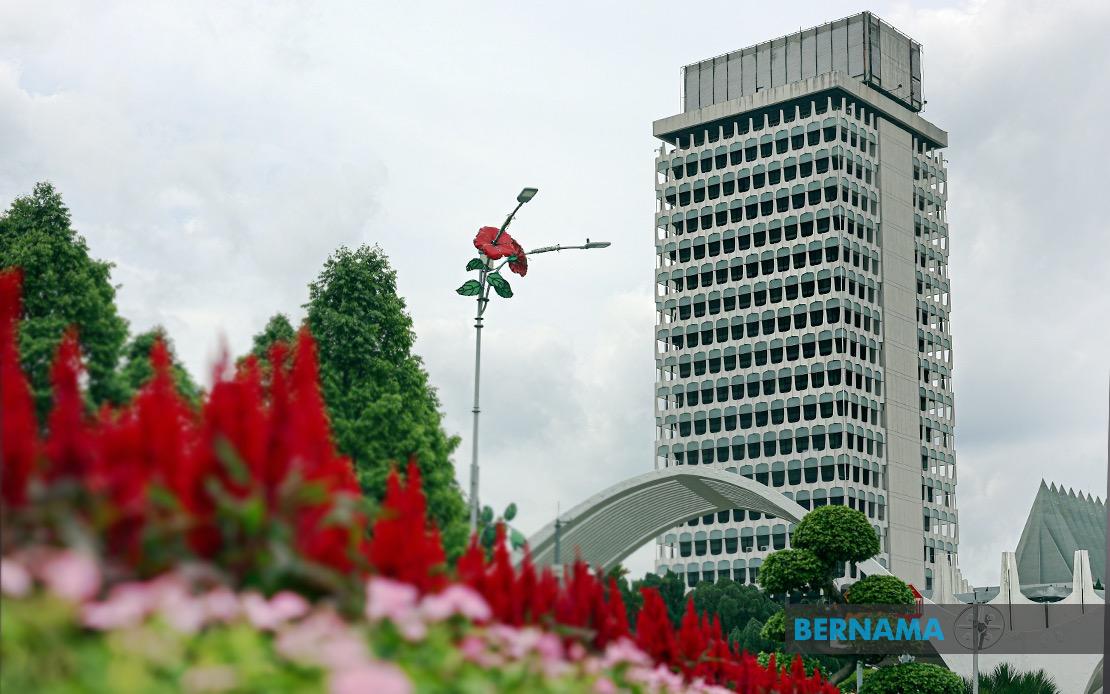
His Majesty Sultan Ibrahim, King of Malaysia, has formally approved eight pieces of legislation that were successfully passed through Parliament during its opening session earlier this year, according to an announcement made in the Dewan Rakyat on June 22. The bills were processed during the First Meeting of the Fifth Session of the 15th Parliament, which conducted business between January 19 and March 3. Dewan Rakyat Speaker Tan Sri Johari Abdul conveyed the royal approval before proceeding with the day's question time, confirming that all eight measures had now become law following the sovereign's constitutional assent.
The suite of approved legislation represents significant policy developments across multiple government portfolios, reflecting the administration's legislative agenda for the year. Among the most substantive is the Government Procurement Act 2025, which establishes a new legal framework governing how government bodies acquire goods, services, and infrastructure. This overhaul modernises procurement practices and introduces updated standards for transparency and efficiency in public spending—a matter of considerable importance given Malaysia's extensive public sector expenditures and the need to ensure competitive and accountable processes.
Two bills addressing immigration and travel documentation have also received royal assent, signalling the government's attention to border management and citizen mobility. The Immigration (Amendment) Act 2025 and the Passports (Amendment) Act 2025 both strengthen Malaysia's regulatory framework in these domains. These changes likely reflect evolving security concerns, administrative improvements, and the need to harmonise domestic procedures with international standards in an era of heightened cross-border flows and digital transformation in identity verification systems.
International legal cooperation formed another focal point of the approved bills. The International Settlement Agreements Resulting from Mediation Act 2025 provides a new legal foundation for Malaysia to recognise and enforce settlement agreements reached through international mediation processes. This legislation aligns Malaysia with contemporary international dispute resolution practices and the Singapore Convention on Mediation, facilitating smoother cross-border commercial and civil dispute resolution among businesses and parties operating in the region.
The Johor Bahru-Singapore Rapid Transit System (RTS) Link Act 2026 represents a landmark approval for the region's transport infrastructure ambitions. This law underpins one of Southeast Asia's most significant bilateral transport projects, a 119-kilometre rail link connecting Malaysia's southern gateway to Singapore's transport network. The legislation provides the legal scaffolding necessary for construction, operation, and governance of this joint venture, which is expected to substantially reshape economic patterns and commuter mobility across the Malaysia-Singapore border.
Two additional bills addressing fiscal matters and environmental protection have also been formally enacted. The Capitation Grant Act 2026 establishes procedures governing per-capita grants distributed to eligible recipients, likely relating to education, healthcare, or social assistance programmes. Meanwhile, the Environmental Quality (Amendment) Act 2026 updates Malaysia's primary environmental legislation, presumably strengthening protections or enforcement mechanisms as the nation navigates intensifying pressures from development, pollution, and climate change—issues of acute concern across the Southeast Asian region.
The Supplementary Supply (2025) Act 2026 authorises additional government expenditures beyond the original budget allocations for the preceding fiscal year, a routine but essential piece of legislation enabling the executive to respond to unforeseen demands or policy priorities that emerged after the main budget passage. This flexibility is particularly important in managing contingencies and ensuring government operations remain adequately funded throughout the financial year.
Separately, the Dewan Negara, Malaysia's upper house, has completed its consideration of the Employment Insurance System (Amendment) Bill 2025, approving it with modifications to Clause 11. The amendments introduced at the senate level suggest substantive deliberation regarding the bill's employment protection provisions, which carry direct implications for workers' benefits and employer obligations. The passage of this bill through both legislative chambers represents an important development for Malaysia's social protection infrastructure, affecting the rights and entitlements of working Malaysians and the operational framework within which employers must function.
The approval of these eight bills demonstrates the parliamentary machinery's capacity to process significant legislation during a concentrated sitting period. The concentration of multiple complex measures—spanning procurement, immigration, infrastructure, mediation, environment, and labour—into a single parliamentary session reflects the government's determination to advance its legislative priorities efficiently. For Malaysian stakeholders across business, civil society, and government, these enactments introduce new legal parameters that will shape administrative processes, investment frameworks, and citizen entitlements in the months and years ahead.
%22%2F%3E%3C%2Fpattern%3E%3C%2Fdefs%3E%3Crect%20width%3D%22100%25%22%20height%3D%22100%25%22%20fill%3D%22url(%23ph12wosg)%22%2F%3E%3Crect%20width%3D%22100%25%22%20height%3D%22100%25%22%20fill%3D%22url(%23ph12wosp)%22%2F%3E%3Ctext%20x%3D%2250%25%22%20y%3D%2250%25%22%20text-anchor%3D%22middle%22%20dominant-baseline%3D%22central%22%20fill%3D%22rgba(255%2C255%2C255%2C0.95)%22%20font-family%3D%22Georgia%2C%20'Times%20New%20Roman'%2C%20serif%22%20font-weight%3D%22700%22%20font-size%3D%22170%22%20letter-spacing%3D%22-0.02em%22%3EMalaysia%3C%2Ftext%3E%3C%2Fsvg%3E)
%22%2F%3E%3C%2Fpattern%3E%3C%2Fdefs%3E%3Crect%20width%3D%22100%25%22%20height%3D%22100%25%22%20fill%3D%22url(%23ph2a8lcg)%22%2F%3E%3Crect%20width%3D%22100%25%22%20height%3D%22100%25%22%20fill%3D%22url(%23ph2a8lcp)%22%2F%3E%3Ctext%20x%3D%2250%25%22%20y%3D%2250%25%22%20text-anchor%3D%22middle%22%20dominant-baseline%3D%22central%22%20fill%3D%22rgba(255%2C255%2C255%2C0.95)%22%20font-family%3D%22Georgia%2C%20'Times%20New%20Roman'%2C%20serif%22%20font-weight%3D%22700%22%20font-size%3D%22170%22%20letter-spacing%3D%22-0.02em%22%3EMalaysia%3C%2Ftext%3E%3C%2Fsvg%3E)