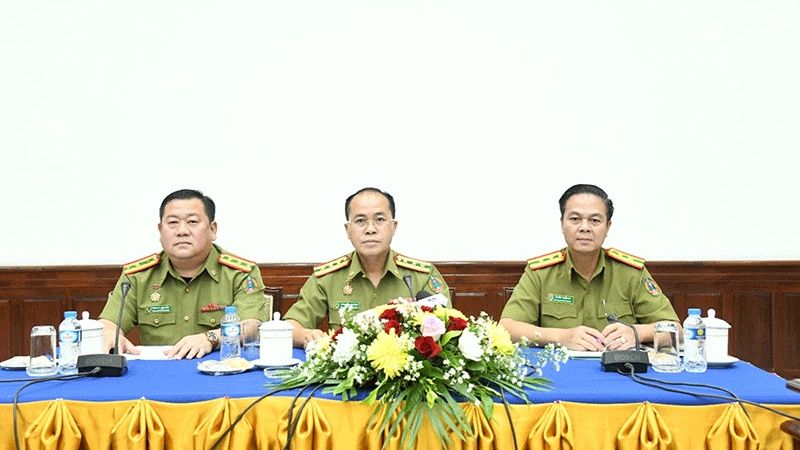
Laotian police have formally indicted the proprietor of Tiger Vodka distillery and multiple personnel connected with Nana Backpackers Hostel in connection with the deaths of six international visitors in the popular backpacker destination of Vangvieng during late 2024, authorities announced at the Ministry of Public Security on Friday. The development marks the most comprehensive public account of the investigation into these fatalities, which claimed victims from the United States, Denmark, Australia, and the United Kingdom and sent shockwaves through the region's tourism sector.
The six deceased have been identified as James Louis Hutson of the United States, Danish nationals Freja Vennervald Sorensen and Anne-Sofie Orkild Coyman, Australian nationals Bianca Jones and Holly Bowles, and British national Simone White. The deaths occurred over a period spanning mid-November 2024, with initial cases reported just days apart. For Southeast Asia and Malaysia in particular, the incident underscores ongoing safety concerns facing young travellers in the region's budget accommodation sector, an industry that draws tens of thousands of Malaysian backpackers annually to Laos and neighbouring countries.
Deputy Chief of the Vientiane Province Police Command Colonel Khamfong Vongdalasane revealed that laboratory testing of vodka samples from the Tiger Vodka distillery in Xaimoungkhoun village, Naxaithong district revealed methanol concentrations exceeding permissible safety thresholds. Methanol, a toxic form of alcohol often used in industrial applications, causes severe poisoning even in small quantities. The Australian Embassy subsequently provided confirmation through Aek Udon Hospital in Thailand that methanol had been detected in the blood of the two Australian women who died, providing direct biochemical evidence linking the contaminated product to at least two of the victims.
Yet despite these findings, the police investigation has encountered a significant legal obstacle that may ultimately limit accountability. Colonel Khamfong stated plainly that investigators cannot legally determine the cause of five deaths because autopsies were never performed. Under Laotian law, establishing criminal responsibility requires more rigorous evidence than toxicological findings alone. The families of the deceased exercised their right to decline post-mortem examinations, a decision that has effectively constrained the police investigation's ability to construct conclusive proof linking specific deaths to the contaminated alcohol or any other criminal conduct.
The distillery owner faces charges under Article 275 of the Penal Code for producing and selling consumer goods harmful to human health, plus charges under Article 297 for operating an illegal business. The case has been forwarded to the Vientiane Province People's Court for trial. Prosecutors initially considered pursuing food safety violations but ultimately redirected the investigation toward the more serious charges related to hazardous product manufacturing and commerce, a strategic pivot suggesting prosecutors believe they can establish a clearer criminal pattern through the broader framework of dangerous goods production.
The hostel case presents a separate legal controversy centred on evidence destruction. Investigators determined that after Hutson died in Room 205 on November 13, 2024, staff members at Nana Backpackers Hostel relocated his body to Vangvieng District Hospital without first alerting police, thereby preventing officers from conducting a crime scene examination of the room where he died. Police charged the hostel owner and ten staff members with destroying evidence under Article 383 of the Penal Code. The Vangvieng District Court convicted all eleven defendants, yet the Vangvieng People's Prosecutor's Office has filed an appeal, contending that the sentences imposed were insufficiently severe and requesting that the Vientiane Province People's Court conduct a review and impose harsher penalties.
This prosecutorial appeal signals frustration with the initial court's leniency and reflects broader pressure to hold the establishment accountable. Currently, Nana Backpackers Hostel remains shuttered whilst legal proceedings continue. The hostel proprietor and all ten staff members have had their passports seized and face travel restrictions, remaining unable to leave Laos until the case concludes. Such measures, while punitive, reflect the seriousness with which authorities are treating the conduct, yet questions linger about whether administrative measures can substitute for definitive determinations of causality.
The circumstances surrounding each death reveal troubling gaps in victim care coordination and investigation procedures. The two Danish nationals fell gravely ill with respiratory distress, vertigo, and nausea, receiving treatment initially at Vangvieng District Hospital before transfer to Hospital 103 in Vientiane, where they subsequently died. The two Australian victims checked into the hostel on November 9, 2024, yet investigators proved unable to trace their complete movements, meals, or beverages consumed during their stay—a troubling investigative blind spot in an era of ubiquitous tourism records and digital communications. After deteriorating rapidly, they received care at Vangvieng District Hospital, then transferred to Settathirath Hospital in Vientiane, before families arranged their airlift to Thailand for advanced medical treatment, where they died. British national Simone White was moved from Mahosot Hospital to Kasemrad International Hospital on November 13, 2024 after losing consciousness, expiring eight days later.
The absence of autopsy evidence creates what might be termed a prosecution dilemma. Police Colonel Khamfong acknowledged forthrightly that whilst methanol exceeding safety standards was confirmed in Tiger Vodka samples and methanol was detected in the blood of the two Australian women, Laotian law as presently applied does not permit investigators to establish criminal responsibility without more definitive proof. This interpretation suggests that Lao jurisprudence, at least as applied in this instance, requires a stronger causal nexus than toxicological evidence alone can provide. Whether this represents a genuine legal limitation or a prosecutorial interpretation favourable to defendants remains a question worth examining.
The investigation's continuation, authorities pledged, will pursue additional evidence gathering under the Law on Criminal Procedure whilst maintaining coordination with the embassies of the United States, Australia, Denmark, and the United Kingdom. This international dimension distinguishes the case from typical domestic criminal matters and has elevated its profile throughout Southeast Asia. Malaysian travellers and families of backpackers should note that Vangvieng, despite its notoriety for adventure tourism, lacks the regulatory oversight and quality assurance systems found in more developed tourist destinations. The incident illustrates the risks inherent in patronising unlicensed alcohol vendors and unregistered accommodations in jurisdictions where enforcement mechanisms remain nascent.
Colonel Khamfong expressed official condolences to bereaved families whilst affirming police commitment to transparent, equitable, and lawful proceedings. The Ministry of Public Security's decision to convene a press briefing with representatives from the Ministry of Foreign Affairs and multiple embassies signals Laotian recognition that this case carries diplomatic significance. However, the reliance on family consent to forgo autopsies—a practice common in many countries but particularly limiting in criminal investigations—has arguably compromised the investigation's ability to establish definitive causality. For Malaysian officials and tourism operators, the case presents a sobering reminder that budget travel, whilst economical, carries risks when undertaken without adequate due diligence regarding accommodation safety, local regulatory compliance, and substance hazards in poorly monitored jurisdictions.

