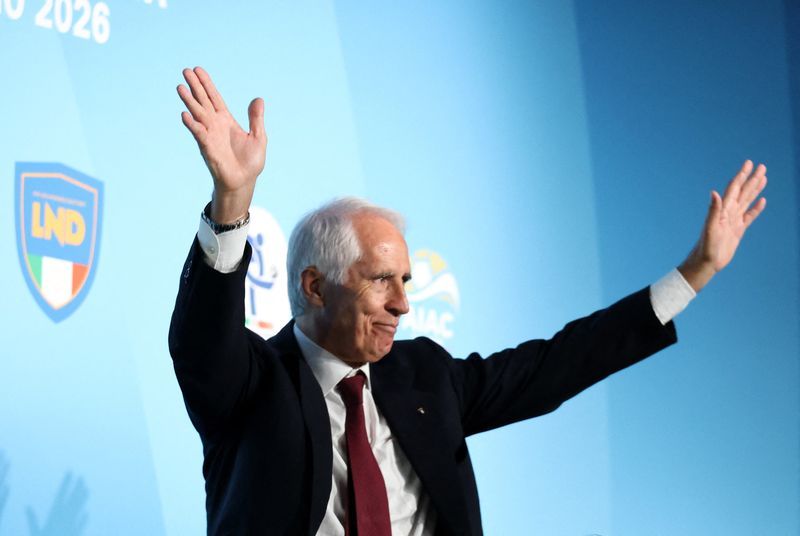
Giovanni Malago's appointment as president of the Italian Football Federation marks a turning point for a national program drowning in unprecedented mediocrity. The 67-year-old businessman secured 68.58% support from federation assembly members in Rome on Monday, defeating rival Giancarlo Abete to take the helm of Italian soccer at its most vulnerable moment in four decades. Malago arrives with an impressive recent credential—he successfully led the organising committee for the Milano Cortina Winter Olympics in February, earning widespread recognition for delivering a well-run Games.
Italy's football establishment faces a catastrophic legitimacy crisis. The nation that has conquered the World Cup four times watched in disbelief as its national team fell to Bosnia & Herzegovina in a qualification playoff last April, extending one of sport's most humbling droughts. This represents the third consecutive World Cup that Italy will miss—a sequence unimaginable even five years ago for a country that has historically dominated international football. The fallout from that April elimination triggered seismic shifts within the federation itself, with outgoing president Gabriele Gravina resigning amid volcanic public anger and condemnation from fans and political figures alike. Compounding this misery, Italy's club teams subsequently crashed out of European competitions, creating a perfect storm of institutional failure.
Gravina's tenure, which began in 2018, ended with visible regret. The 72-year-old acknowledged to reporters during Monday's assembly that he should have departed earlier, a candid admission that underscores the depth of the structural problems requiring urgent intervention. For Malago, the challenge is not simply to restore winning football but to rebuild public confidence in an institution that has forfeited its standing as a continental power. The veteran administrator, who previously chaired the Italian National Olympic Committee, brings experience managing large sporting organisations through crisis periods, though Italian football presents uniquely complex pressures given the sport's cultural dominance in the country.
The departures of key figures signal how thoroughly the system has unravelled. Head coach Gennaro Gattuso stepped down immediately following the Bosnia & Herzegovina defeat, while Gianluigi Buffon, the legendary goalkeeper who served as national team delegation head, also resigned. These exits reflect not merely individual disappointments but a broader institutional fatigue. Buffon's departure proved particularly symbolic—his exit marked the final chapter of an era in which Italian football's philosophical foundations crumbled.
Structural weaknesses have long festered beneath the surface. Respected voices within Italian football, including legendary striker Roberto Baggio, had previously sounded alarms about the youth development system's inadequacy in modern competition. The criticism pointed to a fundamental disconnect between Italy's traditional methodologies and the tactical evolution occurring across Europe. What was once competitive advantage—tactical discipline and defensive organisation—became outdated as the sport accelerated around them. This generational gap in football philosophy contributed substantially to the qualification collapse.
Malago's stated priorities address these systemic failures directly. He must immediately recruit a new men's national team coach capable of instilling competitive credibility, a task complicated by the reputational damage surrounding the program. Beyond coaching appointments, comprehensive youth development reform will require substantial investment and philosophical restructuring across Italian club football, since federation development programs operate within a broader ecosystem. The 2032 European Championship co-hosted by Turkey and Italy offers a medium-term objective around which rebuilding can coalesce, though the timeline remains compressed for fundamental improvement.
The incoming president framed the challenge in philosophical rather than merely technical terms. "The Football Federation must not just administer; it must be a source of inspiration," Malago declared ahead of voting, emphasising that as Italy's largest social institution, the federation carries responsibilities beyond tournament management. His messaging attempts to reframe the crisis as opportunity rather than catastrophe, suggesting that historical achievement should motivate future ambition rather than induce paralysis through nostalgia. "Our roots must not be a source of nostalgia or a burden; we must turn them into an incentive to look toward a new season—one that is courageous, victorious, humble yet ambitious," he stated.
The appointment carries implications extending beyond Italian shores. Italy's decline destabilises established hierarchies within European football, creating space for emerging programs to consolidate power and diminishes the tactical and philosophical influence Italian teams and coaches have traditionally exercised across the continent. For Southeast Asian nations monitoring global football development, Italy's collapse illustrates how institutional complacency and resistance to tactical evolution can rapidly erode competitive standing regardless of historical achievements. Malaysia's own football administration may draw cautionary lessons from Italy's experience.
Malago's inaugural message emphasised collaboration as essential to recovery. "Alone I can do nothing, together we can do everything," he stated after election, recognising that federation renewal requires alignment across clubs, coaches, administrators, and youth development structures. This cooperative approach contrasts with the fractious environment that characterised Gravina's final years, when institutional tensions intensified rather than resolved. The coming months will test whether Malago can translate consensus-building rhetoric into concrete reforms that genuinely modernise Italian football systems rather than merely shuffle personnel within existing structures.