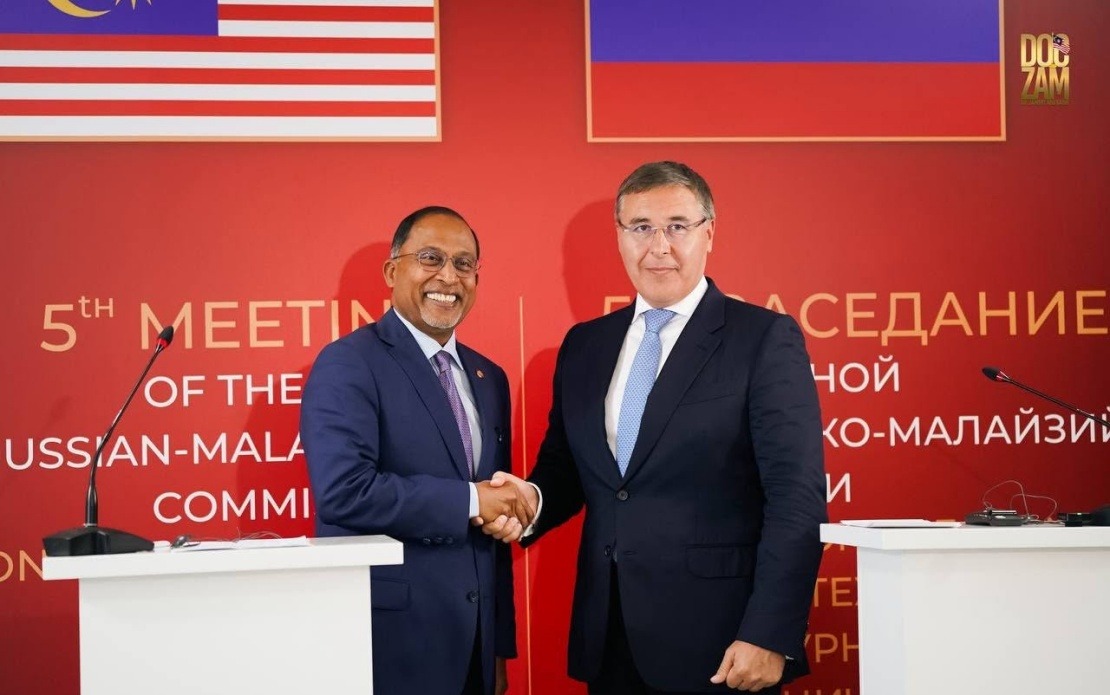
Malaysia and Russia have pledged to complete their 2027 Joint Action Plan before the calendar year closes, establishing a framework that will guide bilateral relations with greater clarity and measurable outcomes. This commitment was announced by Higher Education Minister Datuk Seri Dr Zambry Abd Kadir following the Fifth Meeting of the Malaysia-Russia Joint Commission for Economic, Scientific, Technical and Cultural Cooperation held in Vladivostok, where he shared the chair with Russian Minister of Science and Higher Education Valery Falkov.
The agreement to finalise the action plan represents a significant step in translating the strong political ties between the two nations into tangible, structured initiatives. These relationships have been cultivated at the highest levels, involving His Majesty Sultan Ibrahim, King of Malaysia, Russian President Vladimir Putin, and Prime Minister Datuk Seri Anwar Ibrahim. By establishing clear cooperative frameworks, both countries signal their intent to move beyond ceremonial exchanges toward collaborative efforts that deliver concrete benefits to their populations and economies.
In the sphere of higher education, Malaysia stands to benefit substantially from Russia's ongoing commitment to provide 40 government scholarships annually to Malaysian students. This consistent allocation of educational opportunities reflects the importance both nations place on developing human capital and fostering long-term people-to-people connections. Beyond this established programme, the two countries have embraced several ambitious new initiatives designed to deepen academic and research collaboration, including the inaugural Malaysia-Russia Rectors' Forum slated for 2027, expansion of the MAI-UniKL Russian Aerospace Programme, and the launch of a Malaysia-Russia Youth Leadership Summer Camp.
The proposed Malaysia-Russia Rectors' Forum represents a particularly significant development for Malaysian universities, as it will create a platform for senior academic leaders from both countries to share expertise, identify research synergies, and forge institutional partnerships. The expansion of the aerospace programme underscores mutual recognition of advanced technological capabilities, while the youth leadership initiative signals commitment to developing the next generation of policymakers and innovators who will shape regional dynamics. These educational and academic partnerships will enable students, scholars, and researchers from both nations to cultivate professional networks that transcend borders and enhance knowledge exchange.
On the economic front, Malaysia and Russia have identified substantial opportunities for deepening trade relationships and investment flows. The two countries have explored mechanisms to expand market access and strengthen commercial cooperation, with particular emphasis on agricultural products and raw materials. Notably, discussions have focused on fertiliser supply chains, including urea, which carries direct relevance to Malaysia's food security objectives and agricultural productivity. Such cooperation acknowledges Russia's significant position as a global supplier of agricultural inputs and Malaysia's need to diversify its sourcing strategies while managing domestic food production challenges.
Cooperation has been extended across a diverse array of strategic sectors that reflect contemporary global priorities and technological advancement. Both nations have identified artificial intelligence, digital technology, smart cities, and information security as priority areas, recognising that technological innovation increasingly determines competitive advantage in the global economy. Additionally, Malaysia and Russia have committed to strengthening partnerships in telecommunications, renewable energy, liquefied natural gas, and liquefied petroleum gas—sectors that address energy security and climate transition imperatives. The two countries have also begun exploring cooperation in the peaceful application of nuclear energy, contingent upon both nations' legal and regulatory frameworks, demonstrating readiness to engage in advanced technological domains.
Financial cooperation between Malaysia and Russia has been strengthened through involvement of central banking authorities, with Bank Negara Malaysia and the Bank of Russia spearheading discussions on expanding financial linkages. These conversations have examined Labuan's potential as an international financial centre and gateway to ASEAN markets, positioning Malaysia's financial hub as a conduit for broader Southeast Asian engagement with Russian capital and investment. The two countries have also explored opportunities in Islamic finance, an area where Malaysia's extensive expertise and infrastructure can facilitate Russian participation in this rapidly expanding global sector. Digital assets and blockchain applications have similarly emerged as cooperation domains reflecting the modernisation of financial systems across both nations.
Beyond the headline sectors, Malaysia-Russia collaboration has expanded into industrial development, healthcare provision, transport infrastructure, green technologies, climate change mitigation, creative industries, and space exploration. This breadth of engagement demonstrates the comprehensive nature of the bilateral relationship, extending far beyond traditional energy or arms cooperation to encompass the full spectrum of modern economic and social activity. The diversification of cooperation areas reduces dependency on single sectors and creates resilience within the bilateral relationship.
During the Vladivostok meeting, Datuk Seri Dr Zambry and Minister Falkov witnessed the formal signing of three institutional cooperation agreements. Universiti Teknologi MARA (UiTM) established partnerships with Russia's National Research University Moscow Power Engineering Institute and the Institute of Experimental Medicine, while Universiti Tun Hussein Onn Malaysia (UTHM) signed an agreement with the State University of Land Use Planning. These institutional-level accords represent the practical implementation of bilateral commitments and create direct channels for academic staff exchanges, joint research projects, and student mobility.
The decision to host the sixth Malaysia-Russia Joint Commission meeting in Malaysia in 2027 carries considerable symbolic significance, as this gathering will coincide with the 60th anniversary of diplomatic relations between the two nations. This milestone provides an opportunity for both countries to reflect on six decades of engagement while charting a course for future cooperation. The timing underscores Malaysia's commitment to advancing the relationship and positions the nation as an active rather than passive participant in shaping bilateral trajectories.
For Malaysian policymakers and stakeholders, this collaborative framework offers multiple avenues for engagement with Russian expertise and resources at a time when Southeast Asia faces complex challenges in technology adoption, energy transition, and sustainable development. The emphasis on structured cooperation through formal action plans suggests that both governments are committed to moving beyond ad-hoc engagement toward systematic programmes with measurable outcomes and institutional anchoring. This approach increases the likelihood that initiatives will persist beyond individual political leadership changes and generate sustained benefits for Malaysian institutions, businesses, and citizens.

