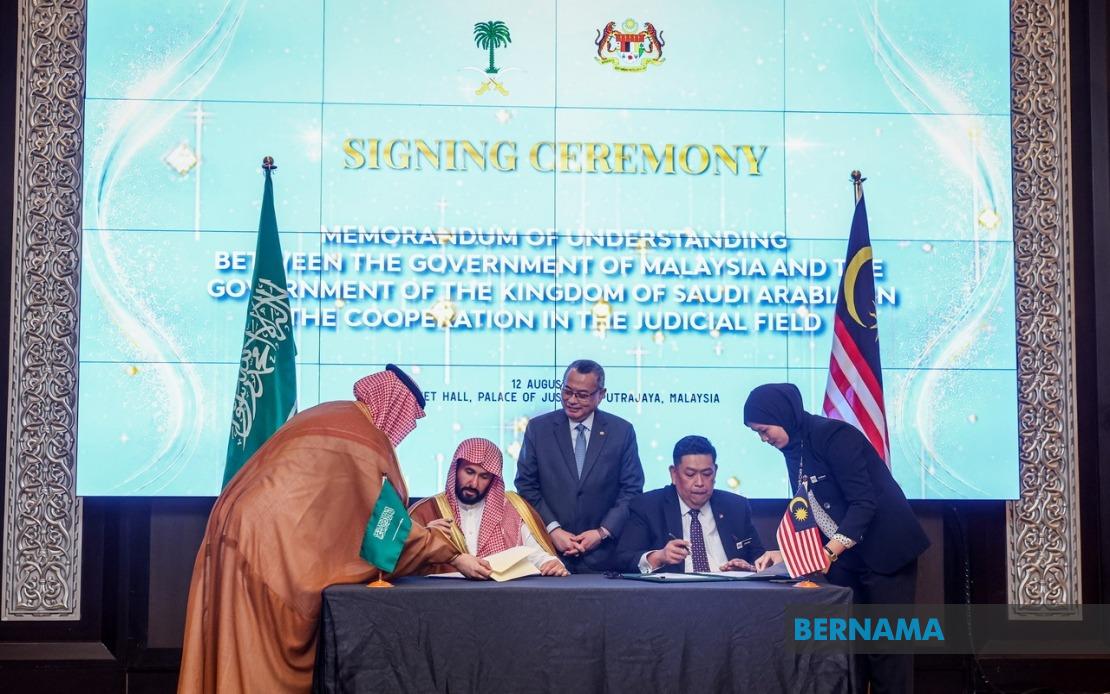
Malaysia and Saudi Arabia have taken a significant step to deepen their judicial relationship by formalising cooperation through a memorandum of understanding signed at the Palace of Justice in Putrajaya on August 12. The agreement, executed between Chief Registrar of the Federal Court Azhaniz Teh Azman Teh and Saudi Arabian Minister of Justice Sheikh Dr Waleed Mohammed Alsmani, establishes a structured institutional partnership intended to facilitate knowledge-sharing and collaborative initiatives across multiple dimensions of the judiciary. The signing ceremony, presided over by Chief Justice Tun Wan Ahmad Farid Wan Salleh, underscores the importance both nations place on strengthening bilateral ties in the justice sector.
The memorandum creates a comprehensive framework addressing several interconnected areas of judicial modernisation and operational excellence. Among the primary focus areas are civil case management systems, the adoption and implementation of judicial technology platforms, and broader digitalisation initiatives that contemporary courts increasingly rely upon to enhance efficiency and accessibility. The agreement also contemplates structured exchanges of practical experience and the sharing of publicly available judicial information, recognising that both jurisdictions can benefit from examining one another's systems and methodologies. Regular institutional visits and continuous knowledge exchange mechanisms are embedded within the framework, suggesting a commitment to sustained engagement rather than a ceremonial gesture.
For Malaysia's judicial system, this partnership carries particular significance given the region's emphasis on digital transformation. The agreement positions Malaysian courts alongside a major Gulf state in sharing best practices around e-governance and technological advancement. The Malaysian Judiciary has invested considerably in its e-Court system, a digitalisation initiative aimed at streamlining proceedings and improving public access to justice. By formalising knowledge-exchange provisions with Saudi Arabia, the arrangement validates Malaysia's technological achievements while potentially exposing Saudi judicial administrators to practical applications that could inform their own modernisation efforts. This reciprocal dynamic reflects a mature understanding that judicial innovation transcends national boundaries and that peer-learning relationships strengthen institutional capacity across borders.
A particularly noteworthy dimension of the cooperation agreement concerns judicial approaches to sensitive criminal matters, specifically sexual offences against children. During Sheikh Dr Waleed's visit, both nations engaged in a dedicated dialogue and experience-sharing session focusing on this critical area. Malaysia's developing jurisprudence and procedural innovations in handling such cases—which intersect legal, psychological, and child protection considerations—represent valuable knowledge assets for regional and international peers. The inclusion of this topic in the formal cooperation framework suggests both nations recognise the urgency of strengthening judicial responses to child vulnerability and exploitation. For Malaysian practitioners and policymakers, Saudi engagement on this matter acknowledges the sophistication of Malaysia's approach while creating opportunities for comparative analysis that may further refine domestic protections.
The timing of this judicial agreement reflects broader Malaysia-Saudi Arabia relations, which have historically encompassed cultural, religious, and economic dimensions. Saudi Arabia represents a crucial partner across multiple sectors for Malaysia, and the judicial MoU represents a natural extension of engagement into governance and institutional domains. The statement issued by the Office of the Chief Registrar characterises the memorandum as marking an important milestone, language that indicates Malaysian authorities view this as a meaningful advancement rather than a routine administrative arrangement. The emphasis on creating a structured platform for closer institutional engagement suggests both parties intend substantive implementation rather than aspirational cooperation.
From a Southeast Asian perspective, this bilateral judicial arrangement carries implications extending beyond the two signatories. Malaysia's willingness to formalise judicial cooperation with Gulf states demonstrates the diversification of regional legal engagement patterns. Traditionally, Southeast Asian judicial institutions have concentrated on intra-regional cooperation through forums like the ASEAN Judicial System. The Saudi arrangement indicates Malaysian courts are developing multidirectional partnerships that span geographies and legal traditions. This approach enriches the Malaysian judicial system's exposure to diverse legal methodologies and administrative practices, potentially fostering innovations that could benefit ASEAN judicial forums subsequently.
The emphasis within the MoU on civil case management deserves particular attention, as backlog reduction and case processing efficiency remain persistent challenges for Malaysian courts. Many Commonwealth jurisdictions, including Malaysia, struggle with delayed resolution of civil disputes, which affects business confidence and public trust in judicial systems. Saudi Arabia's experience with managing civil caseloads, particularly given the rapid economic development and associated commercial litigation in recent decades, provides relevant reference material. The structured exchange of experience in this domain could yield practical insights applicable to Malaysian contexts, potentially informing process improvements that reduce timelines without compromising judicial rigour.
The Malaysian Judiciary's statement explicitly framing the agreement as strengthening longstanding ties suggests historical judicial engagement between the nations that predates this formal memorandum. The characterisation also indicates strategic framing by Malaysian authorities, positioning the MoU as evolution rather than initiation of ties. This rhetorical approach, common in diplomatic statements, reflects confidence in the relationship's foundation and potential for deepening. For observers monitoring judicial independence and institutional autonomy, the bilateral nature of the arrangement and its focus on operational and technological matters rather than substantive judicial philosophy reassures that cooperation remains consonant with each nation's judicial sovereignty.
Looking forward, the practical realisation of this memorandum's provisions will determine its significance. Successful implementation requires dedicated resources, sustained political will, and genuine institutional commitment from both the Malaysian and Saudi judiciaries. The agreement's reference to regular exchanges and institutional visits suggests both parties contemplate ongoing engagement mechanisms that extend beyond initial signing ceremonies. The inclusion of the e-Court system discussion during this visit indicates Malaysia's technological platforms are being positioned as exportable models, potentially creating opportunities for Malaysian tech companies and expertise to serve neighbouring markets. Similarly, Saudi expertise in particular administrative or procedural domains may inform Malaysian institutional refinement. The breadth of cooperation areas—spanning civil procedure, technology, child protection, and general knowledge-sharing—suggests partners identified multiple mutual benefit opportunities before finalising the agreement, indicating pragmatism in structuring the partnership.

