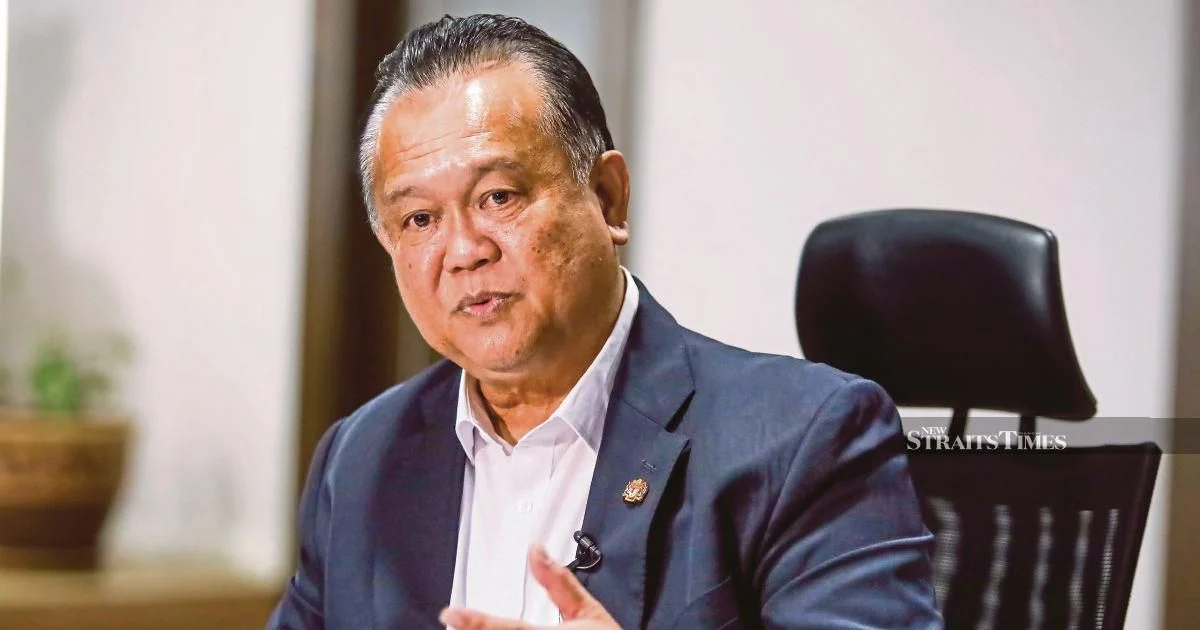
Malaysia's approach to transport infrastructure is undergoing a fundamental recalibration, according to Works Minister Datuk Seri Alexander Nanta Linggi, who argues that the country must move beyond a traditional highway-centric model toward a more sophisticated, integrated approach that weaves together road networks with comprehensive public transit systems.
The minister's statement reflects a growing recognition within government circles that decades of highway expansion have reached a practical and financial saturation point. While acknowledging that road networks will continue to form part of Malaysia's transport backbone, Datuk Seri Nanta Linggi indicated that the era of massive new highway construction projects may be drawing to a close. This represents a notable departure from the development paradigm that dominated Malaysian infrastructure planning for much of the past three decades, when new expressways and federal roads were seen as primary engines of economic growth and urban connectivity.
The pivot toward intelligent, technology-enabled highways signals an understanding that simply building more roads is no longer a viable solution to congestion and mobility challenges. Modern highways, the minister suggested, will require embedded digital systems that enable real-time traffic management, predictive maintenance, and responsive capacity adjustments. Such approaches could include dynamic pricing systems, intelligent signalling, and vehicle-to-infrastructure communication that helps distribute traffic flow more efficiently across existing networks rather than relying on physical expansion.
Crucially, Datuk Seri Nanta Linggi emphasized that future highway development must be conceived as part of a larger, interconnected transport ecosystem rather than as standalone projects. This conceptual shift has significant implications for how Malaysia plans urban mobility going forward. The notion of integration suggests that new or upgraded highways will be designed with deliberate connection points to rail networks, bus rapid transit systems, and other mass transit options. Such design principles could reduce the dependency on private vehicles by making it genuinely convenient for commuters to combine different transport modes within single journeys.
For Malaysian readers and regional observers, this articulation of policy carries tangible consequences. In urban centres like the Klang Valley, where traffic congestion has become a defining characteristic of daily life, an integrated transport strategy could theoretically reduce pressure on roads by offering viable alternatives. The minister's vision suggests that money currently earmarked for new highway construction might be redirected toward expanding and modernizing the public transport network, potentially accelerating projects related to the Mass Rapid Transit system expansion, light rail extensions, and last-mile connectivity solutions.
The emphasis on smarter highways also reflects Malaysia's broader positioning within a globally shifting transport landscape. Worldwide, cities and nations are grappling with how to manage mobility in an age of autonomous vehicles, electric transport, and climate consciousness. By signalling an intention to build fewer highways while making existing ones more intelligent and connected, Malaysia is attempting to position itself as forward-thinking, even as the country continues to develop economically and requires robust transport infrastructure.
However, the transition from highway-building to smart integration presents substantial challenges. It requires not only technological investment but also a fundamental reorganization of how different transport authorities coordinate and share data. Currently, Malaysia's transport system is fragmented across multiple agencies and levels of government, with limited real-time information sharing between operators. Achieving genuine integration will demand institutional reforms and sustained funding commitments that extend well beyond a single electoral cycle.
The affordability question also looms large. Building intelligent highways and expanding public transport simultaneously requires resources that must compete with other pressing development priorities. For Malaysian policymakers, this means making difficult trade-offs about resource allocation, particularly given that public transport expansion typically requires long-term subsidization to remain affordable for lower-income users who might otherwise turn to private vehicles or informal transport options.
International experience offers both cautionary tales and inspiration. Cities like Singapore have achieved high public transport modal shares through intensive investment, regulatory discipline, and pricing mechanisms that make private car ownership expensive. Jakarta and Bangkok, by contrast, have continued to struggle with congestion despite ongoing highway additions, suggesting that road-building alone is insufficient. Malaysia's transport future will likely depend on how successfully the government learns from these varied international experiences and adapts them to local conditions.
The minister's articulation of transport policy also signals recognition that Malaysia's growing environmental commitments, including pledges toward carbon neutrality and support for electric vehicles, require transport systems that reduce overall motor vehicle dependency. An integrated network that makes public transit genuinely competitive offers one pathway toward meeting such environmental targets while maintaining economic connectivity.
Moving forward, the critical test will be whether this shift from highway expansion to intelligent integration translates into concrete budget allocations and policy implementation. The rhetoric of integrated transport is now commonplace in Malaysian political discourse, but actual delivery remains inconsistent. For commuters, businesses, and investors, the real measure of this policy reorientation will be whether the next five years bring demonstrable improvements in how different transport modes connect and function together, not simply aspirational statements about mobility futures.