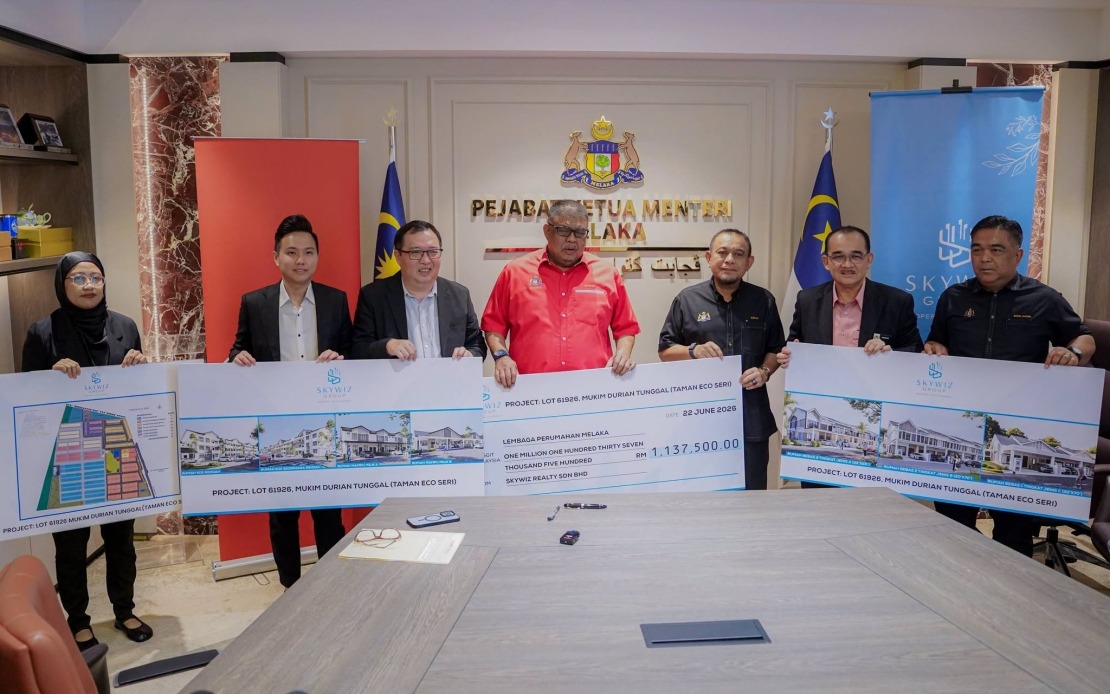
Melaka's Chief Minister Datuk Seri Ab Rauf Yusoh has made an impassioned appeal to property developers operating in the state to incorporate lift facilities in their multi-storey residential and commercial projects, positioning the amenity as a critical accessibility feature rather than an optional luxury. Speaking after overseeing the signing of an Affordable Housing Development Agreement between the Melaka Housing Board (LPM) and Skywiz Reality Sdn Bhd, Ab Rauf emphasized that such infrastructure improvements would expand the market appeal of properties while directly benefiting senior citizens and individuals with mobility challenges.
The urgency of this directive stems from observable market challenges within Melaka's property sector. Ab Rauf highlighted that numerous multi-storey developments across established neighbourhoods such as Kota Laksamana, Banda Hilir and Melaka Raya have struggled to achieve full occupancy, with the absence of lift infrastructure cited as a significant barrier to buyer interest. This observation reveals a gap between property supply and consumer preferences—one that the state government believes it can address through regulatory intervention rather than relying solely on developer discretion.
The state administration is preparing to introduce formal policy mechanisms to address this gap. Rather than continuing with voluntary industry compliance, Melaka intends to establish mandatory requirements mandating that all proposed commercial shoplots and three-storey residential buildings be equipped with lifts. This shift from encouragement to regulation reflects the Chief Minister's conviction that accessibility should be integrated into development planning from inception rather than retrofitted later, an approach that could streamline construction timelines and reduce long-term costs.
Ab Rauf framed the initiative within a broader developmental philosophy centred on inclusive urban planning and quality of life. By removing physical barriers that prevent elderly residents and people with disabilities from accessing buildings, the state positions itself as prioritizing equity alongside economic growth. This messaging resonates particularly in Malaysia's context, where an ageing demographic profile has increasingly drawn policy attention to age-friendly infrastructure and universal design principles.
The Skywiz Reality agreement itself demonstrates the scale of affordable housing ambitions currently reshaping Melaka's residential landscape. The developer will construct 903 housing units across a 26.56-hectare parcel in Mukim Durian Tunggal, Alor Gajah, with completion targeted within three years. Of this total, 453 units will fall within the affordable category, subdivided into low-cost offerings (61 units), low-medium cost homes (54 units), and two tiers of affordable housing products designated as Type A (200 units) and Type B (138 units). The remaining 450 units will operate within the open-market segment, likely commanding higher prices and generating cross-subsidization dynamics typical of mixed-income developments.
The project structure reflects current thinking on how mixed-income communities can achieve financial viability while meeting social objectives. By bundling market-rate units alongside subsidized housing, developers sustain project economics while expanding homeownership opportunities for lower-income households. For Melaka Housing Board, the arrangement is expected to generate RM2.38 million in returns, funds that can be reinvested in future affordable housing ventures or directed toward other state priorities.
Timeline enforcement features prominently in the state's oversight framework. Skywiz Reality faces a 90-day window from Form B issuance by the Hang Tuah Jaya Municipal Council (MPHTJ) to commence active construction, a deadline designed to prevent indefinite land banking and ensure rapid project activation. Beyond this initial trigger, the state government has committed to ongoing monitoring of implementation quality, specifications adherence, and schedule compliance—institutional vigilance reflecting lessons learned from previous stalled or underperforming developments.
The broader policy context involves the Melaka Sayang Rakyat (MeSRa) initiative, a comprehensive state housing programme aimed at expanding homeownership across diverse income brackets. To date, LPM and its development partners have completed 23,514 affordable units, with planners targeting eventual delivery of more than 38,440 properties. This trajectory positions Melaka among Malaysia's more aggressive affordable housing states, though questions persist regarding absorption rates, buyer demographics, and whether supply additions keep pace with migration and household formation patterns.
The Chief Minister's rhetoric regarding homeownership emphasizes its foundational role in social stability and family resilience. Positioning property ownership as essential infrastructure for community well-being and inclusive development, Ab Rauf connects housing policy to broader governance objectives centring family institutions and social cohesion. This framing echoes international best practices while responding to Melaka's specific demographic and economic contexts, where housing affordability remains a persistent concern for working-class and middle-income residents.
For property developers and industry observers across Southeast Asia, Melaka's emerging accessibility standards may signal regulatory directions likely to be replicated elsewhere. As regional governments increasingly recognize that universal design principles enhance market competitiveness alongside achieving equity goals, mandatory lift provisions in multi-storey residential construction could become standardized across Malaysian jurisdictions. Developers operating in Melaka should anticipate that voluntary compliance may soon transition to legal obligation, making early adoption of accessibility features a prudent competitive positioning strategy.
The intersection of housing affordability and accessibility infrastructure highlights evolving expectations around development quality in Malaysia's secondary cities. Rather than viewing lifts as cost-addition problems, the Melaka approach reframes them as market-enabling investments that reduce vacancy risks and broaden buyer pools. This perspective carries implications for construction cost modelling, unit pricing strategies, and the overall feasibility calculations that shape residential development planning across the region.

