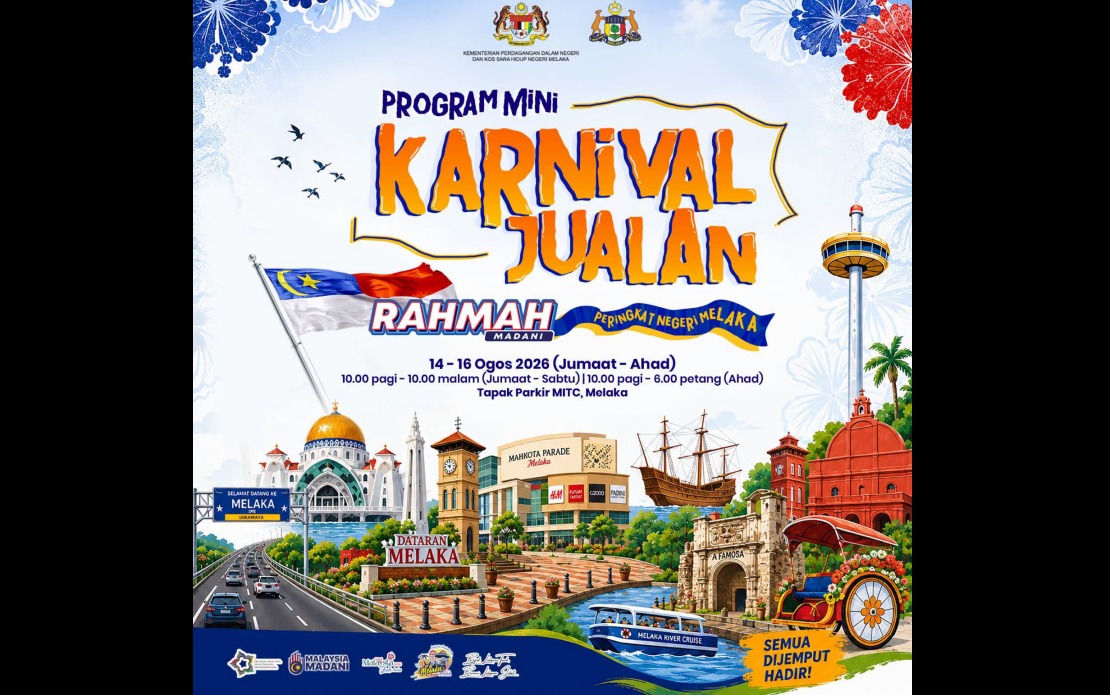
The Ministry of Domestic Trade and Cost of Living (KPDN) will launch its Melaka Mini Carnival this weekend, anticipating strong community turnout as the event aims to showcase government initiatives designed to address household affordability challenges across the state. Running from Friday through Sunday at the Melaka International Trade Centre, the three-day programme represents a strategic effort by federal authorities to engage residents directly with consumer protection services and cost-of-living assistance programmes that often remain underutilised due to limited public awareness.
Deputy Minister Senator Datuk Dr. Fuziah Salleh framed the carnival as part of a broader ministerial strategy to democratise access to KPDN services through an informal, community-centric format rather than traditional bureaucratic channels. This approach reflects growing recognition among Malaysian policymakers that government initiatives frequently fail to reach their intended beneficiaries simply because ordinary households lack convenient exposure to available support mechanisms. By situating the carnival at a commercial venue and incorporating entertainment alongside administrative services, KPDN aims to lower psychological barriers that might otherwise discourage public engagement with state programmes.
The centrepiece of the carnival will be the MADANI Rahmah Sales Programme, a government scheme enabling residents to purchase daily necessities at substantially reduced prices. For Malaysian households already grappling with elevated living costs across food, utilities, and transport, the opportunity to stock up on subsidised essentials at a single dedicated event addresses both practical need and psychological relief. The programme's visibility at such venues helps build awareness of permanent retail partnerships where these discounted goods remain available beyond carnival dates, extending the policy's utility beyond the weekend itself.
Beyond commerce, the carnival will host multiple exhibition booths staffed by KPDN personnel prepared to discuss consumer rights, price monitoring mechanisms, and law enforcement activities aimed at preventing market manipulation. This educational component carries particular relevance for Southeast Asian consumers who frequently encounter pricing inconsistencies, spurious product claims, and unfair commercial practices. Direct interaction with ministry officials allows residents to understand complaint procedures, learn how to identify counterfeit goods, and grasp the regulatory framework protecting their purchasing power—knowledge often dispersed unevenly across different income and education levels.
The programming strategy deliberately incorporates non-commercial attractions to maximise family participation and extend visitor dwell time. An esports tournament organised in collaboration with Todak will appeal to younger demographics, while children's colouring competitions, live performances, and exhibitions of vintage automobiles and classic motorcycles create intergenerational appeal. Such diversification reflects research suggesting that public engagement with government services increases substantially when positioned within broader entertainment contexts rather than framed as purely administrative obligations.
The Menu Rahmah food truck initiative, offering affordable meals during the carnival, simultaneously serves practical and symbolic functions. It provides inexpensive dining options for visitors, reducing overall participation costs for lower-income families, while demonstrating government commitment to food security and affordability—issues dominating household budgets throughout Malaysia and consistently ranking among primary voter concerns. The visibility of subsidised food offerings reinforces messaging about KPDN's core mandate and tangible impact on daily life.
From a political perspective, the Melaka carnival timing and scale signal ministerial confidence in the effectiveness of these programmes and willingness to invest promotional resources in their dissemination. By targeting a state-level venue rather than mounting exclusively national events, KPDN acknowledges the importance of decentralised engagement and recognises that policy adoption requires embedding awareness within communities at the local level where residents maintain greatest everyday economic interactions. This strategy aligns with broader Malaysian governance trends toward devolved programme delivery.
The three-day schedule—operating 10 am to 10 pm Friday and Saturday, with reduced Sunday hours from 10 am to 6 pm—reflects practical scheduling that accommodates both working professionals and weekend-focused family visits. Positioning the carnival at MITC provides sufficient physical capacity to handle projected visitor volumes without creating congestion that might deter participation or diminish experience quality, a lesson learned from overcrowded earlier government events that generated negative public perception.
For Malaysian households navigating persistent cost-of-living pressures, the carnival represents more than entertainment; it offers concrete exposure to government support mechanisms that directly reduce monthly household expenditure. The combination of discounted essential goods access, consumer education, and family entertainment acknowledges that effective policy communication requires engaging multiple audience motivations simultaneously rather than expecting policy compliance through information dissemination alone. As regional governments increasingly confront consumer advocacy demands and affordability crises, Melaka's carnival model may offer transferable lessons for neighbouring Southeast Asian economies grappling with similar household budget pressures and seeking innovative public engagement strategies.

