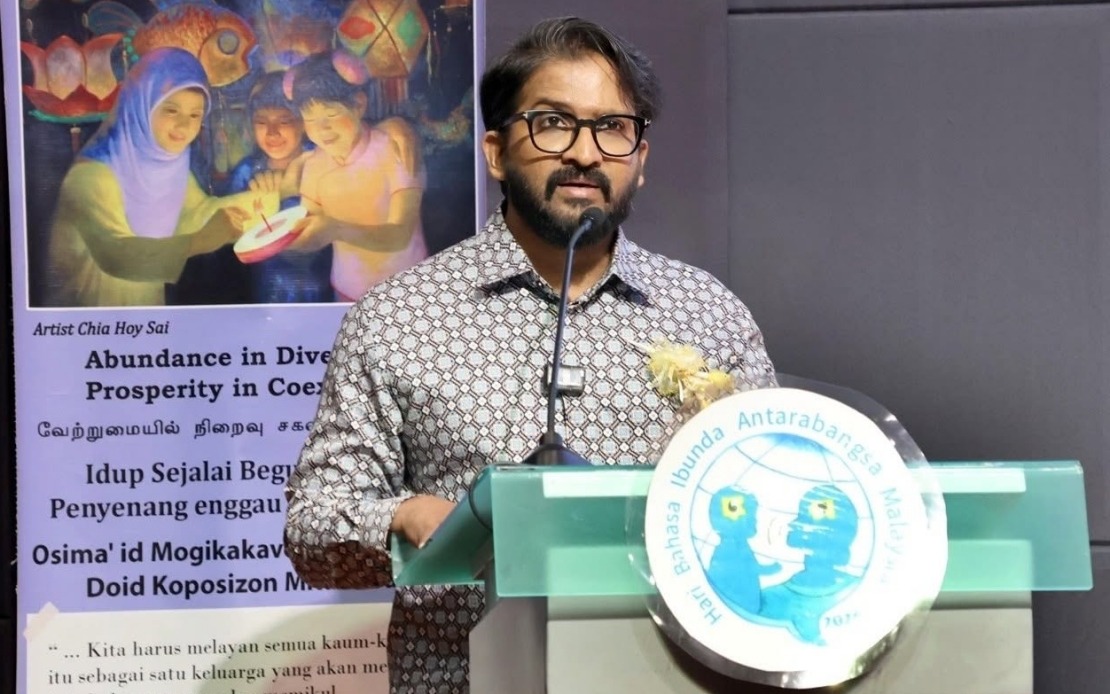
Deputy National Unity Minister R. Yuneswaran has made a compelling case for prioritising mother-tongue education among Malaysia's youth, positioning linguistic competency as a potential antidote to the divisive race, religion and royalty (3R) conflicts that plague social media platforms daily. Speaking in a Facebook post on June 21, Yuneswaran articulated a nuanced vision of national unity that recognises language not merely as a tool for exchanging words, but as a vessel carrying deeper layers of cultural identity, heritage and community values.
The minister's intervention addresses a persistent challenge facing Malaysian society: the rapid spread of inflammatory 3R discussions online that frequently exacerbate social fragmentation. By tracing these tensions to deficiencies in cross-cultural understanding—particularly gaps in knowledge of one another's historical narratives, linguistic traditions and cultural frameworks—Yuneswaran has identified a root cause that extends beyond typical policy responses. His diagnosis suggests that many 3R disputes stem not from ideological conviction but from fundamental ignorance about different communities' worldviews and values systems.
Yuneswaran's emphasis on Malaysia's linguistic landscape carries particular significance for a nation with approximately 130 languages spoken across its diverse population. Rather than viewing this multiplicity as a liability that threatens cohesion, he reframes it as a national asset deserving celebration and active cultivation. This perspective represents a deliberate strategic shift, positioning linguistic diversity as something that strengthens rather than weakens the social fabric—a message that carries weight in a context where language politics frequently become flashpoints for intergroup tensions.
Central to the deputy minister's argument is his rejection of a zero-sum framework where proficiency in one's mother tongue necessarily compromises competency in the national language or other tongues. Drawing on his personal background as an Indian Malaysian educated in both Chinese and national school systems, Yuneswaran articulates from lived experience that multilingualism creates opportunities for deeper cultural self-understanding rather than obstacles to national integration. This biographical grounding lends credibility to his position and provides a counternarrative to periodic claims that mother-tongue education dilutes national cohesion.
The connection Yuneswaran draws between linguistic competency and cultural respect reveals a sophisticated understanding of how language functions in identity formation and intergroup relations. When individuals develop strong literacy in their own mother tongue, they necessarily engage more deeply with their community's historical narratives, philosophical traditions and value systems. This introspection, he suggests, cultivates empathy and intellectual humility—dispositions that enable individuals to approach other cultures with genuine curiosity rather than suspicion or defensiveness. Conversely, those with weak connections to their linguistic heritage may lack the secure cultural grounding from which to appreciate difference.
The National Unity Ministry's mandate under the 13th Malaysia Plan reflects an institutional commitment to fostering understanding, mutual respect and cross-cultural learning as pathways to stronger nation-building. Yuneswaran's invocation of this framework positions mother-tongue education as integral to fulfilling these broader strategic objectives. By anchoring mother-tongue policy within a unified national vision rather than treating it as a particularistic demand, he attempts to reposition it as serving collective Malaysian interests rather than narrow communal interests.
For Malaysian educators and policymakers, Yuneswaran's intervention carries implications for curriculum design and language instruction priorities. If mother-tongue proficiency genuinely enables better cross-cultural understanding and reduces 3R tensions, this reasoning suggests educational institutions should allocate resources accordingly, ensuring that vernacular language programmes receive adequate support alongside instruction in the national language. This would represent a recalibration of priorities in some quarters where mother-tongue education has faced pressure or resource constraints.
The deputy minister's framing of language as a unifying force rather than a dividing mechanism offers a constructive counterpoint to periodic anxieties about linguistic fragmentation. His claim that "language is what unites us" invokes language's fundamental role in building community and enabling solidarity. Yet this observation also invites reflection: what linguistic policies and educational investments are required to actualise this unifying potential? The vision Yuneswaran articulates demands more than rhetorical commitment; it requires sustained institutional investment, curriculum development, teacher training and social messaging that collectively reinforce the value of mother-tongue acquisition.
The timing of these remarks amid ongoing social media tensions underscores the urgency of developing preventive mechanisms against 3R escalation. Rather than attempting to regulate speech or restrict discussion of sensitive topics after conflicts emerge, Yuneswaran's approach targets upstream factors that he identifies as contributing to intergroup friction. By strengthening cultural literacy and mutual understanding through mother-tongue education, the theory holds that individuals become less susceptible to inflammatory rhetoric and more capable of engaging substantively across difference.
Southeast Asian context suggests that Malaysia's challenges with identity-based online polarisation are not unique but reflect region-wide struggles with rapid digitalisation outpacing the development of shared civic understanding. Other multiethnic nations in the region grapple with similar tensions between ethnic particularism and national unity. Yuneswaran's emphasis on language education as a social cohesion tool offers a model that other governments might adapt or learn from, positioning education policy as central to managing pluralism rather than treating it as peripheral to security or political concerns.
The deputy minister's call ultimately represents an appeal for long-term, systemic investment in understanding—a fundamentally hopeful stance that assumes divisive attitudes stem significantly from insufficient knowledge rather than irreconcilable value conflicts. Whether this diagnosis fully captures the causes of 3R polarisation remains open for debate; certainly, structural factors, political incentives and deliberate disinformation campaigns also contribute. Nevertheless, Yuneswaran's linking of mother-tongue proficiency to social cohesion opens important conversations about education's role in building the intercultural competencies that plural societies require to function successfully.
%22%2F%3E%3C%2Fpattern%3E%3C%2Fdefs%3E%3Crect%20width%3D%22100%25%22%20height%3D%22100%25%22%20fill%3D%22url(%23ph5vnqfg)%22%2F%3E%3Crect%20width%3D%22100%25%22%20height%3D%22100%25%22%20fill%3D%22url(%23ph5vnqfp)%22%2F%3E%3Ctext%20x%3D%2250%25%22%20y%3D%2250%25%22%20text-anchor%3D%22middle%22%20dominant-baseline%3D%22central%22%20fill%3D%22rgba(255%2C255%2C255%2C0.95)%22%20font-family%3D%22Georgia%2C%20'Times%20New%20Roman'%2C%20serif%22%20font-weight%3D%22700%22%20font-size%3D%22272%22%20letter-spacing%3D%22-0.02em%22%3EMITRA%3C%2Ftext%3E%3C%2Fsvg%3E)
%22%2F%3E%3C%2Fpattern%3E%3C%2Fdefs%3E%3Crect%20width%3D%22100%25%22%20height%3D%22100%25%22%20fill%3D%22url(%23ph3s7kbg)%22%2F%3E%3Crect%20width%3D%22100%25%22%20height%3D%22100%25%22%20fill%3D%22url(%23ph3s7kbp)%22%2F%3E%3Ctext%20x%3D%2250%25%22%20y%3D%2250%25%22%20text-anchor%3D%22middle%22%20dominant-baseline%3D%22central%22%20fill%3D%22rgba(255%2C255%2C255%2C0.95)%22%20font-family%3D%22Georgia%2C%20'Times%20New%20Roman'%2C%20serif%22%20font-weight%3D%22700%22%20font-size%3D%22320%22%20letter-spacing%3D%22-0.02em%22%3ERim%3C%2Ftext%3E%3C%2Fsvg%3E)