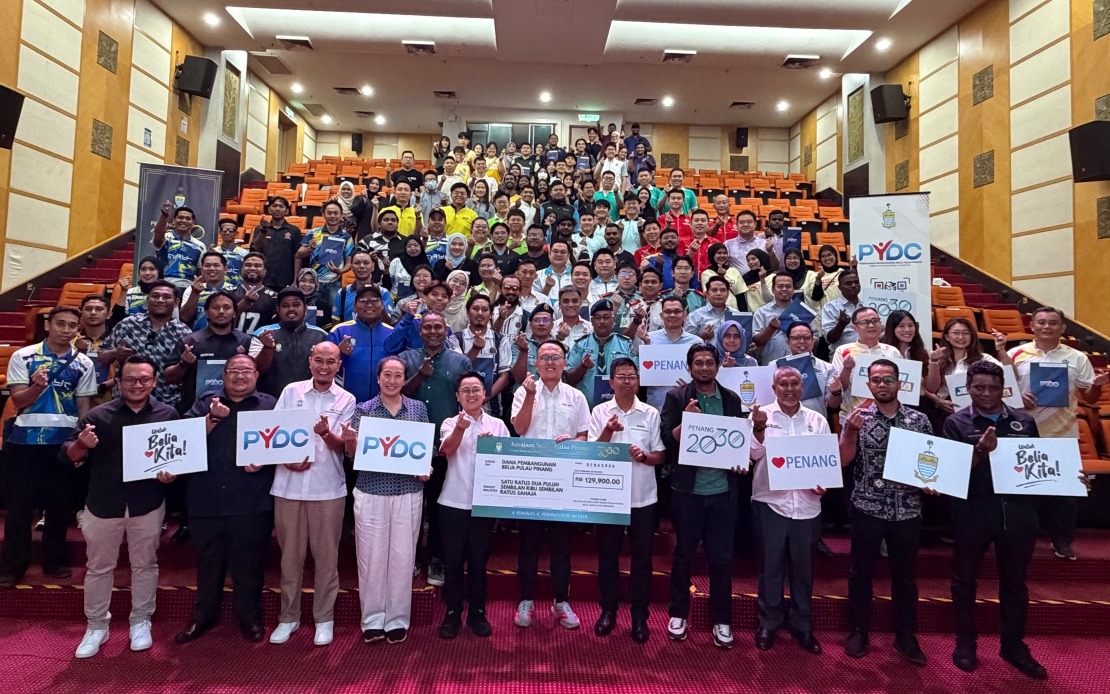
The Penang government has committed RM129,900 this year to fund 68 youth development initiatives organised by 48 registered associations across the state, representing a strategic investment in nurturing young talent and fostering civic engagement. The allocation, drawn from the broader RM200,000 Youth Development Fund approved during a recent State Executive Council Meeting, reflects the administration's determination to create structured pathways for young people to develop practical competencies and contribute meaningfully to society.
Daniel Gooi Zi Sen, chairman of the Penang Youth, Sports and Health Committee, framed the funding announcement not merely as financial disbursement but as institutional endorsement of youth-led initiatives. This distinction carries weight in the Malaysian context, where youth involvement in governance and social development remains an evolving priority. By positioning the fund as an act of trust rather than subsidy, Gooi emphasised that associations must demonstrate organisational maturity and accountability in how they execute their programmes—a message that sets clear expectations for recipients in an environment where public fund management is increasingly scrutinised.
The approved programmes span multiple development domains, with explicit focus on skills acquisition, employability enhancement, volunteerism, and leadership cultivation. For young Malaysians navigating a competitive economic landscape and uncertain job market, skills-focused initiatives carry particular resonance. The breadth of the 68 programmes suggests Penang's approach attempts to reach diverse segments of the youth population, from those pursuing technical competencies to those seeking soft skills and civic awareness. This diversification recognises that one-size-fits-all youth development rarely succeeds across varying socioeconomic backgrounds and educational aspirations.
Gooi's insistence on programme integrity and transparent management reflects mounting public concern about how state funds are deployed, particularly at the subnational level where oversight mechanisms can sometimes prove lax. By explicitly reminding funded associations that their organisations are accountable to both the government and the broader community, the committee chair signalled that Penang will monitor implementation beyond mere financial reconciliation. This governance emphasis has implications for how other Malaysian states might structure their own youth funding mechanisms, potentially establishing benchmarks for fiduciary responsibility in youth development spending.
Crucially, Gooi reframed programme success metrics to encompass long-term community and participant outcomes rather than simply activity completion. This represents a conceptual shift away from output-focused evaluation—the number of workshops held, attendees registered—toward outcome-focused assessment of how participants' capabilities, networks, and civic consciousness have genuinely transformed. Such thinking aligns with international best practices in youth development but remains underemphasised in many Malaysian government initiatives, where quantifiable deliverables often dominate reporting frameworks. Penang's explicit articulation of this principle could encourage other states to adopt deeper impact measurement approaches.
The timing of this announcement in June positions the 68 programmes to begin implementation throughout the remainder of the calendar year, allowing sufficient runway for organisations to recruit participants, deliver content, and capture preliminary outcomes before year-end reporting. For associations in Penang receiving these funds, the challenge will be translating approved allocations into coherent programming that genuinely develops participants' capabilities while meeting government expectations for accountability. Competition for youth development funds remains intense across Malaysia, making Penang's allocation noteworthy in demonstrating ongoing governmental commitment to this demographic.
The involvement of 48 distinct associations suggests a reasonably distributed approach to fund deployment rather than concentration among a handful of established organisations. This broader distribution potentially strengthens the ecosystem of youth-focused civil society across Penang, though it also creates multiplicative governance challenges in monitoring and supporting smaller, less-resourced organisations. Associations that have previously struggled to secure project funding may find themselves newly positioned to implement ideas they have long contemplated, particularly if the application process was inclusive and merit-based rather than relationship-dependent.
For young people in Penang, the practical implications centre on expanded access to development opportunities that bridge the gap between formal education and either employment or further tertiary study. Whether these programmes effectively equip participants with genuinely marketable skills or provide more symbolic engagement with youth development remains an empirical question that will only be answerable through implementation and follow-up evaluation. The quality and relevance of 68 distinct programmes inevitably varies, meaning some participants will likely benefit substantially while others experience more modest returns on their time investment.
The broader Southeast Asian context amplifies Penang's initiative, as youth unemployment and skills mismatches remain persistent regional challenges. Malaysia's younger population faces particular pressure to develop specialist competencies while also cultivating the adaptability required in a rapidly shifting economy. State-level investments like Penang's Youth Development Fund represent one mechanism through which regional governments attempt to address these structural challenges, though critics argue such allocations remain insufficiently scaled relative to the magnitude of youth development needs across the region.

%22%2F%3E%3C%2Fpattern%3E%3C%2Fdefs%3E%3Crect%20width%3D%22100%25%22%20height%3D%22100%25%22%20fill%3D%22url(%23ph3abqhg)%22%2F%3E%3Crect%20width%3D%22100%25%22%20height%3D%22100%25%22%20fill%3D%22url(%23ph3abqhp)%22%2F%3E%3Ctext%20x%3D%2250%25%22%20y%3D%2250%25%22%20text-anchor%3D%22middle%22%20dominant-baseline%3D%22central%22%20fill%3D%22rgba(255%2C255%2C255%2C0.95)%22%20font-family%3D%22Georgia%2C%20'Times%20New%20Roman'%2C%20serif%22%20font-weight%3D%22700%22%20font-size%3D%22151%22%20letter-spacing%3D%22-0.02em%22%3EPerikatan%3C%2Ftext%3E%3C%2Fsvg%3E)
%22%2F%3E%3C%2Fpattern%3E%3C%2Fdefs%3E%3Crect%20width%3D%22100%25%22%20height%3D%22100%25%22%20fill%3D%22url(%23ph4v2psg)%22%2F%3E%3Crect%20width%3D%22100%25%22%20height%3D%22100%25%22%20fill%3D%22url(%23ph4v2psp)%22%2F%3E%3Ctext%20x%3D%2250%25%22%20y%3D%2250%25%22%20text-anchor%3D%22middle%22%20dominant-baseline%3D%22central%22%20fill%3D%22rgba(255%2C255%2C255%2C0.95)%22%20font-family%3D%22Georgia%2C%20'Times%20New%20Roman'%2C%20serif%22%20font-weight%3D%22700%22%20font-size%3D%22272%22%20letter-spacing%3D%22-0.02em%22%3EWorld%3C%2Ftext%3E%3C%2Fsvg%3E)