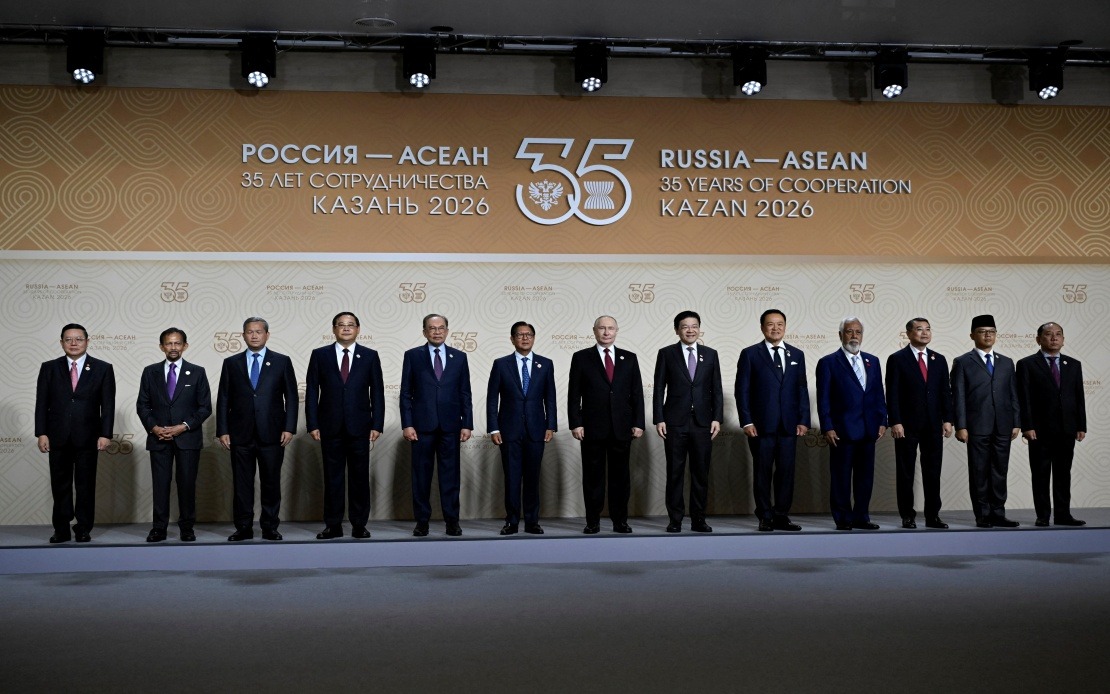
Philippine President Ferdinand R. Marcos Jr has used a high-profile diplomatic occasion to pivot ASEAN's relationship with Russia toward frontier technologies and modern infrastructure, signalling a strategic recalibration of the regional bloc's partnerships. Speaking following the ASEAN-Russia Commemorative Summit in Kazan, Marcos acknowledged that while ties between the two have matured over the past thirty years, they have failed to exploit opportunities in sectors that barely existed when the dialogue partnership began in the late 1980s.
The assessment carries particular weight for Southeast Asia, a region increasingly caught between competing global power centres and seeking to maintain strategic autonomy while capturing economic gains from multiple partners. By framing ASEAN-Russia cooperation through the lens of technology and energy rather than traditional geopolitical alignment, Marcos appears to be positioning the region as pragmatic and open to collaboration regardless of wider international tensions. This approach reflects how smaller and middle-power nations are adapting to a multipolar world where rigid bloc membership yields to flexible, sector-specific partnerships.
Marcos emphasised that cooperation has progressed unevenly across the ten-member ASEAN bloc, with some countries advancing further than others. This candid observation underscores the persistent challenge of ASEAN unity and divergent national interests. While some members maintain closer ties with Russia than others, the bloc's consensus-based decision-making has meant that collective engagement with Moscow remains measured. The Philippine president's remarks suggest awareness that deeper partnerships require tailored approaches rather than one-size-fits-all frameworks.
The focal areas he identified—artificial intelligence, data centres, and power generation—reflect genuine gaps in Southeast Asian capacity and infrastructure. The region's growing economies face escalating energy demands and increasingly depend on digital infrastructure to compete globally. Russian technological expertise, particularly in energy sectors and emerging applications, could complement regional development ambitions. For Malaysia and other ASEAN members, such cooperation offers potential pathways to upgrade industrial capacity without reliance solely on traditional Western sources.
Marcos described the current phase as a "new day" characterised by ASEAN's deliberate diversification of partnerships and evolving strategic priorities. This framing suggests recognition that the region has outgrown the bipolar Cold War mentality that once constrained its external relations. Instead, ASEAN nations are increasingly comfortable engaging multiple powers simultaneously—a posture that serves smaller states well by preventing dependency on any single partner while accessing diverse technological and economic benefits. The implicit message is that partnership selection should reflect functional advantage rather than ideological alignment.
The commemorative summit's outcomes, including the Kazan Declaration 2026 and the ASEAN-Russia Comprehensive Plan of Action for 2026–2030, establish formal frameworks for this expanded cooperation. The inclusion of joint documents on culture and energy demonstrates breadth across soft power and hard infrastructure domains. Such instruments provide institutional scaffolding for sustained engagement and signal commitment beyond rhetorical flourishes. For Malaysian policymakers monitoring ASEAN's strategic direction, these documents outline where the bloc intends to deepen external relationships.
The emphasis on "concrete benefits to their peoples" distinguishes this framing from zero-sum geopolitical competition. By anchoring partnership expansion in tangible economic and technological outcomes, Marcos sidesteps accusations that ASEAN is tilting toward any particular power. This approach resonates across the region, where public support for foreign partnerships typically correlates with visible infrastructure improvements, job creation, and technological advancement rather than abstract strategic calculations.
Marcos's reference to ASEAN "growing up fast" captures a crucial dynamic in Southeast Asian international relations. The region's rising economic weight, expanding technological capacity, and younger populations all contribute to confidence that partnerships should reflect mutual benefit rather than historical subordination. This maturity permits engagement with Russia on technology and energy without triggering the geopolitical anxieties that might have dominated a decade ago when Cold War frameworks still held greater sway in Western discourse.
For Malaysia specifically, the expansion of ASEAN-Russia cooperation in energy and advanced technology sectors presents both opportunities and considerations. Malaysia's own energy transition goals and digital economy ambitions could potentially benefit from Russian expertise, though such engagement would require careful calibration against existing partnerships with Western and Asian allies. The framework established in Kazan provides options for bilateral cooperation within a regional multilateral structure, allowing individual members to pursue relevant partnerships while maintaining ASEAN cohesion.
The three-decade dialogue relationship provides historical foundation for deepening ties, yet also reveals why previous cooperation remained limited. Geographic distance, differing economic structures, Cold War legacies, and competing regional partnerships all constrained ASEAN-Russia engagement. The pivot toward emerging sectors potentially overcomes some traditional barriers by focusing on future capabilities rather than entrenched institutional relationships. Companies and research institutions may engage more readily on artificial intelligence and data centres than on traditional trade or security matters where geopolitical sensitivities run higher.
Looking forward, the successful implementation of the 2026–2030 action plan will determine whether Marcos's optimism translates into substantive cooperation. Concrete projects—whether research collaborations, infrastructure investments, or technology transfer arrangements—will signal whether the commemorative summit represents genuine strategic recalibration or diplomatic theatre. For ASEAN members including Malaysia, close monitoring of implementation progress will clarify the partnership's real trajectory and potential relevance to national development priorities.