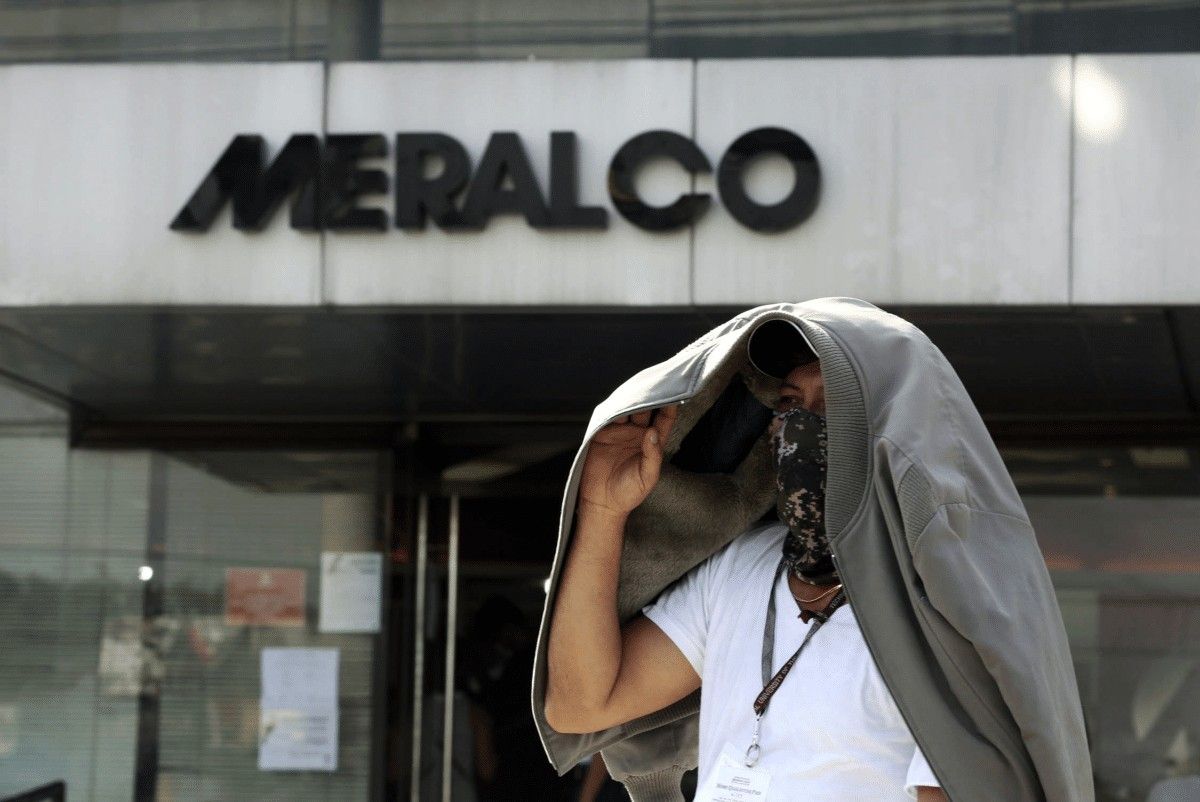
The Philippine Energy Regulatory Commission (ERC) has mandated that Manila Electric Co. (Meralco), the nation's dominant electricity distributor, issue a substantial ₱9.5 billion refund to its consumer base, offering respite from the persistently high power bills that have burdened households and businesses across the country. The directive, formally issued on July 31, represents a crucial intervention in the Philippines' energy pricing structure and underscores growing regulatory scrutiny of utility rates affecting millions of residential and commercial customers.
The refund mechanism will operate through a straightforward process: Meralco must distribute the equivalent of ₱0.3449 per kilowatt-hour (kWh) as a separate, identifiable credit on each billing statement within a six-month timeframe. According to ERC Chair and Chief Executive Officer Francis Saturnino Juan, the implementation process will commence during the subsequent billing cycle following official receipt of the regulatory decision, ensuring minimal administrative delay in delivering the credits to consumers.
This refund addresses what regulators identified as an over-recovery during the lapsed period spanning January through December 2025. The lapsed period is a crucial concept in utility regulation across the Asia-Pacific region: it represents the interval between successive rate adjustments when consumers continue paying tariffs based on outdated cost structures. During such periods, utility companies may effectively collect revenues exceeding their actual operational costs, particularly if business circumstances improve or efficiencies materialise before new rates take effect.
Meralco operates under a rate reset framework established by the ERC, wherein the distributor must periodically submit comprehensive documentation outlining anticipated capital expenditures and operational investments for evaluation. Typically spanning five-year cycles, though subject to regulatory extension, these submissions form the evidentiary foundation supporting proposed tariff adjustments. The process theoretically ensures that rates remain aligned with legitimate company costs while protecting consumer interests from excessive charges. However, the gap between successive rate adjustments frequently creates periods where existing tariffs diverge from actual economic realities, generating either surplus collections or shortfalls depending on operational circumstances.
The ₱9.5 billion figure incorporates not merely the base over-collection but also accumulated interest costs that accumulated during the lapsed period. The ERC's decision specifically acknowledged this calculation methodology, reasoning that since Meralco retained excess revenues throughout 2025, applying interest penalties represented a prudent regulatory response. This approach mirrors practices adopted by telecommunications and utility regulators across Southeast Asia, where interest calculations serve dual purposes: compensating consumers for delayed receipt of funds and creating financial disincentives against future rate-collection irregularities.
For Philippine consumers, particularly those in Metro Manila and surrounding provinces where Meralco operates, the refund carries tangible implications. With electricity costs consuming substantial portions of household budgets and contributing significantly to business operating expenses, even temporary relief through bill credits provides measurable economic benefit. For residential consumers, the credits will reduce their monthly electricity expenditures, while commercial establishments may redirect these savings toward operational improvements or investment. The magnitude of the refund—distributed across Meralco's customer base numbering in the millions—underscores the substantial revenue implications of utility rate regulation in a major Asian economy.
The regulatory decision reflects broader tensions within Philippine energy sector governance. Power costs have emerged as a contentious policy issue, with consumer advocates consistently arguing that distributors capture excessive profits while households struggle with inflation and stagnant wages. Meralco, as the dominant player in the region's electricity market, faces particular scrutiny given its market position and the universal necessity of its service. The ERC's willingness to impose substantial refund obligations signals regulatory acknowledgment that previous rate structures generated unjustified consumer overcharges, though the company's perspective on regulatory treatment and investment incentives may differ significantly.
Beyond the immediate financial impact, this decision carries broader implications for utility regulation throughout Southeast Asia. The Philippines operates within an increasingly complex energy environment combining traditional coal-fired generation with expanding renewable capacity, transmission infrastructure challenges, and mounting consumer pressure for affordable rates. How regulators like the ERC balance competing interests—maintaining utility financial viability, enabling necessary infrastructure investment, protecting consumer affordability, and promoting energy transition—fundamentally shapes regional energy policy trajectories. The ₱9.5 billion refund exemplifies this balancing act in practical form.
The refund's implementation through separate bill-line itemisation rather than lump-sum reimbursement reflects deliberate regulatory design. By presenting credits as distinct components on billing statements, consumers gain clear visibility into the correction, potentially improving public understanding of regulatory mechanisms and utility cost structures. This transparency approach, increasingly adopted by regulators internationally, acknowledges that effective consumer protection extends beyond financial outcomes to encompassing informed engagement with complex utility systems.
Meralco's compliance with the refund order will test the company's operational capacity and relationship with the regulator as both entities navigate an evolving sector. The distributor must execute the credit distribution efficiently while maintaining service quality and addressing the capital investments necessary for aging infrastructure replacement and renewable energy integration. Simultaneously, the ERC faces ongoing challenges in rate-setting processes, including determining appropriate allowed rates of return, managing regulatory lags inherent in periodic adjustment cycles, and responding to technological disruption in electricity distribution.
Looking forward, this decision may influence subsequent rate review proceedings. Meralco's next comprehensive rate adjustment application will likely incorporate detailed discussion of this refund order, with company representatives potentially arguing for accelerated rate adjustment cycles to reduce lapsed-period exposure. Consumer advocates may counter that regulatory mechanisms require strengthening to prevent similar over-collections, while environmental groups may emphasise that rate structures should incentivise renewable energy adoption and conservation. The Philippines' ongoing energy sector evolution, encompassing increasing renewables penetration and distributed generation expansion, will increasingly interact with utility regulation in ways that challenge conventional rate-setting frameworks developed for centralised, fossil-fuel-dependent systems.
The ERC's directive ultimately reflects regulatory authority functioning to correct market outcomes and protect consumer interests, a critical function in Southeast Asian economies where utility monopolies exercise substantial economic influence. Whether this refund adequately addresses past over-collection, whether future regulatory processes will prove more effective at aligning rates with costs, and how regulation adapts to emerging energy system challenges will collectively determine whether Philippine consumers experience durable electricity affordability improvements or whether structural regulatory limitations necessitate more fundamental policy reform.

