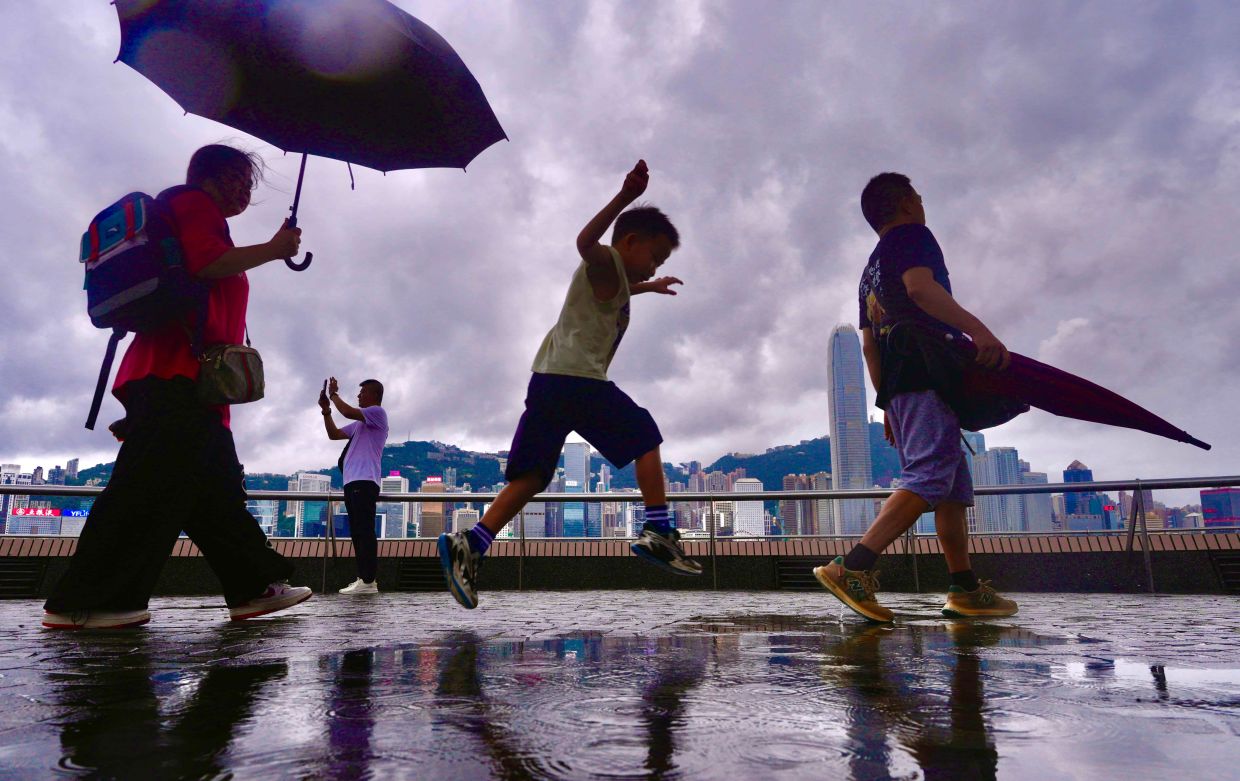
Hong Kong residents finally got respite from an oppressive heat wave on Friday, August 14, when widespread rain swept across the territory in the early morning hours, substantially lowering temperatures that had climbed to record levels throughout the preceding seven days. The Hong Kong Observatory issued its lowest-tier amber rainstorm warning at 8:40 am in response to the incoming weather system, subsequently canceling the alert three hours later as showers and thunderstorms continued sporadically throughout the day. The meteorological intervention came as a deeply welcomed turning point for a city that had endured an extraordinarily prolonged hot spell, pushing residents and authorities alike to seek cooling relief.
The atmospheric conditions responsible for Friday's rainfall originated from a combination of upper-air disturbances and a southwesterly airstream that converged over the region, disrupting the high-pressure system that had dominated Hong Kong's weather patterns for days. These meteorological factors proved sufficient to breach the heat dome that had settled over the territory, delivering the island's first meaningful precipitation after an extended dry period. For meteorologists tracking Hong Kong's weather, the arrival of this system represented a significant shift in atmospheric dynamics, temporarily breaking the dominance of conditions that had produced consecutively dangerous heat indices across all major districts.
The preceding week of extreme heat had pushed temperatures consistently beyond 34 degrees Celsius in multiple neighborhoods throughout Hong Kong, with various districts recording their own local temperature peaks. The Hong Kong Observatory's official thermometer registered 33 degrees Celsius or higher for nine consecutive days, establishing a new historical benchmark for August's longest uninterrupted hot period. This prolonged stretch surpassed previous August records and reflected the intensifying pattern of extreme heat events affecting East Asia during summer months. The cumulative effect of nine days of such elevated temperatures had strained the city's power grid, elevated heat-related health incidents, and disrupted normal routines across residential and commercial areas.
The most alarming data point emerged on Sunday, when the observatory logged a peak temperature of 36.9 degrees Celsius—the highest measurement recorded since the territory began systematic weather documentation in 1884. This nearly 140-year record stood as a stark indicator of the magnitude of the heat wave, reflecting not only the intensity of that particular day but also the broader climatic trends affecting the region. The significance of this reading extended beyond mere meteorological curiosity; it served as a powerful illustration of how environmental conditions in densely populated Hong Kong have shifted over generational timescales, with implications for urban planning, public health infrastructure, and climate adaptation strategies.
The timing of Friday's rainfall relief offered a practical respite to the city's residents, infrastructure, and emergency services, though meteorological forecasts cautioned against assuming the worst had passed. Saturday was expected to bring additional showers and morning thunderstorms to certain neighborhoods, with clearing conditions and sunny intervals anticipated as the day progressed. This pattern reflected the transitional nature of Hong Kong's weather as upper-level systems moved through the region, temporarily destabilizing the atmospheric conditions that had supported the heat dome. However, forecasters emphasized that this interruption would prove temporary.
Meteorologists' outlook for the following week presented a concerning prospect: very hot conditions were predicted to return early in the week ahead, accompanied by scattered showers that would provide little sustained relief. This cyclical pattern—brief respite followed by renewed heat—mirrors broader climatic patterns affecting Southeast Asia and East Asia, where heat waves have become increasingly frequent, intense, and prolonged. For Malaysian readers, Hong Kong's experience serves as a cautionary illustration of heat-related challenges that major Asian urban centers now regularly confront, raising questions about regional climate trends and their broader implications for the zone's densely populated metropolitan areas.
The Hong Kong heat wave and its eventual break carry significance for understanding climate dynamics across the broader region. Southeast Asian nations, including Malaysia, sit within similar subtropical and tropical climatic zones where extreme heat events are becoming normalized rather than exceptional occurrences. The meteorological systems that produced Hong Kong's rainfall—upper-air disturbances and monsoon-influenced airstreams—share characteristics with weather patterns that regularly influence Malaysia's weather, though their impacts manifest differently across the varied geographical and climatic zones of the peninsula and Malaysian Borneo.
From a public health perspective, the relief provided by Friday's rainfall held real consequences for Hong Kong's vulnerable populations, including elderly residents, outdoor workers, and individuals with preexisting health conditions. Heat stress and heat-related illness escalate dramatically during multi-day heat waves, particularly in densely urbanized environments where concrete infrastructure amplifies temperature effects and limits natural cooling. The arrival of rain and cooler conditions reduced immediate health risks, though the forecast's warning of returning heat suggested that sustained vigilance would remain necessary.
The record-breaking nature of Hong Kong's summer heat also prompted reflection on urban heat island effects—the phenomenon whereby densely built cities experience substantially higher temperatures than surrounding rural areas. Hong Kong's dense development, limited green space, and concentration of heat-generating activities contribute to localized temperature elevation beyond what would occur in less developed surroundings. As global temperatures continue rising due to long-term climate change, cities like Hong Kong face compounding challenges in managing the heat island effect through urban design, increased vegetation, and infrastructure modifications.

