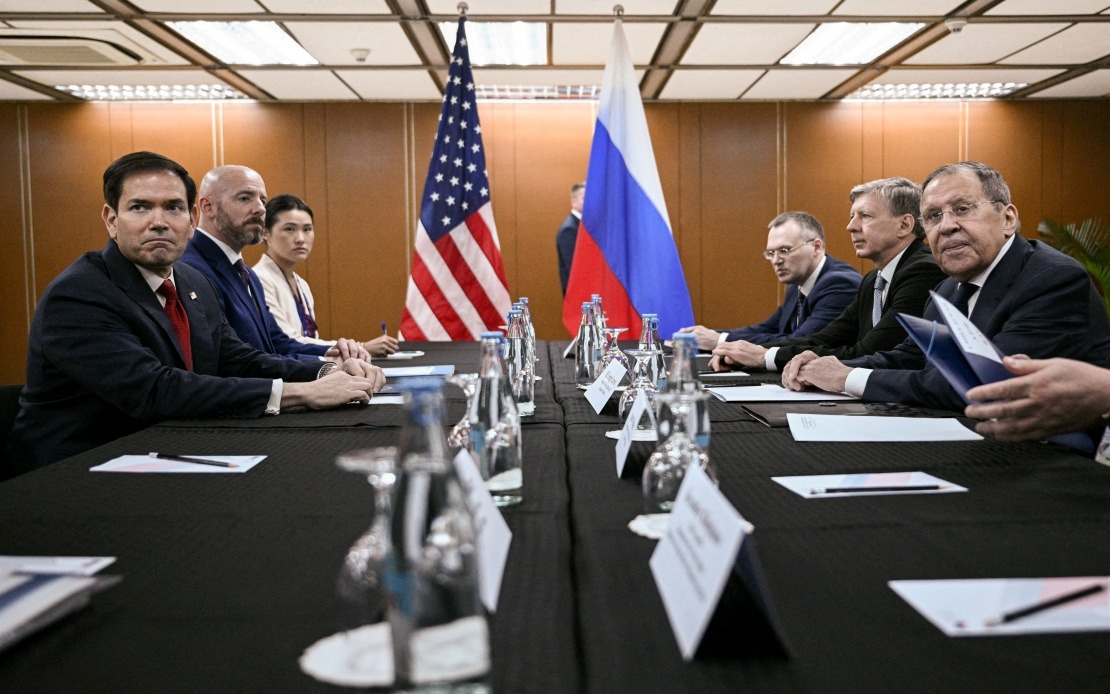
Russian Foreign Minister Sergey Lavrov and United States Secretary of State Marco Rubio have committed to maintaining regular diplomatic contact between their respective foreign ministries, with particular emphasis on interactions occurring within the structure of international organisations. The agreement emerged from their meeting in Manila, signalling a willingness by both nations to preserve official channels despite broader geopolitical tensions that have strained Moscow-Washington relations in recent years.
The decision to continue engagement through multilateral frameworks reflects a pragmatic approach by both capitals to sustain diplomatic communication at critical junctures. By anchoring their contacts within international organisations rather than pursuing purely bilateral channels, both countries appear to be seeking a politically acceptable framework for dialogue that neither side views as a tacit normalisation of broader relations. This distinction carries weight in the context of current global divisions, where formal engagement through multilateral bodies allows governments to maintain communication without appearing to yield on core policy positions.
Beyond the maintenance of diplomatic channels, the two foreign ministers turned attention to resolving practical obstacles affecting their diplomatic operations. The normalisation of working conditions for Russian and American diplomatic missions has become an increasingly contentious issue, with both sides experiencing restrictions on embassy functioning and staffing levels. By agreeing to address these operational challenges, Lavrov and Rubio acknowledged that effective diplomacy requires functional diplomatic infrastructure, regardless of the broader political climate between their nations.
A particularly noteworthy element of the Manila talks involved the resumption of full-scale cooperation between Roscosmos, Russia's state space agency, and NASA, the American counterpart. Space exploration has historically served as one of the rare domains where Russia and the United States have maintained collaborative relationships, with the International Space Station representing perhaps the most tangible symbol of their shared scientific endeavours. The welcoming of renewed engagement between these agencies suggests both nations recognise the mutual benefits of space cooperation and wish to insulate this sector from the deterioration evident in other bilateral relationships.
For Southeast Asian observers and policymakers, this diplomatic development carries multiple implications. Malaysia and other regional states have sought to navigate the intensifying competition between major powers without being forced into exclusive alignments. The maintenance of Russian-American communication channels, even in limited form, suggests that dialogue and engagement remain possible even amid significant strategic competition. This outcome may encourage smaller nations to continue engaging constructively with both superpowers rather than anticipating an inevitable bifurcation of the international system.
The agreement to develop interparliamentary exchanges and strengthen cultural ties indicates both sides recognise that sustainable diplomatic relationships require foundations beyond official government contacts. Parliamentary delegations and cultural programmes create networks of understanding that can survive periods of political tension and provide platforms for dialogue when official relations cool. For the broader international community, including Southeast Asian nations, such people-to-people connections serve as stabilising factors that prevent conflicts from escalating beyond political and military dimensions.
The significance of these agreements must be contextualised within the current international environment. Russia and the United States remain at odds over multiple issues spanning Eastern Europe, arms control, and global governance structures. Yet the Manila talks demonstrate that even amid profound disagreements, both nations recognise the necessity of maintaining communication mechanisms. This approach contrasts sharply with Cold War patterns of minimal engagement and suggests international diplomacy has evolved toward greater acceptance of continuous dialogue as a permanent feature of interstate relations.
For Malaysia and fellow ASEAN members, the preservation of Russian-American communication channels has stabilising implications for regional security. While the region has experienced friction with both powers over various issues, the functioning of diplomatic mechanisms reduces the risk of miscalculation and unintended escalation. The focus on space cooperation and scientific exchange also reinforces the principle that rivalry in political and strategic spheres need not preclude collaboration in technical and scientific domains—a principle applicable to regional dynamics as well.
The outcome of the Lavrov-Rubio meeting ultimately reflects a mature approach to managing great power competition. Rather than pursuing zero-sum confrontation, both governments have demonstrated recognition that dialogue serves their mutual interests. As international tensions persist across multiple regions, this commitment to sustaining contact through institutional frameworks provides a model that other competing powers might observe with interest. For Southeast Asian nations navigating relationships with global powers, such examples underscore the continued viability of engagement-based diplomacy even in an era of significant strategic rivalry.

