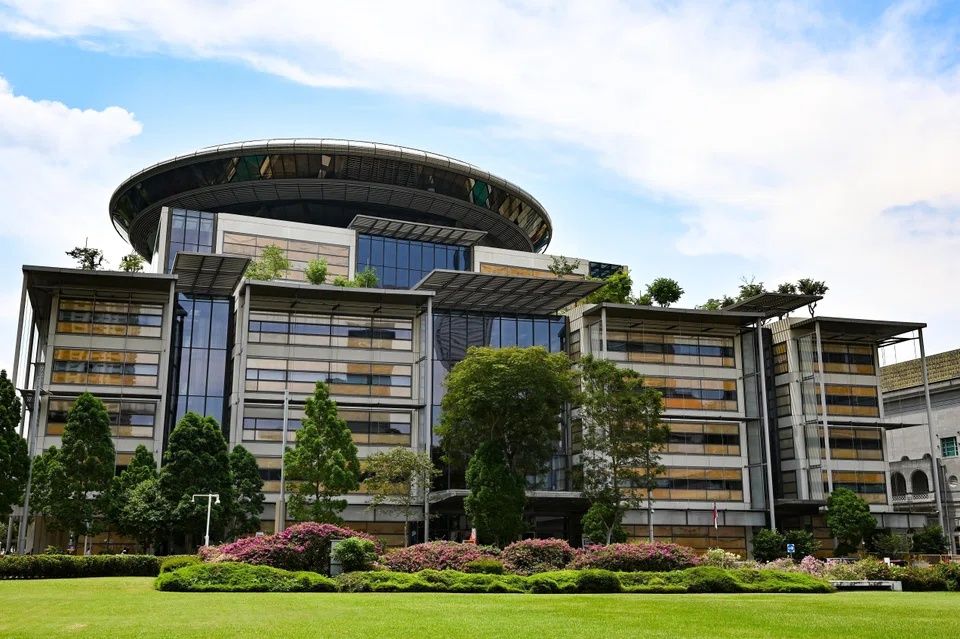
The Singapore High Court has delivered a significant victory for asset recovery efforts tied to the 1Malaysia Development Bhd (1MDB) scandal, ruling that a major lawsuit against Standard Chartered Bank will advance to trial rather than being dismissed. The court's decision on Tuesday, upheld in a formal order released on Wednesday (July 1), represents a crucial milestone in ongoing global efforts to reclaim billions in misappropriated funds connected to the sprawling Malaysian investment fund scandal that shook regional financial markets and drew international scrutiny.
At the heart of the dispute is a claim worth US$2.7 billion (approximately RM11 billion) filed against the international banking giant. The case was initiated in June 2025 by court-appointed liquidators Angela Barkhouse and Toni Shukla, acting on behalf of three former 1MDB subsidiaries: Alsen Chance Holdings Ltd, Blackstone Asia Real Estate Partners Ltd and Brightstone Jewellery Ltd. These shell entities became central to the scheme through which billions were siphoned from Malaysian state coffers, and their liquidation has become a key mechanism through which authorities seek to trace and recover stolen assets across multiple jurisdictions.
Standard Chartered's legal team had previously moved to strike out the entire suit, arguing that the case should be dismissed before proceeding to full trial. In November 2025, the Singapore High Court rejected this application, prompting the bank to file an appeal. The court's decision this week to uphold the earlier dismissal of the bank's strike-out application effectively removes that procedural barrier and allows the substantive allegations to be tested in open court. The bank has indicated its intention to seek permission for a further appeal, suggesting the legal battle will likely extend over many months as both sides exhaust available remedies.
The allegations against Standard Chartered are detailed and specific. The liquidators contend that the bank knowingly authorised over 100 intra-bank transfers that served to obscure the true origins and destinations of misappropriated funds. More significantly, they argue the institution deliberately ignored multiple warning signs and red flags that should have prompted closer scrutiny under international anti-money-laundering standards. Such allegations strike at the heart of compliance obligations imposed on international banks under global financial regulations, standards that became particularly stringent following the International Commission Against Corruption investigations into 1MDB.
This lawsuit sits within a broader ecosystem of legal actions spanning multiple countries as governments, regulators and asset recovery specialists pursue those allegedly responsible for the 1MDB fraud. Malaysia has positioned itself as central to these efforts, with Lim Chee Wee Partnership of Kuala Lumpur serving as global co-ordinating counsel for all 1MDB-related asset recovery efforts both domestically and internationally. The designation underscores the scale of coordination required to pursue claims across different legal systems, each with distinct procedural rules and enforcement mechanisms.
The legal team representing the liquidators in Singapore comprises prominent counsel including Lok Vi Ming SC, Joseph Lee, Mohd Haireez, Tan Kah Wai and Koo Jin Rong of LVM Law Chambers LLC. Their involvement signals the seriousness with which the case is being pursued and the concentration of specialised legal expertise necessary to litigate complex international financial crimes. The representation structure itself reflects how such recovery efforts necessarily involve coordinated teams across multiple jurisdictions, each contributing expertise in their respective legal systems.
For Malaysian stakeholders, the court's decision holds profound significance. The liquidators explicitly framed the recovery effort as ultimately benefiting Malaysia and its people, emphasising that funds misappropriated from the three subsidiaries ultimately derived from Malaysian state resources. The scale involved—billions of ringgit—represents resources that might have been deployed towards healthcare, education, infrastructure or other public goods. Every dollar recovered through such litigation represents partial restoration of the public patrimony that was diverted through elaborate schemes that exploited gaps in international financial oversight.
Standard Chartered's determination to pursue further appeals reflects the bank's assessment that the financial exposure and reputational stakes justify continued legal defence. The financial services sector has faced intensifying regulatory scrutiny since the 1MDB disclosures, with multiple institutions facing enforcement actions and penalties for inadequate monitoring of suspicious transactions. The Standard Chartered case thus extends beyond the particular institution to encompass broader questions about banking sector accountability and the effectiveness of compliance frameworks.
The decision to allow the case to proceed to trial rather than dismissing it on procedural grounds represents a significant hurdle cleared, but substantial litigation lies ahead. Trial-stage discovery will likely produce extensive documentation regarding the bank's internal decision-making, risk assessment protocols, and communication flows at relevant periods. Such processes are typically lengthy and expensive, consuming years before final judgments are reached. Nonetheless, the court's signal that the case has sufficient legal merit to warrant full adjudication provides the liquidators with a foundation from which to pursue their claims on the substantive merits.
Regionally, the Singapore court's decision reinforces the willingness of major financial centres to entertain complex asset recovery litigation tied to high-profile corruption cases. Singapore's role as both a financial hub and neutral legal jurisdiction has made it an important venue for resolving disputes arising from cross-border financial crimes. The judgment contributes to an emerging body of case law establishing that financial institutions cannot escape accountability for their role in facilitating large-scale fraud merely through procedural challenges, setting precedent that may influence similar cases in progress across the region.
Looking forward, the path to trial and eventual judgment will require substantial commitment from all parties. The quantum involved ensures that both the liquidators and Standard Chartered will deploy considerable resources to supporting their respective positions. For Malaysia, successful recovery of assets through this and parallel proceedings remains a key priority, as the nation continues its efforts to rebuild confidence in governance institutions and demonstrate that even the most elaborate schemes can eventually face legal accountability. The Singapore court's decision thus represents not merely a procedural victory but a reaffirmation of the judiciary's role in pursuing accountability for those who facilitate international financial crime.

