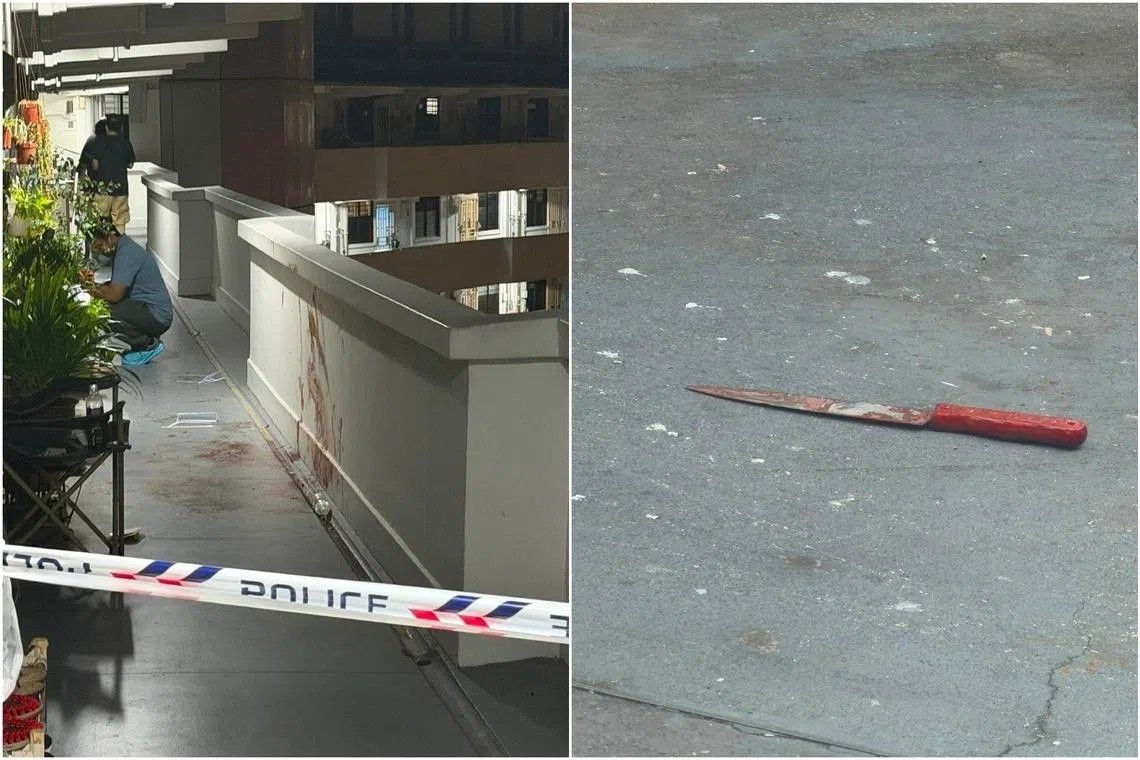
A Singapore resident has been charged with the murder of his neighbour following a violent incident at a public housing block in the Redhill area. Ng Swee Seng, 59, made his first court appearance on July 22 via video link at a district court, facing an allegation that he unlawfully caused the death of Thiyagarajan Karunakaran, also 59, at Block 55 Lengkok Bahru on July 20.
Police received emergency calls regarding the incident shortly before 5 in the afternoon on July 20. Officers who arrived at the scene discovered the victim lying unresponsive in the lift lobby on the 16th floor of the residential block. Thiyagarajan was immediately transported to the National University Hospital, where medical staff attempted to save his life. However, he succumbed to his injuries later that day.
The layout of the building and the positioning of both men's residences suggests this was not a chance encounter between strangers. Residents of Block 55 Lengkok Bahru indicated that Ng and Thiyagarajan occupied separate units on the same 16th floor, several units apart from one another. This proximity would have made daily interaction between the neighbours entirely plausible, raising questions about what circumstances may have preceded the alleged fatal confrontation.
Physical evidence left at the scene provided stark testimony to the violence that occurred. When journalists visited the residential block on July 21, the day after the incident, visible bloodstains remained in the 16th-floor corridor leading to and around the lift lobby where the victim was discovered. A bloodied footprint was also visible along the same corridor, suggesting a struggle or rapid movement through the hallway during or immediately after the alleged assault.
The incident has shaken the community at this particular residential block. One resident who has lived at Block 55 Lengkok Bahru for approximately four years commented on the proximity between the two men and their ordinary status as neighbours. The murder charge represents one of the more serious criminal allegations that can be brought in Singapore's legal system, where homicide cases typically receive extensive scrutiny from both law enforcement and the courts.
For Malaysian readers and residents of the broader Southeast Asian region, this incident underscores the reality that serious violent crime can occur within seemingly ordinary residential settings and between people with established neighbourhood relationships. The murder of a resident within a multi-unit public housing block raises broader concerns about security, neighbour relations, and the potential for disputes to escalate into fatal confrontations. The case will likely proceed through Singapore's judicial system with significant public attention, given both the serious nature of the charge and the residential setting where the alleged crime took place.
The investigation and subsequent charging of Ng Swee Seng reflect the efficiency of Singapore's police and prosecutorial apparatus. The fact that he appeared in court just two days after the incident demonstrates the speed at which the criminal justice system can move when serious allegations are involved. The next stages of the legal process will involve further court appearances, evidence presentation, and ultimately a trial where the prosecution must prove its case beyond reasonable doubt.
The 16th floor of Block 55 Lengkok Bahru, located in a neighbourhood near Redhill Road that is home to thousands of residents, has become the site of a criminal investigation that will likely dominate local news coverage in Singapore for the coming weeks and months. The location's proximity to other residential areas and public facilities means that the incident has implications for perceptions of safety in the wider district.
Singapore's justice system treats murder cases with the utmost severity. The charge against Ng Swee Seng, if proven in court, carries potentially substantial consequences under the country's penal code. The detailed evidence gathering at the scene, including the documentation of bloodstains and footprints, will form part of the prosecution's case in demonstrating what occurred in the moments leading to Thiyagarajan's death.

