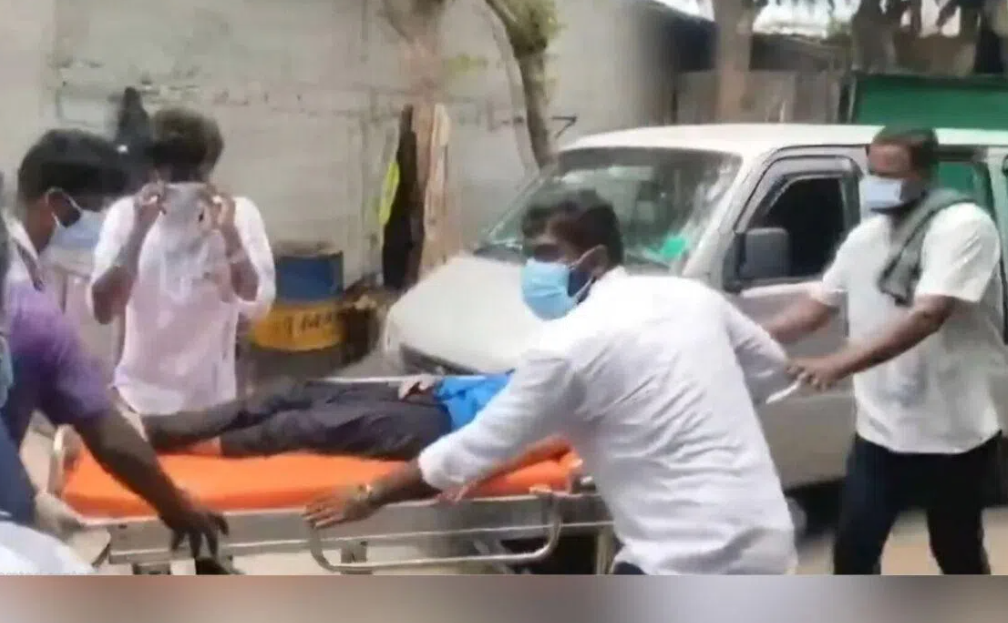
A catastrophic ammonia gas leak at a seafood export processing facility in Tamil Nadu's Thiruvallur district claimed the lives of at least six workers on Sunday, with dozens more requiring emergency medical treatment. The disaster has reignited concerns about industrial safety standards in India's food processing sector, particularly in facilities employing large numbers of migrant workers from economically disadvantaged regions.
The incident unfolded at a seafood processing unit located near Periyapalayam village, where approximately 120 migrant labourers were working when the leak was detected. The workforce comprised predominantly women from Assam, Odisha and Jharkhand—states that supply a significant proportion of India's internal migrant workforce. These workers, often employed on contractual terms with minimal formal safety training, bore the brunt of the accident.
According to preliminary investigations, the ammonia gas emanated from either the facility's refrigeration system or its processing equipment before dispersing rapidly throughout the plant. Ammonia, commonly used in industrial refrigeration, poses extreme hazards when released in concentrated quantities within enclosed or poorly ventilated spaces. The gas's toxic properties mean exposure at high concentrations can prove fatal within minutes, while lower concentrations cause severe respiratory and neurological damage.
Workers in proximity to the leak experienced severe physiological distress within seconds. Victims reported acute breathing difficulties, vertigo and pronounced sensory irritation affecting their eyes and respiratory passages. More alarmingly, some workers exhibited haemorrhaging from the mouth and nose—a clinical indicator of substantial toxic exposure and systemic damage. The severity of symptoms suggested the gas concentration exceeded safe exposure thresholds by a considerable margin.
As the gas cloud spread across the facility, panic ensued among the workforce. Many workers attempted to evacuate the premises instinctively, while others succumbed to the toxic fumes and collapsed before reaching safety. The chaotic scene underscored the facility's apparent lack of emergency preparedness and evacuation protocols, raising questions about whether workers had received adequate briefing on responding to industrial accidents.
Emergency response teams, police units and local administrative officials converged on the facility once the incident was reported. Rescue operations proceeded to identify affected workers and transfer them to nearby healthcare facilities for urgent treatment. Medical teams worked to stabilise victims exhibiting respiratory failure and other critical symptoms. Hospital authorities subsequently reported that several patients remained in critical condition, suggesting ongoing danger to their lives.
Tamil Nadu's Chief Minister C. Joseph Vijay publicly responded to the tragedy by expressing concern and instructing officials to ensure comprehensive medical support for all affected workers. Recognising the severity of the incident, he moved quickly to establish a three-member inquiry committee tasked with investigating the circumstances and systemic failures that permitted the leak to occur. This committee was directed to undertake immediate inspections of the facility and submit detailed findings within 24 hours—an aggressive timeline indicating governmental recognition of the incident's gravity.
The inquiry framework specifically targets several critical areas: the facility's existing safety protocols and whether they were being implemented; the maintenance procedures governing the refrigeration and processing systems; and potential regulatory lapses that allowed unsafe conditions to persist. The mandate implicitly acknowledges that such catastrophes rarely result from single isolated failures but rather from accumulated neglect of safety standards and institutional oversight.
Authorities have initiated formal criminal proceedings, with police registering cases related to the incident. Parallel investigations will assess whether the facility violated applicable industrial safety regulations and labour standards. Such examinations typically focus on whether owners conducted regular equipment inspections, maintained adequate emergency response systems, ensured proper worker training, and adhered to mandatory safety certifications. Early indications suggest multiple regulatory failures may have contributed to the disaster.
The tragedy carries particular significance for regional readers given parallels with industrial incidents across Southeast Asia. Many Malaysian and regional manufacturers employing migrant workers face similar pressure to prioritise output over safety infrastructure. The Thiruvallur incident demonstrates how vulnerable workers from impoverished backgrounds—a pattern replicated throughout the region—face heightened exposure to industrial hazards due to limited bargaining power and inadequate legal protection.
Beyond the immediate human tragedy, the incident will likely intensify scrutiny of India's seafood processing sector, which supplies substantial quantities of frozen and processed seafood to regional markets including Malaysia. Importers and retailers may face pressure to verify that suppliers implement enhanced safety measures, potentially driving compliance improvements across the supply chain. The episode also serves as a cautionary reminder for regional policymakers regarding the critical importance of rigorous workplace safety enforcement, particularly in facilities employing large transient workforces with limited recourse to legal remedies.
%22%2F%3E%3C%2Fpattern%3E%3C%2Fdefs%3E%3Crect%20width%3D%22100%25%22%20height%3D%22100%25%22%20fill%3D%22url(%23ph12wosg)%22%2F%3E%3Crect%20width%3D%22100%25%22%20height%3D%22100%25%22%20fill%3D%22url(%23ph12wosp)%22%2F%3E%3Ctext%20x%3D%2250%25%22%20y%3D%2250%25%22%20text-anchor%3D%22middle%22%20dominant-baseline%3D%22central%22%20fill%3D%22rgba(255%2C255%2C255%2C0.95)%22%20font-family%3D%22Georgia%2C%20'Times%20New%20Roman'%2C%20serif%22%20font-weight%3D%22700%22%20font-size%3D%22170%22%20letter-spacing%3D%22-0.02em%22%3EMalaysia%3C%2Ftext%3E%3C%2Fsvg%3E)
%22%2F%3E%3C%2Fpattern%3E%3C%2Fdefs%3E%3Crect%20width%3D%22100%25%22%20height%3D%22100%25%22%20fill%3D%22url(%23ph2a8lcg)%22%2F%3E%3Crect%20width%3D%22100%25%22%20height%3D%22100%25%22%20fill%3D%22url(%23ph2a8lcp)%22%2F%3E%3Ctext%20x%3D%2250%25%22%20y%3D%2250%25%22%20text-anchor%3D%22middle%22%20dominant-baseline%3D%22central%22%20fill%3D%22rgba(255%2C255%2C255%2C0.95)%22%20font-family%3D%22Georgia%2C%20'Times%20New%20Roman'%2C%20serif%22%20font-weight%3D%22700%22%20font-size%3D%22170%22%20letter-spacing%3D%22-0.02em%22%3EMalaysia%3C%2Ftext%3E%3C%2Fsvg%3E)