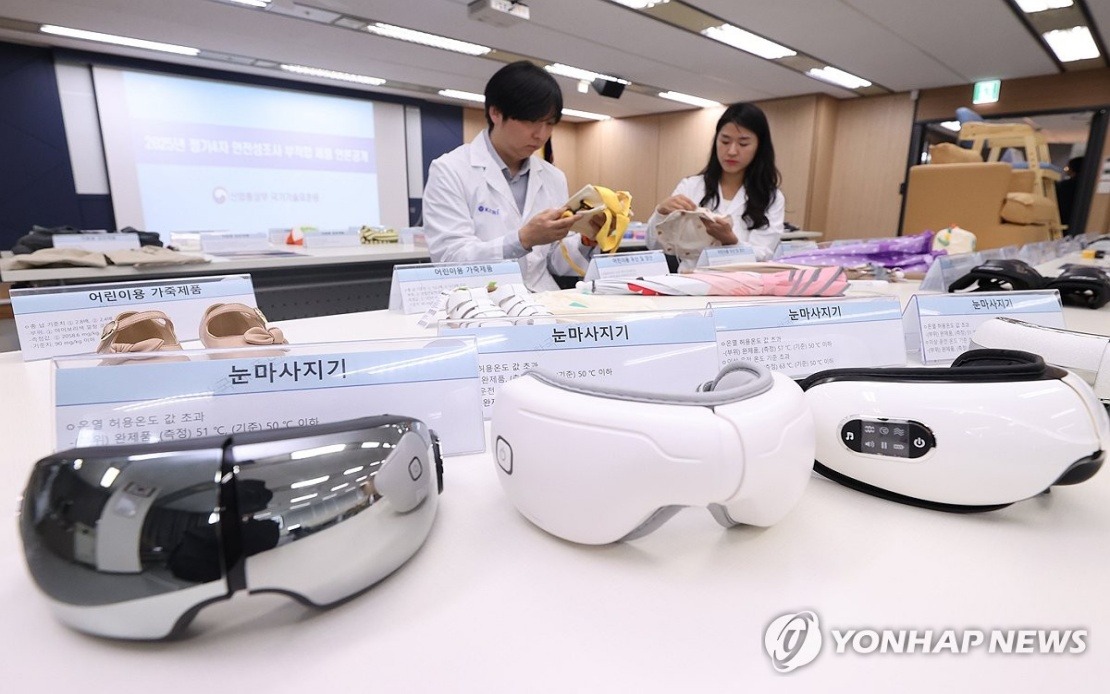
South Korea's consumer safety watchdog has documented a troubling acceleration in product recalls during 2025, reflecting mounting challenges in policing the nation's sprawling digital commerce ecosystem. The Fair Trade Commission disclosed Monday that 2,656 recall incidents were registered throughout the year, representing a steady 5 per cent climb from the 2,537 cases documented in 2024. This incremental but consistent upward trajectory underscores a deepening vulnerability in how imported goods—particularly those already flagged as dangerous in their countries of origin—infiltrate Korean consumers' hands through online retail channels.
The underlying driver of this surge becomes starkly evident when examining specific violation categories. Cases involving breaches of the Framework Act on Consumers more than doubled the overall growth rate, surging approximately 42 per cent year-on-year to reach 851 incidents. This disproportionate spike reveals a systemic problem: products that have previously undergone recalls in foreign markets are routinely reappearing for sale on domestic online platforms, suggesting inadequate coordination between international regulators and Korean e-commerce operators. The phenomenon reflects a critical gap in supply chain transparency, where discarded or problematic items find new commercial life through unvetted digital sellers.
For Malaysian consumers and regulators, this Korean experience offers a cautionary blueprint. As e-commerce penetration accelerates across Southeast Asia and consumers increasingly engage in cross-border purchasing, the mechanisms that allowed hazardous imports to proliferate in South Korea's online space could easily replicate domestically. The speed with which recalled products circulate through digital marketplaces—often faster than physical retail networks—creates enforcement challenges that conventional consumer protection frameworks struggle to address. Malaysian authorities monitoring similar trends would be wise to examine how Seoul's FTC is adapting its surveillance protocols.
The Fair Trade Commission responded to these troubling figures by articulating a multi-agency containment strategy. Officials announced enhanced monitoring operations conducted in collaboration with relevant governmental bodies, with particular emphasis on stemming the tide of hazardous foreign merchandise entering the local market. Simultaneously, the government has begun directly compelling online marketplace operators to implement sales blocks against products identified as safety risks, either because they have undergone recalls internationally or because Korea's own safety testing has flagged them as posing consumer harm. This dual approach—combining surveillance with direct intervention at the point of sale—represents an escalation of regulatory authority into the typically less-regulated e-commerce domain.
Industrial consumer goods bore the brunt of the recall surge, with 1,282 cases registered in 2025, marking an 8.6 per cent increase from 2024 levels. This category encompasses everyday household items, electronics, appliances, and tools—precisely the merchandise most frequently purchased through online channels by cost-conscious consumers seeking bargains. The concentration of recalls within this segment suggests that price competition on digital platforms may be incentivizing retailers to source from lower-cost suppliers with less rigorous quality oversight, creating a race-to-the-bottom dynamic where safety considerations take secondary priority to margin maximization.
Conversely, pharmaceutical and herbal medicine recalls demonstrated inverse momentum, declining 13.5 per cent to 295 cases during the same period. This improvement likely reflects stricter pre-market authorization requirements and tighter controls over pharmaceutical distribution channels, which remain more heavily regulated than consumer goods. The contrast underscores how regulatory intensity correlates with safety outcomes—sectors subjected to rigorous gatekeeping mechanisms experience fewer problems, whilst loosely-monitored categories become havens for defective products.
Medical device recalls presented a mixed picture, rising 8.5 per cent to 308 cases despite pharmaceutical product reductions. This divergence merits attention, as medical devices occupy an intermediate regulatory space between consumer goods and pharmaceuticals. The uptick suggests that as devices become more technologically sophisticated and globally sourced, safety verification at point of importation may be lagging behind innovation velocity. For a region like Southeast Asia, where healthcare infrastructure remains unevenly distributed, an influx of unverified or recalled medical devices poses tangible risks to patient outcomes and public health credibility.
The broader pattern emerging from South Korea's data reveals a critical vulnerability in how modern consumer protection frameworks contend with globalized supply chains intersecting with decentralized digital distribution. Traditional regulatory models presumed that physical borders and centralized retail points created natural checkpoints for safety enforcement. Online marketplaces obliterate these assumptions, enabling direct producer-to-consumer connections that circumvent conventional inspections. When international recalls fail to trigger coordinated removal from foreign e-commerce platforms, dangerous products simply migrate to new markets where regulatory reach remains uncertain.
Southeast Asian nations, particularly Malaysia with its robust e-commerce sector and position as a regional trading hub, must grapple with similar pressures. Local regulators lack enforcement mechanisms comparable to South Korea's ability to compel marketplace operators into compliance. Cross-border product flows occur at scales that defy traditional inspection methodologies. Consumer awareness of international recall databases remains patchy, allowing unknowing purchases of items flagged as hazardous elsewhere. These structural challenges suggest that reactive enforcement—responding to incidents after they occur—will prove increasingly inadequate.
Proactive solutions require fundamental reimagining of how regulatory authority functions in the digital economy. South Korea's model of directly mandating sales blocks through marketplace operators represents one avenue, though it raises questions about platform liability, consumer choice, and the regulatory resources required for continuous monitoring. International information-sharing about recalls and safety tests could prevent products from simply relocating to less-vigilant markets. Mandatory seller registration and authentication systems on e-commerce platforms might reduce anonymity and increase accountability for hazardous merchandise. Enhanced consumer education about verifying product origins and checking international safety databases could create demand-side resistance to suspicious listings.
For Malaysian policymakers and consumer advocates, the South Korean experience suggests that the recall crisis unfolding in Seoul today may become Asia-Pacific's tomorrow. The 5 per cent annual increase in incidents, while seemingly modest, compounds significantly over time and masks the accelerating trend visible in specific violation categories. Without deliberate intervention to tighten e-commerce governance, hazardous products will continue exploiting regulatory arbitrage, with consumers bearing the cost through safety compromises. The question is not whether Malaysia will encounter South Korea's challenges, but whether it will learn from Seoul's experience quickly enough to implement preventive rather than merely curative policies.

