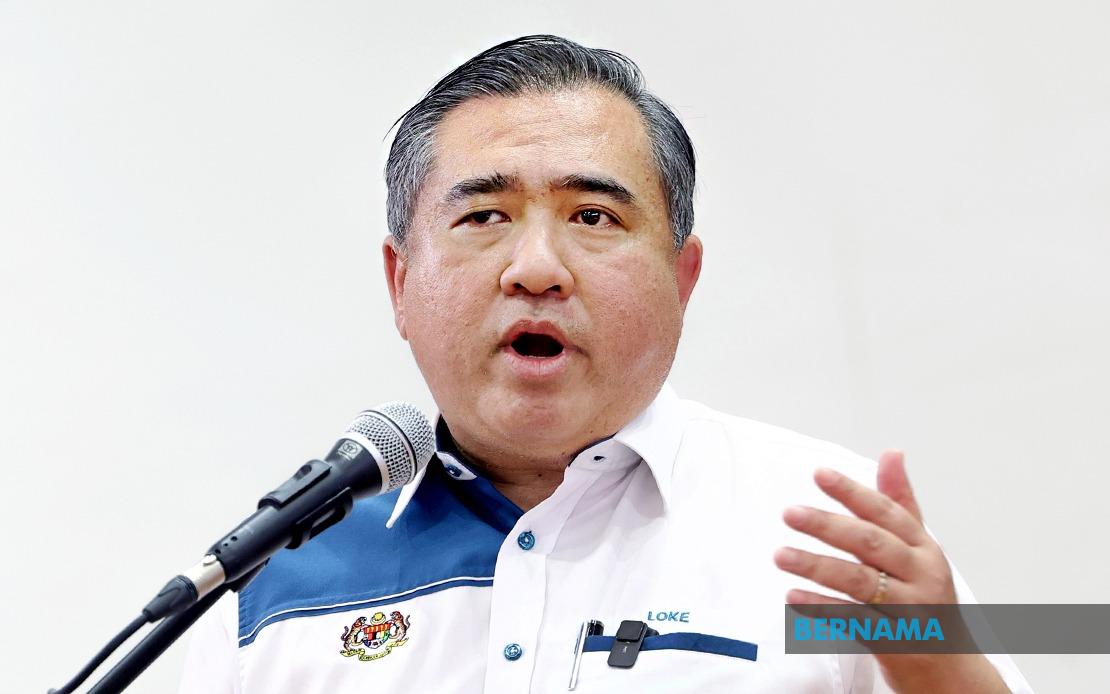
Transport Minister Anthony Loke has defended the interim use of diesel-powered trains on the Southern Shuttle service, positioning the decision as a pragmatic response to balancing immediate public transport needs against the lengthy manufacturing timeline for new electric stock. Speaking on social media from Johor Bahru, Loke acknowledged that the existing diesel trains represent a temporary solution whilst the Ministry awaits delivery of ten new Electric Multiple Unit (EMU) train sets, a process expected to span between two and three years. Rather than compelling residents to endure an extended waiting period for modern rolling stock, the minister argued that deploying available assets today serves the travelling public more effectively than postponing service improvements.
The ministry has committed substantial annual subsidies to bolster rail-based public transport accessibility across the region, with allocations ranging from RM11 million to RM15 million per annum. This financial commitment underscores the government's intention to make rail services more competitive and affordable for commuters throughout Johor. The funding mechanism acknowledges that public transport infrastructure requires ongoing operational support to remain viable and accessible to lower-income users who depend most heavily on such services. The subsidy framework reflects a broader strategic shift toward reducing car dependency in the southern corridor, potentially easing congestion on the North-South Expressway and associated trunk roads that channel traffic through Johor.
The Southern Shuttle currently operates three key routes: Kulai to JB Sentral, JB Sentral to Pasir Gudang, and the newly activated Kempas Baru to Pasir Gudang corridor. Journey times are notably brisk, with the Kulai-JB Sentral leg completed in approximately 40 minutes, whilst the longer Kempas Baru-Pasir Gudang stretch requires 40 to 45 minutes. These transit times position the shuttle as a genuinely competitive alternative to private vehicles for many commuters, particularly those traveling from satellite towns into the state capital. The expanded Kempas Baru-Pasir Gudang route represents a significant development, having previously functioned exclusively for freight operations before being repurposed to accommodate passenger demand.
Diesel operations are explicitly framed as transitional by the ministry. Once the Gemas-Johor Bahru electrified double-tracking project reaches completion, conventional diesel services will be phased out entirely. The upgraded corridor will support the modern Electric Train Service (ETS), providing enhanced speed, reliability, and environmental performance compared to current diesel traction. This timeline suggests that Johor's rail infrastructure is undergoing comprehensive modernization, with electrification representing a critical milestone in that transformation. The completed double-tracking will also eliminate bottlenecks that currently constrain service frequency and capacity.
The decision to deploy diesel trains has attracted criticism from some quarters, particularly regarding fare structures. Commentators have highlighted that Southern Shuttle fares reportedly exceed comparable rates on services operating in Kuala Lumpur and Selangor by approximately threefold. This disparity raises legitimate questions about affordability and equity in public transport pricing across Malaysia's regions. The higher tariffs may reflect infrastructure costs, operational expenses, or subsidy allocation methodologies that diverge from peninsular precedents. Understanding the cost drivers behind ticket prices remains important for evaluating whether the current fare regime genuinely reflects value or whether pricing mechanisms require recalibration to encourage broader ridership adoption.
The minister's framing of the diesel decision as a choice between immediate service availability and extended deferral presents a classic public policy dilemma. Manufacturing and delivering ten new EMU train sets demands substantial lead times for procurement, design finalisation, and testing protocols. Few administrations would willingly withhold operational capacity when functional assets exist and can be deployed immediately. This pragmatic calculus appears to have guided the ministry's conclusion that using existing trains while waiting for modern replacements represents superior policy to obliging residents to tolerate further delays. However, this rationale does hinge on demonstrable assurances that new EMU sets will indeed materialize within the stated timeframe, as delays in acquisition schedules could strain public credibility.
The broader context of Johor's transport development reveals a state undergoing significant infrastructure modernisation. The Southern Shuttle sits within a larger ecosystem encompassing road, rail, and port connectivity improvements designed to enhance regional competitiveness and facilitate economic integration. Johor's geographic position as a gateway between Peninsular Malaysia and Singapore places particular emphasis on mobility solutions that can handle increasing cross-border commuter flows and freight movement. Efficient rail services reduce pressure on road corridors and contribute to sustainable urban development patterns across the state's major centres.
For Malaysian and Southeast Asian observers, the Southern Shuttle case exemplifies broader regional challenges in balancing rapid infrastructure development against finite procurement and manufacturing capabilities. Many countries across the region face similar pressures to upgrade aging transport systems whilst managing fiscal constraints and extended acquisition timelines for modern rolling stock. The willingness to deploy interim solutions whilst pursuing longer-term modernisation represents one approach to this challenge, though it requires careful management of stakeholder expectations and transparency regarding transition timelines.