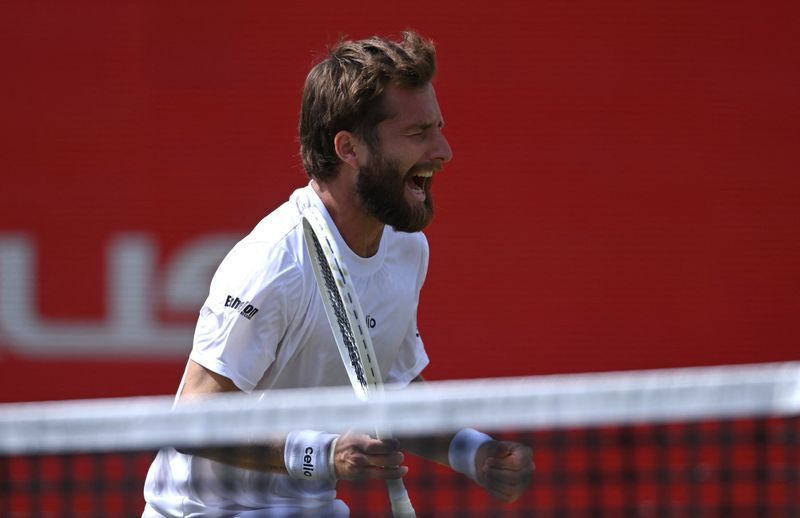
French tennis player Corentin Moutet's profitable week at the Queen's Club tournament in London has turned costly after the ATP handed him a substantial fine for an expletive-filled interview conducted on court by the BBC following his opening-round victory. The 27-year-old was penalised $40,000 for the conduct, a punishment that eliminates nearly the entirety of his $43,000 earnings from advancing to the tournament's second round. Moutet has since lodged an appeal against the decision, though the ATP maintains the fine was warranted under its unsportsmanlike conduct regulations.
The incident unfolded moments after Moutet defeated fellow Frenchman Giovanni Mpetshi Perricard in his opening match. During the mandatory courtside interview, he became increasingly animated while discussing a particular point, specifically referencing being aced on match point by a 142mph second serve from his opponent. His language descended into profanity, prompting the interviewer to politely request he refrain from repeating the offensive expletive. Rather than comply, Moutet continued to use the same swear word three additional times before the interview was terminated.
The situation created an awkward moment for the BBC production team, who subsequently issued apologies to both the live audience in attendance and television viewers at home. The network's editorial standards require swift action when on-air language breaches broadcasting codes, making the early cessation of the interview an appropriate response. However, what transpired immediately after the interview concluded proved equally revealing about Moutet's state of mind. He subsequently posted to Instagram claiming he had merely been joking, a characterisation that appears to have held little weight with ATP disciplinary officials who proceeded with the fine despite this attempted clarification.
Moutet's disciplinary troubles extend well beyond this latest incident, revealing a pattern of behavioural concerns that has troubled governing bodies across professional tennis. In 2022, he was defaulted from the Adelaide International during a match against Serbia's Laslo Djere after directing profanities at the umpire, an automatic disqualification that underscores how seriously the sport treats such outbursts. That same year, the French Tennis Federation took the additional step of withdrawing support from the player due to ongoing behavioural issues, a significant institutional response that signals the frustration his conduct has generated among French tennis authorities.
The financial impact of this fine represents a consequential penalty for a player ranked 36th in the world. Losing $40,000 of a $43,000 tournament payday effectively converts what should have been a solid financial week into a net loss when accounting for travel, accommodation, coaching staff, and other tournament-related expenses. For mid-ranking professionals on the ATP circuit, such financial swings can significantly affect annual earnings targets and investment in their support teams. The fine thus operates as both a punitive measure and a genuine economic hardship for Moutet.
Moutet's stay at Queen's Club proved brief beyond the financial consequences of the fine. After his first-round victory over Mpetshi Perricard, he advanced to face Spain's Alejandro Davidovich Fokina in the second round but failed to progress further, exiting the prestigious grass-court tournament without additional earnings. This early departure meant his Queen's campaign yielded disappointingly little despite the initial promise of that opening-round win. The combination of the first-round exit and the subsequent fine underscored what had begun as a promising week into a largely unsuccessful visit to the tournament.
The ATP's stance on courtside profanity reflects broader efforts across professional sports to maintain broadcast standards and protect the viewing experience for global audiences. Tennis, uniquely among major sports, places players in immediate proximity to microphones during matches and directly after, meaning their language reaches viewers unfiltered. Broadcasters operating under strict regulatory frameworks in jurisdictions worldwide—including the United Kingdom, United States, and Australia—require content that meets their standards. When players violate these expectations, governing bodies face pressure from both broadcasters and regulatory authorities to enforce consequences.
Moutet's appeal of the fine carries uncertain prospects given the apparent flagrancy of the original conduct. The incident was not a single outburst followed by immediate contrition; rather, it represented a deliberate escalation after being explicitly asked to moderate his language. The interviewer's polite intervention should have served as a circuit-breaker, yet Moutet's decision to repeat the offending language multiple times suggested either poor impulse control or a deliberate disregard for the request. This distinction matters significantly in disciplinary proceedings, as it speaks to whether conduct was momentary and regrettable or sustained and defiant.
For Malaysian and Southeast Asian readers following professional tennis, Moutet's situation illustrates the heightened scrutiny contemporary athletes face regarding on-court deportment. In an era where every match is recorded, broadcast globally, and scrutinised on social media, professional athletes operate under unprecedented behavioural accountability. What might have generated minor comment two decades ago now triggers swift financial consequences and institutional responses. This reflects broader societal expectations that sports figures model appropriate conduct, particularly given the young audiences who watch professional tennis.
The incident also underscores a recurring tension in professional sports between the competitive intensity that drives high-level performance and the behavioural standards expected of public figures. Moutet's frustration following the ace on match point was understandable—losing a critical point in that manner would test any competitor's composure. However, the manner in which he expressed that frustration crossed boundaries established by broadcasters, tournaments, and governing bodies. Managing emotions while maintaining professional decorum represents a skill that separates athletes who sustain lucrative careers from those whose conduct regularly generates controversy and financial penalties.