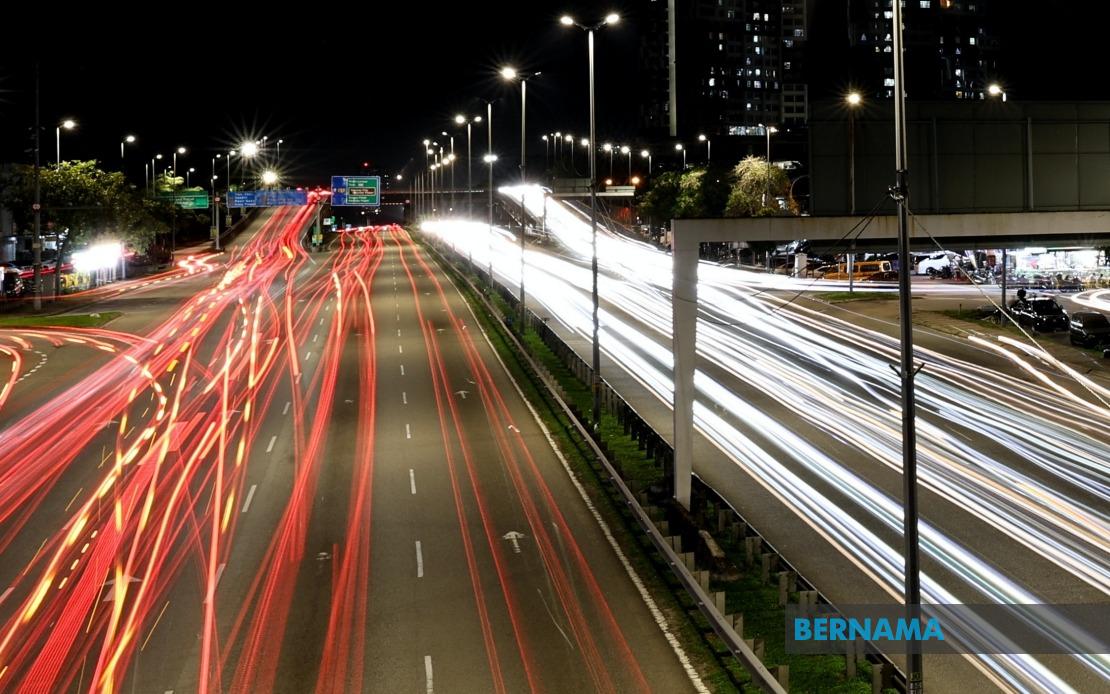
The Malaysian government has drawn a firm legal line around speed testing on public roads, with Deputy Transport Minister Datuk Hasbi Habibollah warning that individuals conducting such trials on any street—regardless of whether they are racing against other vehicles—now face potential criminal charges. His statement came during parliamentary debate on the Road Transport (Amendment) Bill 2026 in the Dewan Negara on July 21, emphasising that all public thoroughfares, including apparently clear highway stretches, are strictly off-limits for performance evaluation of motorcycles and cars.
The newly passed legislation represents a significant tightening of Malaysia's approach to dangerous driving behaviours that have long plagued urban and rural roads across the nation. For years, speed testing and illegal street racing have claimed lives and caused serious injuries, creating public safety concerns that extend beyond the immediate participants to everyday commuters and pedestrians. The amendment specifically targets activities that fall outside traditional definitions of competitive racing but nonetheless pose comparable hazards to road users. By criminalising the act itself rather than requiring proof of competitive intent, authorities aim to eliminate a loophole that has allowed dangerous drivers to claim their high-speed manoeuvres were merely performance testing rather than organised racing.
The legal framework now codified in the Road Transport (Amendment) Bill 2026 introduces a new Section 42A(2) that explicitly classifies speed testing as a criminal offence regardless of circumstances. Anyone participating in speed testing on the road involving one or more motor vehicles faces potential penalties including a fine ranging from RM2,000 to RM10,000, imprisonment of up to two years, or both sanctions simultaneously. These substantial penalties reflect parliament's determination to deter such behaviour through meaningful consequences. The graduated fine structure allows courts discretion to impose proportionate sentences based on aggravating factors such as the severity of the speed differential, road conditions, presence of other traffic, and any resulting damage or injury.
However, the law's practical implementation hinges on a distinction that remains somewhat ambiguous between speed testing and ordinary speeding violations. Deputy Minister Hasbi acknowledged this complexity during parliamentary proceedings, indicating that detailed guidelines clarifying the precise boundaries between these two categories will be provided once amendments to the Road Transport Act 1987 (Act 333) are formally gazetted. This technical distinction matters considerably for enforcement purposes and judicial interpretation. Speed testing implies deliberate evaluation of a vehicle's maximum capability or acceleration characteristics in conditions specifically arranged for that purpose, whereas speeding typically refers to exceeding posted speed limits without necessarily attempting to measure performance capabilities. The forthcoming regulations must establish objective criteria that police can readily identify at roadsides and that prosecutors can convincingly prove in court.
The timing of this legislation reflects growing regional concerns about dangerous driving phenomena that have proliferated across Southeast Asia. Street racing culture, including more informal speed testing activities, has expanded significantly in Malaysia particularly among younger drivers with modified vehicles. Social media amplification of such activities through recorded videos and live streaming has created additional incentives and audiences for these behaviours. The new law addresses not merely the immediate safety risk but also aims to counter the cultural normalisation of public road speed testing through anticipated social consequences and legal penalties. By making the activity clearly illegal with serious criminal rather than merely traffic violation consequences, parliament sends a message that such conduct falls outside acceptable boundaries.
The legislative process proved decisive, with the Road Transport (Amendment) Bill 2026 receiving passage through a majority voice vote in the Dewan Negara. This broad parliamentary support indicates consensus among legislators across different political alignments regarding the necessity of strengthening penalties for dangerous driving activities. The government framed the amendments as essential for protecting public safety and reducing road fatalities, arguments that resonated across the chamber. Malaysian road fatality rates remain stubbornly high by regional standards, and speed-related incidents constitute a significant proportion of serious crashes. By specifically targeting speed testing rather than requiring proof of organised racing, the legislation casts a wider protective net over road users.
Enforcement of this new provision will require training and vigilance from traffic enforcement authorities. Police personnel must be able to distinguish speed testing from simple speeding or aggressive driving, a task requiring judgment and technical understanding. Enforcement on busy highways presents particular challenges since high speeds may occur intermittently and witnesses may be difficult to identify. The onus will fall on officers to document patterns suggesting deliberate performance testing rather than momentary speed lapses. Meanwhile, prosecution of alleged violations will require courts to evaluate evidence of intent to test vehicle capabilities, potentially including vehicle condition assessments, driver statements, mobile phone records, and witness testimony regarding acceleration patterns.
For the general driving public and vehicle owners in Malaysia, the legislation carries clear implications. Those tempted to assess their motorcycles or cars on public thoroughfares now face substantially elevated legal jeopardy compared to previous regulatory environments. Legitimate performance testing must occur exclusively on dedicated racetracks or closed circuits where such activities are properly regulated and insurance covered. Vehicle modification enthusiasts and performance-focused drivers must adjust their practices accordingly or face serious criminal consequences. The law effectively redirects high-speed vehicle testing from public spaces to appropriate dedicated facilities.
Regional observers note Malaysia's evolving approach to road safety through legislative innovation. The amendment joins other recent initiatives aimed at modernising transport laws to address contemporary road safety challenges. Neighbouring countries including Singapore, Thailand, and Indonesia have implemented comparable prohibitions and penalties for street racing and speed testing, creating a more consistent regional legal framework. Malaysia's new provision aligns the nation with these peer standards while maintaining local legislative autonomy. Harmonisation across ASEAN jurisdictions potentially strengthens enforcement by establishing consistent legal consequences for cross-border road violations.
The gazetted amendments to the Road Transport Act 1987 will provide the regulatory flesh on this legislative skeleton. These detailed rules and guidelines must address scenarios including solo vehicles being speed tested, multiple vehicles engaged in coordinated testing, modified versus stock vehicles, and the role of timing technology or observers. Clear definitions will help police distinguish between statistically difficult cases, such as drivers who momentarily accelerate to merge onto highways versus those deliberately testing acceleration from standstill. The regulations should also address evidentiary standards for prosecutions, establishing what documentation or witness testimony constitutes sufficient proof of speed testing intent.

