%22%2F%3E%3C%2Fpattern%3E%3C%2Fdefs%3E%3Crect%20width%3D%22100%25%22%20height%3D%22100%25%22%20fill%3D%22url(%23ph4twxvg)%22%2F%3E%3Crect%20width%3D%22100%25%22%20height%3D%22100%25%22%20fill%3D%22url(%23ph4twxvp)%22%2F%3E%3Ctext%20x%3D%2250%25%22%20y%3D%2250%25%22%20text-anchor%3D%22middle%22%20dominant-baseline%3D%22central%22%20fill%3D%22rgba(255%2C255%2C255%2C0.95)%22%20font-family%3D%22Georgia%2C%20'Times%20New%20Roman'%2C%20serif%22%20font-weight%3D%22700%22%20font-size%3D%22320%22%20letter-spacing%3D%22-0.02em%22%3E95%3C%2Ftext%3E%3C%2Fsvg%3E)
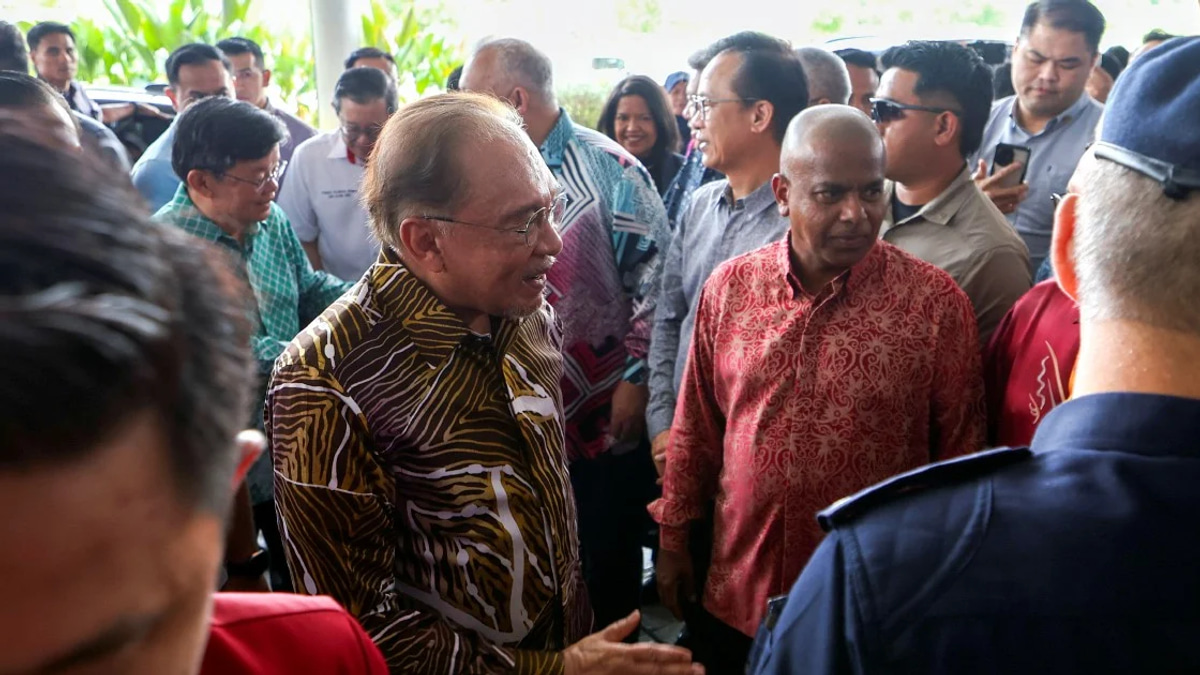
In a bid to fortify connections between the state apparatus and ordinary Malaysians, 95 MADANI Community leaders from the northern states of Kedah and Perlis have been formally installed through an appointment ceremony held in Alor Setar. The initiative represents a structured push by Prime Minister Datuk Seri Anwar Ibrahim's administration to embed government representatives at the grassroots, where they can facilitate two-way communication and ensure that policy messaging reaches citizens with clarity and precision.
The appointees comprise 68 representatives from Kedah and 27 from Perlis, each tasked with serving as a conduit between federal and state agencies and their respective communities. Speaking at the Jiwa MADANI Programme ceremony, Abdullah Izhar Mohamed Yusof, Political Secretary to the Communications Minister, emphasised that this deployment reflects a strategic belief that effective governance hinges not merely on announcement of programmes but on their comprehension and meaningful uptake by the public. The appointment letters formalise roles that have become increasingly critical in Malaysia's communicative landscape, where the proliferation of false narratives and digital misinformation poses a genuine governance challenge.
Within Malaysia's federal structure, grassroots engagement mechanisms have long been acknowledged as essential yet inconsistently resourced. The MADANI Community leader framework attempts to address this gap by creating a dedicated cadre of trained intermediaries who understand local contexts and possess credibility within their neighbourhoods. These individuals function as translators of government intent, capable of explaining complex policy announcements in vernacular terms while remaining sensitive to community concerns that might otherwise go unheard in higher administrative echelons. This model recognises that top-down communication alone rarely achieves the behavioural change or programme participation that governments seek.
A primary function assigned to these leaders involves shepherding citizens toward targeted welfare assistance schemes. Abdullah Izhar specifically referenced programmes such as Sumbangan Tunai Rahmah (STR), Sumbangan Asas Rahmah (SARA), and Budi MADANI support, which collectively channel billions of ringgit to vulnerable populations. Without effective community-level dissemination and verification mechanisms, such assistance risks reaching ineligible beneficiaries or, conversely, bypassing those most in need. Community leaders serve to validate recipient lists, clarify eligibility criteria, and manage expectations—functions that, when performed poorly, can undermine public confidence in government welfare operations and fuel perceptions of patronage or favouritism.
Beyond welfare administration, these appointees shoulder responsibility for countering the digital threats that have come to characterise contemporary governance challenges. Abdullah Izhar drew particular attention to the emergence of deepfake technology and synthetic media, which can be generated with increasing ease and decreasing detectability. He called upon community leaders to promote digital literacy and encourage a culture of verification before content sharing—essentially asking them to function as bulwarks against the viral spread of false information that can destabilise public health responses, undermine electoral integrity, or trigger communal tensions. This represents a significant expansion of the traditional community leader role, placing them at the frontline of information warfare.
The appointment ceremony itself serves a symbolic function within Malaysia's political culture. Formal recognition through presentation of letters signals that these individuals are no longer merely volunteer advocates or informal opinion leaders but official representatives invested with government sanction and, implicitly, resources. This formality lends legitimacy to their advocacy efforts and may facilitate their access to information channels, media platforms, and bureaucratic personnel who might otherwise deprioritise community concerns. In a nation where formal protocols and hierarchical recognition carry considerable weight, the ceremonial aspect of the appointments matters substantially beyond its surface appearance.
For Kedah and Perlis specifically, the scheme carries particular resonance. Both states have experienced significant economic transition over recent decades, with populations often feeling disconnected from federal development initiatives concentrated in the Klang Valley and other major urban centres. Northern states have intermittently articulated grievances regarding resource allocation and policy attention, making enhanced communication channels a politically strategic investment. The appointment of 95 leaders across the two states suggests an attempt to address such sentiments through improved responsiveness rather than through infrastructure spending or industrial incentives alone.
The framework also reflects broader Southeast Asian trends toward deepening participatory governance mechanisms. Across the region, governments from Thailand to Indonesia have experimented with formalised community engagement structures, recognising that legitimacy in the digital age depends partly on demonstrating accountability and responsiveness to constituent concerns. Malaysia's MADANI approach aligns with this regional current, though its implementation in Kedah and Perlis remains nascent and its effectiveness will depend critically on the training, motivation, and resource allocation provided to appointed leaders.
However, questions persist regarding the operational architecture underpinning the scheme. How will leaders be trained, monitored, and held accountable for their performance? What mechanisms exist to prevent the system from devolving into a patronage apparatus where appointments reward political loyalty rather than community capacity? Will leadership selection reflect demographic diversity and genuine community trust, or will it replicate existing power structures? These implementation details, often invisible in ceremonial announcements, will ultimately determine whether MADANI Community leaders function as authentic bridges between government and grassroots or become another layer of bureaucratic intermediation that citizens must navigate.
Looking forward, the success of this initiative will be measurable in concrete outcomes: improved programme uptake among eligible populations, reduced misinformation-driven public confusion, and enhanced feedback flows that allow policymakers to adjust initiatives based on ground-level experiences. If community leaders gain genuine influence over resource allocation decisions and programme design, the model could represent meaningful decentralisation of participatory power. Conversely, if their role remains largely communicative and advisory without substantive decision-making authority, the scheme risks becoming performative—a means of appearing responsive while concentrating power in unchanged hands. For Malaysian citizens in Kedah and Perlis, and for observers across Southeast Asia watching how Malaysia manages grassroots engagement in the digital era, the coming months will prove instructive.
%22%2F%3E%3C%2Fpattern%3E%3C%2Fdefs%3E%3Crect%20width%3D%22100%25%22%20height%3D%22100%25%22%20fill%3D%22url(%23ph3tanfg)%22%2F%3E%3Crect%20width%3D%22100%25%22%20height%3D%22100%25%22%20fill%3D%22url(%23ph3tanfp)%22%2F%3E%3Ctext%20x%3D%2250%25%22%20y%3D%2250%25%22%20text-anchor%3D%22middle%22%20dominant-baseline%3D%22central%22%20fill%3D%22rgba(255%2C255%2C255%2C0.95)%22%20font-family%3D%22Georgia%2C%20'Times%20New%20Roman'%2C%20serif%22%20font-weight%3D%22700%22%20font-size%3D%22194%22%20letter-spacing%3D%22-0.02em%22%3EVeteran%3C%2Ftext%3E%3C%2Fsvg%3E)
%22%2F%3E%3C%2Fpattern%3E%3C%2Fdefs%3E%3Crect%20width%3D%22100%25%22%20height%3D%22100%25%22%20fill%3D%22url(%23ph529pwg)%22%2F%3E%3Crect%20width%3D%22100%25%22%20height%3D%22100%25%22%20fill%3D%22url(%23ph529pwp)%22%2F%3E%3Ctext%20x%3D%2250%25%22%20y%3D%2250%25%22%20text-anchor%3D%22middle%22%20dominant-baseline%3D%22central%22%20fill%3D%22rgba(255%2C255%2C255%2C0.95)%22%20font-family%3D%22Georgia%2C%20'Times%20New%20Roman'%2C%20serif%22%20font-weight%3D%22700%22%20font-size%3D%22320%22%20letter-spacing%3D%22-0.02em%22%3ENew%3C%2Ftext%3E%3C%2Fsvg%3E)