%22%2F%3E%3C%2Fpattern%3E%3C%2Fdefs%3E%3Crect%20width%3D%22100%25%22%20height%3D%22100%25%22%20fill%3D%22url(%23ph3tanfg)%22%2F%3E%3Crect%20width%3D%22100%25%22%20height%3D%22100%25%22%20fill%3D%22url(%23ph3tanfp)%22%2F%3E%3Ctext%20x%3D%2250%25%22%20y%3D%2250%25%22%20text-anchor%3D%22middle%22%20dominant-baseline%3D%22central%22%20fill%3D%22rgba(255%2C255%2C255%2C0.95)%22%20font-family%3D%22Georgia%2C%20'Times%20New%20Roman'%2C%20serif%22%20font-weight%3D%22700%22%20font-size%3D%22194%22%20letter-spacing%3D%22-0.02em%22%3EVeteran%3C%2Ftext%3E%3C%2Fsvg%3E)
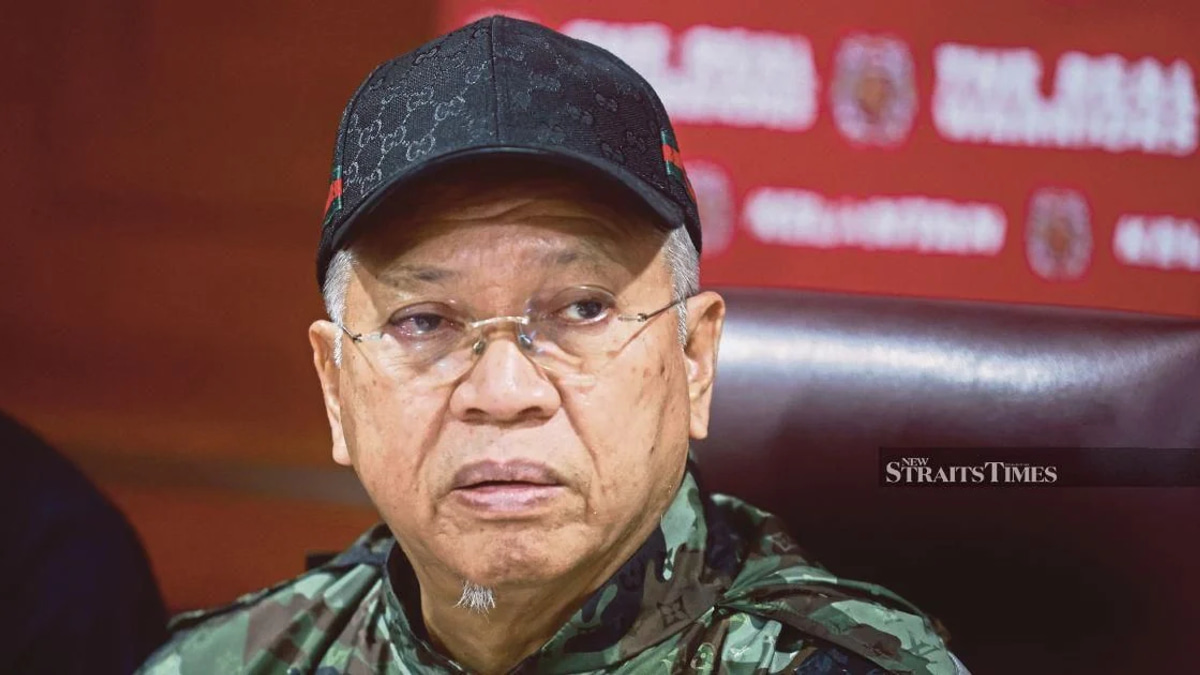
Datuk Suhaimi Sulaiman, whose career spans more than thirty years in broadcasting and journalism, has been recognised as a recipient of the National Journalists' Day (HAWANA) 2026 Award, underscoring his enduring influence on Malaysia's evolving media ecosystem. The accolade was presented by Prime Minister Datuk Seri Anwar Ibrahim during the HAWANA 2026 Grand Finale held on June 20 at PICCA @ Arena Butterworth Convention Centre in Butterworth, Penang, with the country's top media and political leadership in attendance.
Suhaimi's career trajectory reflects the profound transformations the Malaysian media industry has experienced. His tenure as Broadcasting Malaysia (RTM) director-general placed him at the epicentre of decisions shaping national broadcast policy and content strategy during critical periods of technological transition. The award recognises not merely his administrative stewardship but his substantive contributions to professionalising journalistic practice across the nation's largest public broadcaster. His influence extended beyond boardroom decisions; his engagement with industry standards and editorial philosophy helped establish benchmarks that subsequent generations of broadcasters have adopted.
The ceremony itself embodied the interconnectedness of Malaysia's institutional landscape. Penang Chief Minister Chow Kon Yeow, Communications Minister Datuk Fahmi Fadzil, and Bernama chairman Datuk Seri Wong Chun Wai witnessed the presentation, signalling the award's significance within both media and government circles. The presence of Bernama chief executive officer Datin Paduka Nur-ul Afida Kamaludin and editor-in-chief Arul Rajoo Durar Raj underscored the national news agency's central role in recognising excellence within the journalism profession.
In responding to the honour, Suhaimi articulated a perspective that resonates deeply with contemporary media challenges facing Southeast Asia. He framed the award not as a retrospective celebration but as an impetus for continued evolution, emphasising that the recognition carried implicit responsibility to remain intellectually engaged with industry transformation. His characterisation of himself as someone still in a learning phase, despite three decades of seniority, reflects a professional humility increasingly rare in media leadership circles across the region.
The timing of Suhaimi's recognition coincides with unprecedented disruption in global media. Artificial intelligence has emerged as a determinant force reshaping journalistic workflows, editorial decision-making, and audience engagement strategies. Suhaimi's explicit acknowledgement of AI's transformative potential demonstrates awareness that contemporary media practitioners cannot rely on institutional memory or established methodologies alone. The challenge confronting Malaysian journalism involves integrating AI-augmented processes while preserving editorial integrity and maintaining audience trust—concerns that extend beyond individual newsrooms to encompass the entire information ecosystem.
Malaysia's media environment faces particular pressures that make mentorship from experienced practitioners like Suhaimi invaluable. The country navigates complex terrain where press freedom, regulatory frameworks, and commercial viability must coexist. A journalist's career spanning the pre-digital, digital transition, and now the AI era provides perspective that younger practitioners desperately need. Suhaimi's commitment to sharing experience addresses a critical knowledge gap within Malaysian newsrooms, where institutional memory has often been lost through staff turnover and organisational restructuring.
The HAWANA awards themselves represent an important mechanism for maintaining professional standards and recognising excellence. By honouring figures like Suhaimi, the journalism community signals that longevity, ethical practice, and institutional contribution merit celebration alongside individual investigative triumphs or viral content successes. This matters particularly in Southeast Asia, where media organisations often struggle with resource constraints and talent retention. Recognising veterans provides counterweight to the market's frequent tendency to undervalue experience in favour of digital-native credentials.
Suhaimi's engagement with the AI question carries practical implications for Malaysian newsrooms considering technological adoption. His framework—emphasising continuous learning and knowledge acquisition—provides a template for institutional responses that neither reject technological advancement nor allow it to subsume journalistic judgment. This balanced approach is essential as Malaysian media companies invest in AI tools for content creation, audience analytics, and editorial efficiency. The risk remains that cost-cutting rationales mask diminished editorial resources; Suhaimi's emphasis on adaptation rather than replacement offers corrective perspective.
The broader significance of this award extends to succession planning within Malaysian media. As digital-native editors increasingly occupy senior positions, maintaining connection with institutional history and established professional values becomes more challenging. Awards like HAWANA 2026 that explicitly recognise decades of service reinforce the proposition that media institutions possess accumulated wisdom worth preserving. For Malaysian journalism students and early-career journalists, Suhaimi represents a model of how sustained engagement with the profession, rather than pursuit of singular breakthrough moments, constitutes a meaningful career trajectory.
Looking forward, Suhaimi's continued engagement as a mentor figure could address specific challenges confronting Malaysian media. Regional journalism has struggled with investigative capacity, fact-checking infrastructure, and audience media literacy initiatives. An experienced voice advocating for these areas could amplify their importance within increasingly commercialised newsrooms. His positioning at the intersection of broadcasting tradition and digital transition provides vantage point for identifying sustainable models that have worked across different technological eras.
The HAWANA 2026 Award ultimately acknowledges that Malaysia's media industry contains practitioners whose careers encompass valuable lessons for navigating contemporary uncertainty. Suhaimi Sulaiman's recognition validates the proposition that experience, ethical commitment, and intellectual flexibility remain vital even—perhaps especially—during periods of rapid technological change. For Malaysian journalism, the award's significance lies not in honouring past achievement alone but in encouraging continued contributions to an industry requiring thoughtful guidance as it confronts challenges that transcend national borders and demand wisdom accumulated across decades of practice.