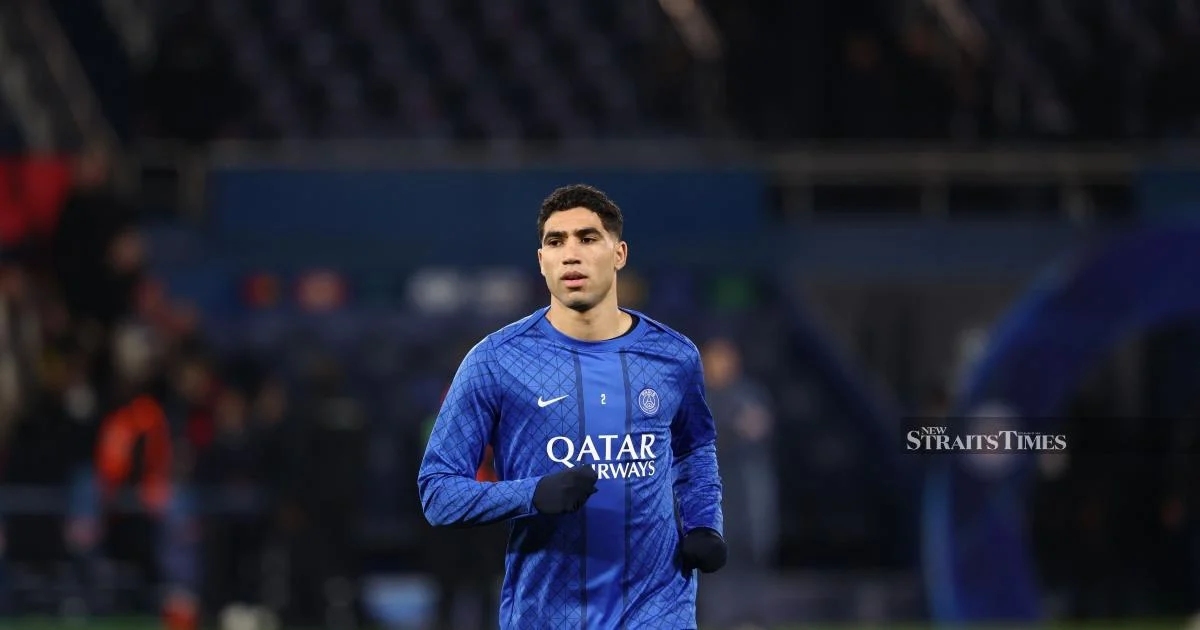
Moroccan international defender Achraf Hakimi will proceed to trial on rape allegations following a significant legal ruling from a French appeals court this week. The decision represents a major development in a case that has drawn international attention given Hakimi's prominence as a player for elite European club Paris Saint-Germain.
The Versailles court's confirmation on Friday upheld an earlier determination that sufficient evidence exists to warrant formal trial proceedings against the Paris Saint-Germain defender. This judicial decision marks an advancement through the French legal system, moving the case beyond preliminary investigative stages toward formal courtroom proceedings where both prosecution and defence will present their full arguments.
Hakimi, who has represented Morocco internationally and competed at the highest levels of European club football, faces serious criminal allegations in connection with allegations made by a young woman. The specifics of the allegations and the complainant's identity remain subject to French legal privacy protections that typically govern such proceedings. The player has consistently maintained his innocence throughout the investigation process.
The appeals court's decision carries particular significance for how the French judicial system handles cases involving high-profile athletes. French law allows for what is known as "mise en examen" or "ordonnance de renvoi," whereby courts determine whether sufficient evidence justifies proceeding with formal charges. This appeals court affirmation indicates that magistrates have found the evidence presented meets the threshold necessary to advance to trial.
For Malaysian and Southeast Asian sports followers, this case underscores broader questions about athlete accountability and the legal processes that govern serious criminal allegations in major European jurisdictions. French courts operate under a civil law system distinct from common law frameworks, with different procedural rules regarding evidence presentation and defendant rights. The progression of this particular case will likely establish important precedents regarding how international football personalities are treated within French legal proceedings.
The implications extend beyond the individual case. Paris Saint-Germain and European football governing bodies will inevitably face questions about how they manage their relationships with players facing serious criminal charges. The club has not publicly detailed its internal protocols for such situations, though many professional organisations maintain policies addressing player conduct and legal matters. The coming trial may influence how other clubs and leagues approach similar circumstances in the future.
Hakimi's legal situation represents a notable moment in contemporary European football where the sport's commercial prominence and global reach intersect with national legal systems. The player's status as an international athlete competing at club level in one of Europe's most visible leagues amplifies public interest in the proceedings. This contrasts with domestic footballers facing similar charges who typically receive less international media attention.
The court's ruling also demonstrates how the French legal system continues processing cases against prominent figures despite their public status. Unlike some jurisdictions where celebrity or athletic achievement might influence judicial decision-making, French courts have historically maintained institutional independence in determining whether cases merit proceeding to trial. The appeals court's confirmation indicates that such considerations did not deter the judicial process in this instance.
Preliminary hearings and investigative phases in the French system can extend considerably, with trials sometimes scheduled months after formal charges are confirmed. The timeline for Hakimi's case remains unclear, though interested observers should anticipate potential delays common to complex criminal proceedings involving multiple parties and significant media attention. The eventual trial date will likely become apparent only after additional procedural steps conclude.
The development carries implications for player transfers and employment arrangements, as football clubs typically conduct thorough background investigations before recruiting players. Potential complications arising from serious criminal charges in any jurisdiction can affect a player's market value, availability for competition, and long-term career prospects. Hakimi's future in professional football may depend significantly on trial outcomes.
For football enthusiasts across the region, the case exemplifies how elite athletes increasingly navigate intersections between sporting careers and legal obligations. Even players performing at the highest competitive levels remain subject to the same legal systems as ordinary citizens, a principle French courts have now reaffirmed through their handling of this matter. The coming trial will test how thoroughly this principle holds throughout judicial proceedings.
As the case progresses toward trial, attention from media, legal observers, and the broader sporting community will likely intensify. The proceedings will unfold within the French judicial system's established frameworks, with outcomes determined by evidence presented and legal arguments advanced by both prosecution and defence teams. The appeals court's decision ensures that substantial questions at the heart of the allegations will eventually receive formal judicial examination.

%22%2F%3E%3C%2Fpattern%3E%3C%2Fdefs%3E%3Crect%20width%3D%22100%25%22%20height%3D%22100%25%22%20fill%3D%22url(%23ph2hy9vg)%22%2F%3E%3Crect%20width%3D%22100%25%22%20height%3D%22100%25%22%20fill%3D%22url(%23ph2hy9vp)%22%2F%3E%3Ctext%20x%3D%2250%25%22%20y%3D%2250%25%22%20text-anchor%3D%22middle%22%20dominant-baseline%3D%22central%22%20fill%3D%22rgba(255%2C255%2C255%2C0.95)%22%20font-family%3D%22Georgia%2C%20'Times%20New%20Roman'%2C%20serif%22%20font-weight%3D%22700%22%20font-size%3D%22272%22%20letter-spacing%3D%22-0.02em%22%3EAnwar%3C%2Ftext%3E%3C%2Fsvg%3E)