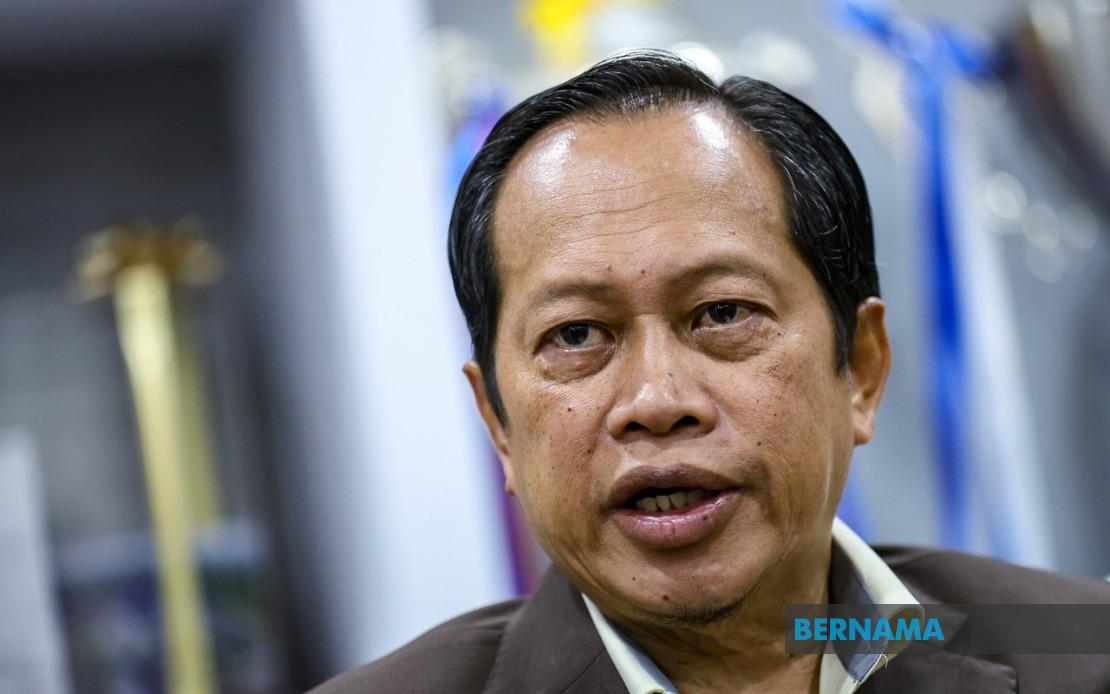
Datuk Seri Dr Ahmad Maslan, the deputy chairman of Johor Barisan Nasional, has formally announced his decision to sit out the forthcoming state election, putting to rest weeks of speculation about which constituencies the senior politician might target. Speaking at the Johor Public Works Department in Iskandar Puteri on June 15, the Deputy Works Minister categorically denied reports that had connected him to multiple state seats, particularly the Benut and Pulai Sebatang divisions within the Pontian parliamentary constituency where he holds the federal seat.
The announcement represents a strategic move within UMNO's internal political calculations as the party prepares for what is expected to be a closely contested state election. Ahmad's decision to voluntarily step aside from the electoral contest suggests a deliberate effort to prevent internal party tensions during the campaigning period. His statement that party leadership endorsed the decision indicates this was not an isolated personal choice but rather a coordinated outcome following discussions with senior BN figures who oversee candidate selection for Johor.
Ahmad's reasoning for his withdrawal carries particular significance within Malaysian political context. He explicitly framed his non-participation as creating space for other candidates to advance within the party hierarchy. This language reflects broader concerns within BN about managing succession and providing opportunities for younger or differently-positioned party members. By stepping back, Ahmad avoids potential scenarios where his candidacy might overshadow emerging figures or create internal competition that could weaken party unity heading into a crucial state contest.
The Pontian MP's continued commitment to campaigning represents an important qualifier to his withdrawal. Rather than removing himself entirely from the electoral process, Ahmad intends to maintain an active presence supporting other BN and UMNO candidates across Johor. This distinction allows him to retain political relevance and influence without the specific commitment of contesting a seat himself. For BN, his deployment as a campaigner means a seasoned politician with ministerial experience can focus on mobilizing support across multiple constituencies without the narrower constraints of defending a specific seat.
The broader political context for this announcement centres on Johor's strategic importance within Malaysia's electoral landscape. The state has historically been an UMNO stronghold, yet recent national political trends have created uncertainties about the party's performance in state-level contests. Johor's economy, infrastructure development, and cross-border relations with Singapore make it a crucial proving ground for BN's governance narrative. The state election becomes an early indicator of whether the coalition can maintain its traditional dominance or whether opposition parties have successfully inroads into the state's electorate.
The Election Commission's timeline shapes the urgency surrounding candidate announcements. With nomination day set for June 27 and polling day scheduled for July 11, the roughly two-week window for campaigning is considerably compressed compared to federal elections. This tight schedule means BN cannot afford prolonged internal discussions about candidacies; clarity about who is running and who is not must emerge quickly. Ahmad's announcement ahead of the nomination deadline allows the party to finalize its slate without last-minute disruptions and gives candidate committees time to identify replacement candidates for constituencies if needed.
Ahmad's position as Deputy Works Minister adds a layer of significance to his decision. Federal ministers contesting state elections face the practical challenge of managing dual portfolios simultaneously. Infrastructure and public works projects under his ministry often intersect with state-level priorities, creating potential conflicts of interest or perception problems if he were simultaneously campaigning for a state seat. His choice to focus on the ministerial role while supporting the broader BN campaign allows clearer delineation between his federal responsibilities and party political activities.
The dynamics within Johor BN leadership also merit examination. Ahmad's withdrawal occurs alongside likely announcements from other senior figures about their electoral intentions. BN's structure typically involves careful choreography around candidate selection to balance geographic representation, communal interests, and generational transitions. The Pontian constituency and its adjacent state divisions represent areas with particular demographic and economic characteristics that influence which candidates BN considers most suitable. Ahmad's stepping back creates space for the party to craft a comprehensive slate that optimizes its prospects across these varying local contexts.
For opposition parties eyeing gains in Johor, Ahmad's withdrawal removes a specific target for electoral campaigns against him personally. At the same time, the absence of a frontline federal minister from state-level candidacy might subtly weaken BN's narrative about federal-state policy coordination and ministerial engagement with local issues. Opposition strategists will likely emphasize this point while simultaneously highlighting Ahmad's continued campaigning role as evidence that BN lacks confidence in its candidates or faces internal hesitation about the electoral battle ahead.
The decision also reflects evolving patterns in Malaysian politics around how senior politicians manage their careers. Rather than the earlier model where federal success automatically translated into state-level contests, contemporary political figures increasingly make strategic calculations about where to invest their electoral capital. Some concentrate on federal positions, others maintain state seats, and still others build balanced portfolios. Ahmad's choice to strengthen his federal ministerial profile while supporting rather than contesting state elections represents one credible pathway through Malaysia's complex multi-level political system.
Looking ahead, Ahmad's availability as a campaigner could prove particularly valuable in constituencies where BN faces unexpectedly stiff challenges. Senior figures not tied to specific constituencies can be deployed flexibly to address party morale, counter opposition messaging, or provide high-profile support to vulnerable candidates. This tactical deployment role may ultimately contribute more substantially to BN's state-level performance than Ahmad would have achieved by contesting a single seat. His ministerial profile and parliamentary experience position him well for this broader supportive function across Johor's 56 state constituencies.
The Johor state election will test whether BN's candidate selection strategy and internal decisions like Ahmad's withdrawal strengthen or weaken the coalition's competitive position. As one of Malaysia's largest and most economically significant states, Johor's outcome will carry implications extending beyond state politics, influencing federal political calculations and opposition momentum heading toward the next general election. Ahmad's role in the campaign, despite not contesting, will thus remain significant to this larger political narrative.


%22%2F%3E%3C%2Fpattern%3E%3C%2Fdefs%3E%3Crect%20width%3D%22100%25%22%20height%3D%22100%25%22%20fill%3D%22url(%23ph2hy9vg)%22%2F%3E%3Crect%20width%3D%22100%25%22%20height%3D%22100%25%22%20fill%3D%22url(%23ph2hy9vp)%22%2F%3E%3Ctext%20x%3D%2250%25%22%20y%3D%2250%25%22%20text-anchor%3D%22middle%22%20dominant-baseline%3D%22central%22%20fill%3D%22rgba(255%2C255%2C255%2C0.95)%22%20font-family%3D%22Georgia%2C%20'Times%20New%20Roman'%2C%20serif%22%20font-weight%3D%22700%22%20font-size%3D%22272%22%20letter-spacing%3D%22-0.02em%22%3EAnwar%3C%2Ftext%3E%3C%2Fsvg%3E)