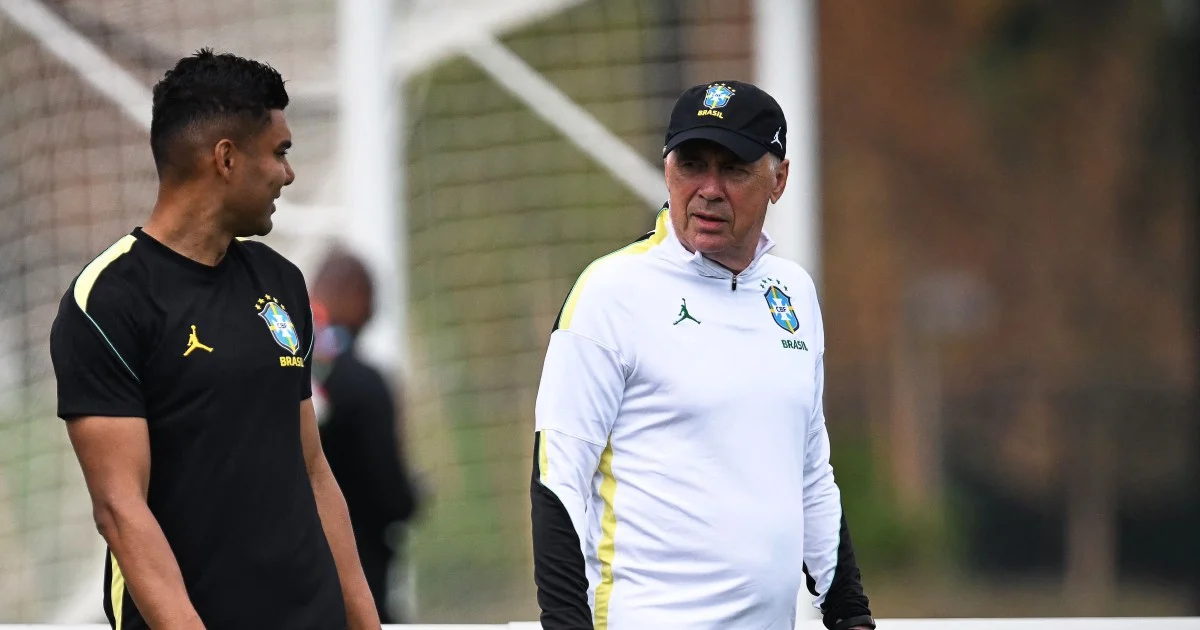
Brazil's World Cup ambitions hit a speed bump in their opening Group C fixture, but coach Carlo Ancelotti is refusing to sound alarms after the disappointing 1-1 draw with Morocco in Philadelphia. Rather than succumbing to panic, the Italian tactician is taking a measured approach to the challenge ahead, positioning Friday's match against Haiti as a crucial platform to recalibrate and eliminate the weaknesses that emerged during the stuttering start.
Ancelotti's composure under pressure stems from his extensive experience managing elite football clubs across Europe's top leagues. His track record suggests a coach comfortable with volatility in tournament football and confident in his squad's ability to respond. The draw with Morocco, while frustrating, has provided valuable diagnostic information about where Brazil must improve before facing tougher opponents later in the group stage.
The Morocco stalemate exposed several vulnerabilities that demand urgent attention. Brazil's attacking play, typically fluid and creative, lacked the incisiveness required to break down a well-drilled defensive setup. Morocco's disciplined approach, combined with Brazil's occasional carelessness in possession, created a fragmented performance that fell short of expectations for a nation accustomed to dominating World Cup preliminaries. These deficiencies cannot be allowed to persist, particularly as the tournament progresses toward knockout stages where such inconsistency proves fatal.
Haiti presents a radically different proposition from Morocco, offering Brazil an ideal scenario to rebuild momentum and confidence. The Caribbean nation, historically outmatched in World Cup competition, arrives as clear underdogs whose defensive limitations should provide Brazil opportunities to showcase the quality many observers expected to see in the opening match. This tactical mismatch could prove therapeutic for a squad needing to rediscover rhythm and cohesion.
Ancelotti's decision to maintain perspective rather than implement wholesale changes reflects strategic wisdom. Panic-driven adjustments often introduce fresh problems rather than solving existing ones. By targeting specific weaknesses and implementing measured corrections, the coach can address fundamental issues without dismantling an overall structure that merely requires fine-tuning. This approach has proven effective in his previous managerial roles at elite institutions where tournament psychology remains paramount.
Brazil's midfield dynamics warrant particular scrutiny heading into the Haiti encounter. The balance between defensive solidity and creative contribution was compromised during stretches against Morocco, with the team occasionally caught between competing tactical priorities. The Haiti match offers precious minutes to experiment with configurations that provide both protective cover for the back line and sufficient freedom for attacking players to express themselves.
Defensively, Brazil's approach against Morocco revealed uncertainty in transition moments, particularly when Morocco shifted quickly from defensive posture to counterattack. These gaps in defensive compactness cannot recur if Brazil aspires to progress deep into the tournament. Haiti's slower, more methodical approach provides an opportunity to establish defensive patterns without the constant pressure of elite attacking football.
The psychological dimension of this fixture should not be underestimated. A comprehensive victory restores self-belief and erases doubts that naturally emerge after an opening draw. For a squad containing players accustomed to winning major tournaments, the psychological release of a convincing performance carries immense value beyond the three points. Ancelotti understands that tournament success often hinges on these psychological factors as much as technical prowess.
Brazil's attacking personnel, individually gifted beyond question, require opportunity and rhythm to click as a collective unit. Against Morocco, several forward players operated in isolation rather than as coordinated attacking force. The Haiti match provides runway for combination play and understanding to develop, allowing Ancelotti's attacking philosophy to flourish against opposition less equipped to suffocate possession and neutralise space.
Regionally, Brazil's World Cup performance holds significance beyond national borders. As South America's strongest representative in this tournament, any Brazilian stumble reverberates across the continent, potentially affecting confidence and momentum for other South American teams navigating their own group challenges. A decisive victory against Haiti reinforces South American strength in Qatar and maintains continental prestige.
Ancelotti's measured temperament, forged across decades managing at Europe's highest levels, suggests Brazil's camp remains convinced fundamental quality will manifest once tactical refinements take hold. The Morocco result, irritating though it proved, represents one match among multiple opportunities to shape Group C outcome. Haiti offers the ideal corrective platform, and Ancelotti appears confident his squad possesses sufficient quality and intelligence to extract maximum value from this encounter.
For Malaysian and Southeast Asian football enthusiasts, Brazil's trajectory remains compelling viewing. The five-time champions' ability to recalibrate under pressure demonstrates precisely why they command respect in tournament football. Friday's encounter against Haiti will reveal whether Ancelotti's calm confidence proves justified or whether deeper problems require more substantial intervention.
%22%2F%3E%3C%2Fpattern%3E%3C%2Fdefs%3E%3Crect%20width%3D%22100%25%22%20height%3D%22100%25%22%20fill%3D%22url(%23ph2hy9vg)%22%2F%3E%3Crect%20width%3D%22100%25%22%20height%3D%22100%25%22%20fill%3D%22url(%23ph2hy9vp)%22%2F%3E%3Ctext%20x%3D%2250%25%22%20y%3D%2250%25%22%20text-anchor%3D%22middle%22%20dominant-baseline%3D%22central%22%20fill%3D%22rgba(255%2C255%2C255%2C0.95)%22%20font-family%3D%22Georgia%2C%20'Times%20New%20Roman'%2C%20serif%22%20font-weight%3D%22700%22%20font-size%3D%22272%22%20letter-spacing%3D%22-0.02em%22%3EAnwar%3C%2Ftext%3E%3C%2Fsvg%3E)